
Melihat burung? Identifikasi seketika dengan aplikasi Birdby
Buka aplikasiTentang
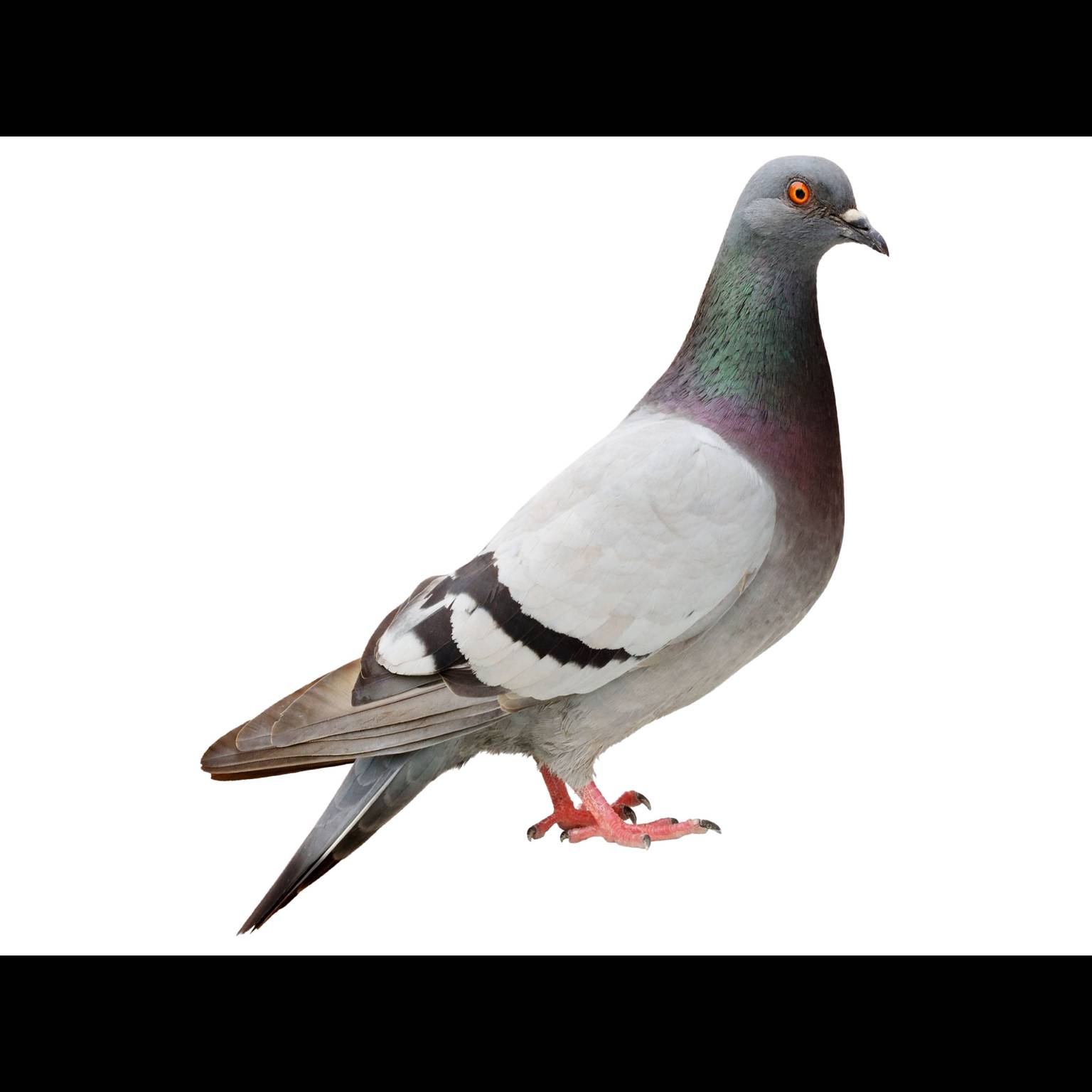
Merpati Batu, or Rock Dove, is a widespread species of pigeon, originally native to Europe, North Africa, and Asia. It is the ancestor of all domestic pigeons and has become feral in urban environments worldwide. Characterized by its stout body, short neck, and small head, it typically exhibits a grey plumage with iridescent green and purple patches on the neck and two black bars on the wings. Its adaptability to human-modified landscapes has made it one of the most common and recognizable birds globally.
Ukuran dan masa hidup
- Panjang
- 31-35 cm
- Bentang sayap
- 62-68 cm
- Berat
- 238-380 g
- Masa hidup
- 3-5 years (wild), up to 15 years (domestic/feral)
- Makanan
- Granivore (seeds, grains), supplemented with fruits, berries, insects, and human food scraps in urban areas.
Ciri fisik
- Bulu
- The wild type (Rock Dove) has a dark bluish-grey head, neck, and chest with glossy yellowish-green and reddish-purple iridescence on the neck and wing coverts. The back is grey, and the wings have two prominent black bars. The rump is white, and the tail is grey with a broad black terminal band. Feral populations exhibit a wide range of plumage variations, including solid black, white, brown, pied, and various shades of grey, often lacking the distinct black wing bars or white rump.
- Bentuk paruh
- Slender, dark grey to black beak with a prominent white cere (fleshy patch) at the base.
- Warna mata
- Orange to reddish-orange, with a pale inner ring.
- Warna kaki
- Reddish-pink to purplish-red legs and feet.
- Ciri pembeda
- The wild type's white rump and two distinct black wing bars are key field marks. Feral pigeons are highly variable but often retain some elements of the wild type's pattern, or show a mix of colors. The characteristic head-bobbing walk is also distinctive.
- Penampilan muda
- Juveniles have duller plumage, lacking the strong iridescence on the neck. Their eyes are typically greyish-brown, gradually changing to orange. The cere is less prominent and often greyish.
- Perubahan musiman
- No significant seasonal plumage changes. Plumage remains consistent year-round.
- Dimorfisme seksual
- Males and females are generally monomorphic in plumage, though males may appear slightly larger and have more pronounced iridescence on the neck. During courtship, males display more vigorous bowing and cooing.
Cara identifikasi
- 1
Plumage (Wild Type)
Look for the classic bluish-grey body, iridescent green/purple neck, white rump, and two distinct black bars on each wing. The tail is grey with a broad black band.
- 2
Plumage (Feral)
Be aware of extreme variability. Many feral pigeons will still show some grey with black wing bars, but others can be solid black, white, brown, or pied. The overall pigeon shape and behavior remain consistent.
- 3
Head and Eyes
Note the small head, prominent white cere at the base of the beak, and orange to reddish-orange eyes with a pale inner ring.
- 4
Flight
Observe their strong, direct flight with rapid wing beats. They often glide on stiff wings.
- 5
Vocalization
Listen for the characteristic soft, guttural cooing sounds, especially the 'coo-COO-coo' call.
- 6
Behavior
Watch for their typical head-bobbing walk when foraging on the ground and their tendency to gather in flocks.
Habitat dan persebaran
- Bioma
- Originally found in coastal cliffs and mountainous regions. Feral populations thrive in urban, suburban, and agricultural areas, including cities, towns, farms, and industrial sites.
- Persebaran geografis
- Native to Europe, North Africa, and parts of Asia. Introduced and feral populations are now found almost worldwide, including North and South America, Australia, and sub-Saharan Africa.
- Rentang ketinggian
- From sea level up to 4,000 meters in mountainous regions.
- Lingkungan yang disukai
- Cliffs, rocky outcrops, caves, and human-made structures that mimic these environments (buildings, bridges, barns, silos).
Perilaku
- Waktu aktivitas
- Diurnal, most active during daylight hours.
- Kebiasaan makan
- Primarily ground feeders, foraging for seeds, grains, and fallen fruits. In urban settings, they readily consume human food scraps, bread, and other discarded items. They often feed in flocks.
- Perilaku sosial
- Highly social birds, typically found in flocks of varying sizes, especially when foraging or roosting. They form monogamous pairs during the breeding season but often remain in communal settings.
- Pola terbang
- Strong, direct, and swift flight with rapid wing beats. They can achieve considerable speeds. Often glide on stiff wings when descending or approaching a perch.
- Pola migrasi
- Non-migratory; resident throughout their range. Feral populations are sedentary, remaining in their chosen urban or rural habitats year-round.
- Teritorialitas
- While not strictly territorial over large areas, breeding pairs will defend a small area around their nest site from other pigeons.
Kicauan dan suara
- Kicauan
- Rock Doves do not have a complex song. Their primary vocalization is a soft, guttural cooing sound.
- Panggilan
- A characteristic 'coo-COO-coo' or 'doo-doo-doo' call, often repeated. This call is used for courtship, territorial display, and communication within the flock. Alarm calls are short, sharp 'hoo-hoo' sounds.
- Kapan bersuara
- Vocalize throughout the day, particularly during courtship displays, nesting, and when interacting with other pigeons.
Reproduksi
- Musim kawin
- Year-round in feral populations, with peaks in spring and summer (March-October) in temperate regions. Wild populations typically breed from spring to late summer.
- Kebiasaan bersarang
- Nests are typically flimsy platforms of twigs, grass, and debris, often placed on ledges, crevices, or sheltered spots on cliffs, buildings, bridges, or other structures. They prefer elevated, protected sites.
- Jumlah telur
- Typically 2 eggs, but occasionally 1 or 3.
- Deskripsi telur
- Usually two pure white, elliptical eggs.
- Masa inkubasi
- 17-19 days, incubated by both parents.
- Masa terbang
- 25-32 days after hatching. Young are fed 'crop milk' by both parents.
- Perawatan orang tua
- Both parents share incubation duties and feed the altricial young with crop milk, a nutritious secretion from the lining of their crop, for the first few days, gradually transitioning to regurgitated seeds.
Di mana ditemukan
Urban and Suburban Areas
Common in cities, towns, parks, plazas, and residential areas worldwide, often congregating around food sources and human activity.
Agricultural Lands
Found around farms, barns, silos, and grain storage facilities where food is readily available.
Coastal Cliffs and Rocky Outcrops
In their native range, they can be found nesting and roosting on natural cliff faces and rocky coastlines.
Bridges and Industrial Structures
Any human-made structure offering ledges, crevices, or sheltered spots for nesting and roosting.
Tips lapangan
- Look for flocks. Rock Doves are highly social; spotting one often means many more are nearby, especially in urban settings.
- Observe feeding behavior. They are often seen foraging on the ground in open areas, pecking for seeds and scraps.
- Listen for cooing. Their distinctive cooing calls are a good indicator of their presence, particularly during breeding season.
- Check elevated structures. Scan ledges, window sills, bridge supports, and other elevated perches where they roost or nest.
Spesies serupa
Stock Dove
Columba oenas
Stock Doves lack the white rump and prominent black wing bars of the Rock Dove. They have a more uniform grey plumage, a shorter tail, and dark eyes. They also prefer tree cavities for nesting, unlike the Rock Dove's preference for ledges.
Common Wood Pigeon
Columba palumbus
Wood Pigeons are significantly larger than Rock Doves, with a distinctive white patch on the side of the neck (adults) and white wing patches visible in flight. Their call is a much deeper, five-note coo.
Oriental Turtle Dove
Streptopelia orientalis
Oriental Turtle Doves are smaller and more slender, with a distinctive black and white striped patch on the side of the neck. Their plumage is generally browner with scaly patterns on the back and wings, and they have a longer tail.
Fakta singkat
- Ancestor of:
- All domestic pigeons
- Diet:
- Primarily seeds and grains
- Nesting:
- Ledges and crevices on cliffs or buildings
- Sociality:
- Highly social, forms flocks
- Migration:
- Non-migratory (resident)
Fakta menarik
- Rock Doves were domesticated over 5,000 years ago, primarily for food, messages, and sport.
- They are renowned for their homing ability, capable of finding their way back to their loft from hundreds of miles away.
- Pigeons can drink by sucking water without tilting their heads back, unlike most other birds.
- They produce 'crop milk' to feed their young, a unique adaptation shared with flamingos and emperor penguins.
- Despite their commonality, the wild Rock Dove (Columba livia) is genetically distinct from feral pigeons, though interbreeding is common.
Klasifikasi ilmiah
- Kerajaan
- Animalia
- Filum
- Chordata
- Kelas
- Aves
- Ordo
- Columbiformes
- Famili
- Columbidae
- Genus
- Columba
- Spesies
- Columba livia
Jelajahi Merpati Batu
Identifikasi burung di mana saja
Gratis di iOS, Android, dan Web. Identifikasi foto & suara, database spesies lengkap, dan daftar pribadi Anda.