
Melihat burung? Identifikasi seketika dengan aplikasi Birdby
Buka aplikasiTentang
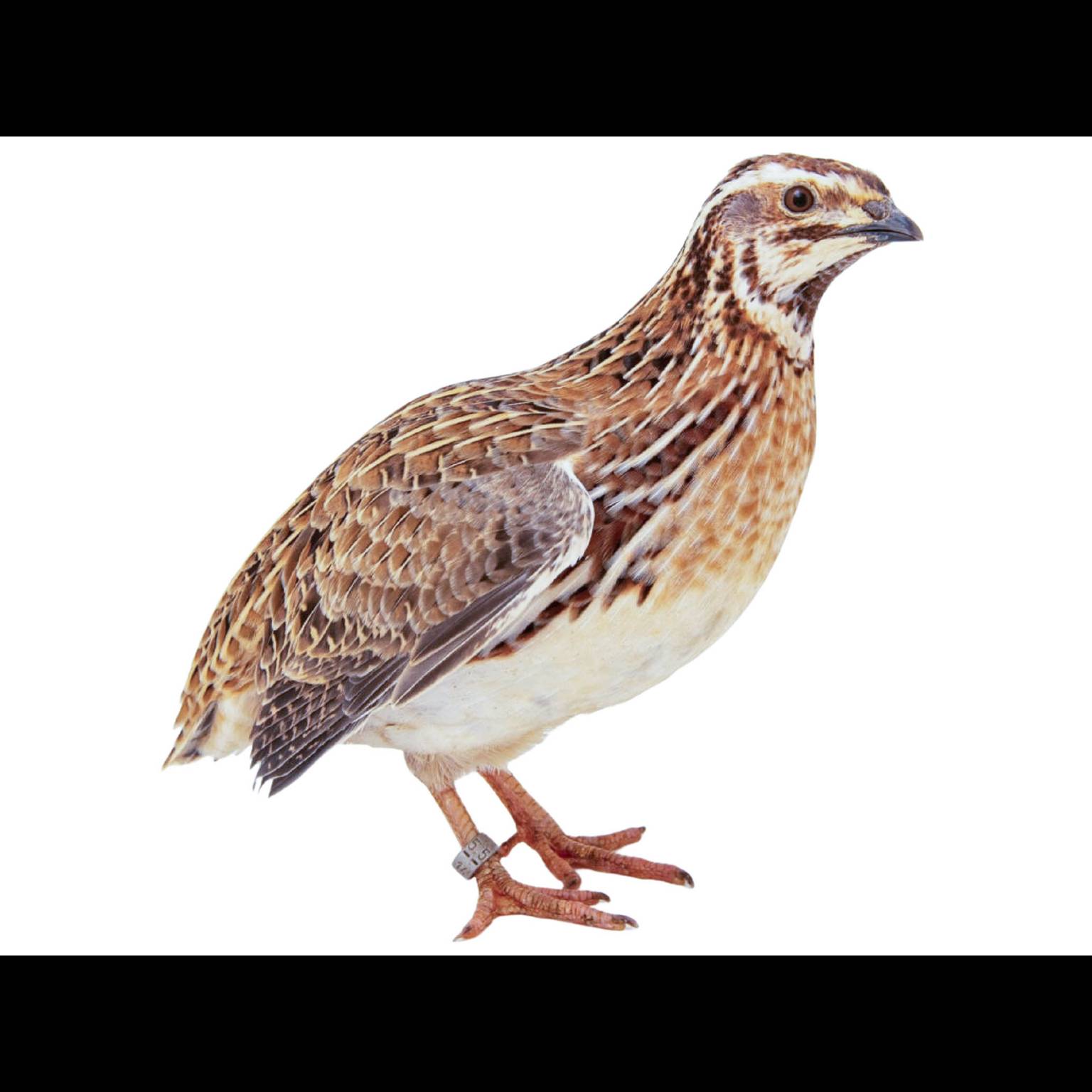
The Common Quail, often referred to as 'Puyuh' in Southeast Asia, is a small, ground-dwelling game bird belonging to the pheasant family. It is known for its cryptic plumage, short tail, and distinctive 'wet-my-lips' call. This species is highly migratory across much of its range, undertaking long-distance journeys between breeding and wintering grounds.
Ukuran dan masa hidup
- Panjang
- 16-18 cm
- Bentang sayap
- 32-35 cm
- Berat
- 70-150 g (males typically lighter than females)
- Masa hidup
- 2-3 years in the wild, up to 5 years in captivity
- Makanan
- Omnivore
Ciri fisik
- Bulu
- Overall cryptic brown and buff streaked plumage, providing excellent camouflage in grasslands. Upperparts are dark brown with buff streaks and blackish barring. Underparts are paler buff, often with fine dark streaking on the flanks. Males have a distinctive dark throat patch and a dark stripe extending from the beak to behind the eye, often bordered by a white stripe. Females lack the prominent dark throat patch and facial markings, appearing more uniformly buff on the throat and breast.
- Bentuk paruh
- Short, conical, and stout, adapted for pecking seeds and insects from the ground. Color is typically dark horn to brownish.
- Warna mata
- Dark brown.
- Warna kaki
- Pale flesh to yellowish-brown.
- Ciri pembeda
- Small size, short tail, streaked brown plumage, and the male's distinctive dark throat and facial markings. When flushed, it flies with rapid, whirring wingbeats close to the ground before dropping back into cover.
- Penampilan muda
- Juveniles resemble adult females but are generally duller, with less defined streaking and a more mottled appearance. Their plumage is softer and less compact.
- Perubahan musiman
- No significant seasonal plumage changes beyond wear and tear. Breeding plumage is essentially the same as non-breeding plumage, though colors may appear fresher after a molt.
- Dimorfisme seksual
- Males have a prominent dark brown or black throat patch and a dark stripe from the gape to behind the eye, often bordered by a white supercilium. Females lack these prominent markings, having a plain buffy throat and breast, sometimes with faint streaking. Females are also generally slightly larger and heavier than males.
Cara identifikasi
- 1
Size and Shape
Look for a very small, plump, short-tailed game bird that is often seen running on the ground or flushed from dense cover.
- 2
Plumage (General)
Observe the cryptic, streaked brown and buff plumage, which provides excellent camouflage. Look for dark barring on the upperparts and paler underparts.
- 3
Male Facial Markings
For males, identify the distinctive dark brown/black throat patch and the dark stripe extending from the gape to behind the eye, often bordered by a white supercilium.
- 4
Female Plumage
Females lack the prominent dark throat and facial markings, appearing more uniformly buff on the throat and breast, sometimes with faint streaking.
- 5
Flight Pattern
If flushed, note the explosive, low, and direct flight with rapid, whirring wingbeats, followed by a quick drop back into cover.
- 6
Vocalization
Listen for the male's characteristic 'wet-my-lips' or 'quick-quick-quick' song, especially at dawn and dusk during the breeding season. This is often the easiest way to detect their presence.
Habitat dan persebaran
- Bioma
- Grasslands, agricultural fields, steppes, open woodlands, and heathlands.
- Persebaran geografis
- Widespread across Europe, Asia, and Africa. Breeds across most of Europe and temperate Asia, and winters in Africa and parts of India. Some populations are resident in parts of Africa and the Indian subcontinent.
- Rentang ketinggian
- Sea level up to 3,000 meters, depending on the region and season.
- Lingkungan yang disukai
- Prefers dense, tall vegetation for cover, such as cereal crops (wheat, barley), hayfields, meadows, and natural grasslands. Avoids dense forests and arid deserts.
Perilaku
- Waktu aktivitas
- Diurnal, but most active during dawn and dusk. Migratory flights occur at night.
- Kebiasaan makan
- Primarily ground-foraging. Diet consists mainly of seeds from grasses and weeds, supplemented by insects (beetles, ants, grasshoppers, caterpillars) and their larvae, especially during the breeding season. Chicks are almost entirely insectivorous initially.
- Perilaku sosial
- Generally solitary or found in pairs during the breeding season. During migration, they can form loose flocks. They are highly secretive and difficult to observe.
- Pola terbang
- Reluctant to fly, preferring to run and hide in dense cover. When flushed, it takes off with a sudden, explosive burst of rapid, whirring wingbeats, flying low and straight for a short distance before dropping back into vegetation. Flight is generally weak and not sustained for long periods, except during migration.
- Pola migrasi
- Highly migratory across much of its range. European and Asian populations migrate south to winter in Africa and India. African populations can be resident or undertake local movements. Migration occurs at night, often in large numbers.
- Teritorialitas
- Males establish and defend territories during the breeding season, primarily through vocalizations. They are polygynous, with males often mating with multiple females.
Kicauan dan suara
- Kicauan
- The male's distinctive song is a loud, three-syllable 'wet-my-lips' or 'quick-quick-quick' call, often transcribed as 'whit-whit-whit' or 'quip-quip-quip'. It is repetitive and can be heard frequently during the breeding season, especially at dawn and dusk.
- Panggilan
- Various soft clucking and chirping calls, particularly between mates or with chicks. A sharp 'prrrrt' alarm call is given when flushed.
- Kapan bersuara
- Males sing most frequently during the breeding season (spring and early summer), primarily at dawn and dusk, but also throughout the day and sometimes at night.
Reproduksi
- Musim kawin
- April to August in temperate regions, varying geographically. Can have multiple broods in warmer climates.
- Kebiasaan bersarang
- Nests are simple scrapes on the ground, typically well-hidden in dense vegetation, often at the base of a tussock or shrub. Lined with grass and leaves.
- Jumlah telur
- 6-12 eggs, typically 8-10.
- Deskripsi telur
- 6-12 (occasionally up to 18) eggs per clutch. Eggs are pale buff to yellowish-brown, heavily spotted and blotched with dark brown or black. Oval-shaped, approximately 30x23 mm.
- Masa inkubasi
- 17-20 days, primarily by the female.
- Masa terbang
- Chicks are precocial, leaving the nest shortly after hatching. They can fly short distances at about 11 days and are fully independent at 30-50 days.
- Perawatan orang tua
- Mainly by the female. She incubates the eggs and cares for the chicks. Males may sometimes stay in the vicinity but generally do not participate in incubation or direct chick rearing.
Di mana ditemukan
Agricultural Fields
Look in fields of wheat, barley, oats, and other cereal crops, especially those with dense undergrowth or weedy margins.
Hayfields and Meadows
Search in tall, uncut hayfields, natural meadows, and pastures with sufficient cover.
Grasslands and Steppes
Explore open grasslands and steppe habitats, particularly those with a mix of tall grasses and low shrubs.
Heathlands
In some regions, they can be found in heathland areas with suitable ground cover.
Tips lapangan
- Listen for the Call. The Common Quail is far more often heard than seen. Learn its distinctive 'wet-my-lips' song and listen for it, especially at dawn and dusk during the breeding season. This is the most reliable method for detection.
- Walk Slowly Through Cover. If you suspect their presence, walk slowly and methodically through dense grassy or cropped areas. They will often flush at close range.
- Look for Movement. Scan the ground for subtle movements in dense vegetation. Their cryptic plumage makes them very difficult to spot when stationary.
- Be Patient. Quails are secretive. Patience is key. You might need to spend considerable time in suitable habitat to get a glimpse.
- Observe During Migration. During migration periods, they may be found in less typical habitats as they rest and refuel. Coastal areas or open fields along migratory routes can be productive.
Spesies serupa
Japanese Quail
Coturnix japonica
Very similar in appearance and often considered conspecific with Common Quail. Males of Japanese Quail typically have a plain rufous throat without the distinct dark anchor-shaped mark of the Common Quail. Females are virtually indistinguishable in the field. Range overlap occurs in parts of Asia.
Rain Quail
Coturnix coromandelica
Smaller and darker overall. Males have a prominent black breast band and a black patch on the lower throat. Found in the Indian subcontinent and Southeast Asia.
Stubble Quail
Coturnix pectoralis
Found in Australia. Males have a distinctive black breast band and a white throat with a black central stripe. Females are similar to Common Quail females but generally paler.
Fakta singkat
- Status:
- Migratory (most populations), Resident (some African/Asian populations)
- Diet:
- Seeds, insects
- Habitat:
- Grasslands, agricultural fields
- Vocalization:
- Distinctive 'wet-my-lips' song
- Nesting:
- Ground scrape in dense cover
- Conservation:
- Least Concern (globally, but declining in some regions)
Fakta menarik
- The Common Quail is the only Old World quail with a truly migratory nature, undertaking impressive long-distance journeys.
- Despite its small size, it is a popular game bird and has been hunted for centuries, leading to population declines in some areas.
- Its scientific name 'Coturnix coturnix' is an example of a tautonym, where the genus and species names are the same.
- The male's song is so characteristic that it has been used in folklore and literature across its range.
- Quail eggs are considered a delicacy in many cultures and are smaller than chicken eggs but proportionally richer in nutrients.
Klasifikasi ilmiah
- Kerajaan
- Animalia
- Filum
- Chordata
- Kelas
- Aves
- Ordo
- Galliformes
- Famili
- Phasianidae
- Genus
- Coturnix
- Spesies
- Coturnix coturnix
Jelajahi Common Quail
Identifikasi burung di mana saja
Gratis di iOS, Android, dan Web. Identifikasi foto & suara, database spesies lengkap, dan daftar pribadi Anda.