
Melihat burung? Identifikasi seketika dengan aplikasi Birdby
Buka aplikasiTentang
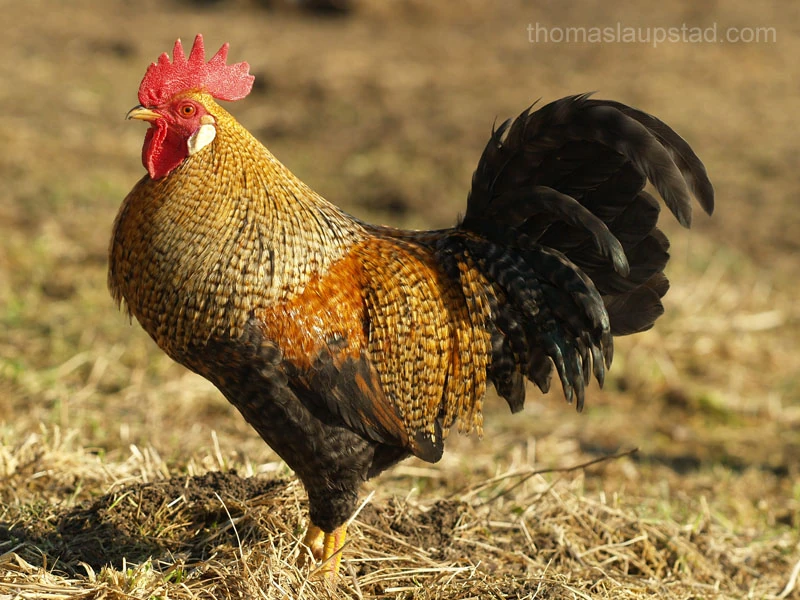
Ayam Kampung, literally meaning 'village chicken' in Indonesian and Malay, refers to the indigenous chicken breeds found throughout Southeast Asia. They are a domesticated subspecies of the Red Junglefowl (Gallus gallus) and are characterized by their diverse plumage, robust nature, and adaptability to free-range environments. Unlike commercial broiler or layer breeds, Ayam Kampung are not bred for specific high-yield traits but rather for their hardiness, foraging ability, and traditional culinary value.
Ukuran dan masa hidup
- Panjang
- Male: 65-70 cm; Female: 40-45 cm
- Bentang sayap
- Male: 70-80 cm; Female: 50-60 cm
- Berat
- Male: 2.0-3.5 kg; Female: 1.0-2.0 kg
- Masa hidup
- 5-8 years (in free-range conditions, can be longer in protected environments)
- Makanan
- Omnivore
Ciri fisik
- Bulu
- Highly variable. Males (roosters) typically exhibit vibrant, iridescent plumage with long, flowing tail feathers and hackle feathers. Common colors include red, black, gold, white, and various combinations. Females (hens) generally have more subdued, cryptic plumage, often mottled brown, black, or grey, providing camouflage during nesting. Plumage can be solid, barred, spangled, or penciled.
- Bentuk paruh
- Strong, conical, and slightly curved, adapted for pecking and foraging. Color varies from yellow to horn-colored or dark grey.
- Warna mata
- Varies, commonly reddish-brown, orange, or dark brown.
- Warna kaki
- Typically yellow, grey, or black, often unfeathered, with four toes. Males possess prominent spurs on their tarsi.
- Ciri pembeda
- Presence of a comb (single, rose, pea, or V-shaped) and wattles (red fleshy growths below the beak). Males have larger, more prominent combs and wattles. Their overall body shape is more slender and athletic compared to many commercial breeds, reflecting their active foraging lifestyle.
- Penampilan muda
- Chicks are covered in down, typically yellow, brown, or mottled. As they mature, they gradually develop adult plumage, with males showing early signs of comb and wattle development and longer tail feathers.
- Perubahan musiman
- No significant seasonal plumage changes. Plumage remains consistent year-round, though feather condition may vary with molting cycles.
- Dimorfisme seksual
- Pronounced. Males are significantly larger, more colorful, and possess larger combs, wattles, and spurs. Their tail feathers are longer and more arched. Females are smaller, duller in coloration, and lack prominent spurs.
Cara identifikasi
- 1
Overall Build and Agility
Look for a more slender, athletic body shape compared to commercial chickens. They are active foragers and appear more agile.
- 2
Plumage Diversity
Observe the wide variety of feather colors and patterns within a flock. This high variability is a hallmark of Ayam Kampung, contrasting with the more uniform appearance of specific commercial breeds.
- 3
Comb and Wattles
Note the size and shape of the comb and wattles. Males will have larger, more prominent red fleshy growths. The comb type can vary (single, rose, pea, etc.).
- 4
Legs and Spurs
Check leg color (yellow, grey, or black) and the presence of spurs on males, which are sharp bony protrusions on the back of the legs.
- 5
Behavioral Traits
Their strong foraging instinct, tendency to roost in trees or elevated structures, and wary nature (compared to highly domesticated breeds) are good indicators.
- 6
Vocalizations
The rooster's crow and the hen's clucking are characteristic, though similar to other chicken types.
Habitat dan persebaran
- Bioma
- Tropical and subtropical agricultural landscapes, rural villages, forest edges, and open woodlands.
- Persebaran geografis
- Widespread throughout Southeast Asia, including Indonesia, Malaysia, Thailand, Philippines, Vietnam, and other neighboring countries. Also found in diaspora communities globally.
- Rentang ketinggian
- Sea level up to approximately 1,500 meters, adapting to various altitudes where human settlements and agriculture are present.
- Lingkungan yang disukai
- Free-range environments around human dwellings, farms, and villages, where they can forage for food. They prefer areas with access to shelter (trees, bushes, human structures) and open ground for dust bathing and foraging.
Perilaku
- Waktu aktivitas
- Diurnal, most active during daylight hours, foraging in the morning and late afternoon, and roosting at night.
- Kebiasaan makan
- Highly opportunistic omnivores. They forage extensively, scratching the ground for insects, worms, seeds, grains, fallen fruits, and tender vegetation. They also consume kitchen scraps and supplementary feed provided by humans.
- Perilaku sosial
- Live in social groups, typically a flock consisting of a dominant rooster, several hens, and their offspring. They establish a pecking order within the flock. Roosters are territorial and will defend their hens and foraging areas.
- Pola terbang
- Capable of short, powerful flights, primarily for escaping predators, reaching roosting spots in trees, or crossing obstacles. Not sustained long-distance flyers.
- Pola migrasi
- Non-migratory; resident birds.
- Teritorialitas
- Males are highly territorial, especially during the breeding season, using vocalizations and aggressive displays to ward off rival roosters. Hens can also be territorial around their nests.
Kicauan dan suara
- Kicauan
- The characteristic 'crow' of the rooster is a loud, multi-syllabic vocalization, often described as 'cock-a-doodle-doo'. The exact pattern and timbre can vary slightly between individuals and local populations. It serves to announce territory, challenge rivals, and signal dawn.
- Panggilan
- Hens produce a variety of clucking sounds, ranging from soft contentment calls while foraging to louder alarm calls when sensing danger. They also emit specific calls to gather their chicks or announce egg-laying. Chicks have high-pitched peeping calls.
- Kapan bersuara
- Roosters crow most frequently at dawn, but also throughout the day, especially in response to other roosters or perceived threats. Hens vocalize regularly during foraging, nesting, and when interacting with their flock.
Reproduksi
- Musim kawin
- Year-round in tropical climates, with peaks often coinciding with favorable weather conditions (e.g., after rainy seasons).
- Kebiasaan bersarang
- Hens typically seek secluded, sheltered spots on the ground, often under bushes, in tall grass, or in abandoned structures. They create a simple scrape lined with available soft materials like leaves or straw.
- Jumlah telur
- 6-15 eggs, with an average of 8-12.
- Deskripsi telur
- Eggs are typically small to medium-sized, oval, and range in color from white to cream, light brown, or sometimes tinted blue/green depending on the specific genetic lineage. Shells are generally smooth.
- Masa inkubasi
- 20-21 days.
- Masa terbang
- Chicks are precocial and can walk and feed themselves shortly after hatching. They remain with the hen for several weeks to months for protection and guidance.
- Perawatan orang tua
- The hen provides sole parental care, brooding the eggs, protecting the chicks, and teaching them to forage. Roosters do not participate directly in incubation or chick rearing but provide protection for the flock.
Di mana ditemukan
Rural Villages and Farms
The most common place to find Ayam Kampung, as they are traditionally kept as free-range poultry by local communities.
Forest Edges and Agricultural Lands
They often forage in areas bordering human settlements, where they can find natural food sources and shelter.
Traditional Markets
Live Ayam Kampung are frequently sold in local markets throughout Southeast Asia.
Tips lapangan
- Look for free-ranging chickens. Ayam Kampung are typically not confined to coops but allowed to roam freely during the day.
- Listen for vocalizations. The distinctive crow of a rooster or the clucking of hens can indicate their presence.
- Observe foraging behavior. Watch for chickens scratching the ground, pecking at insects, and generally being active and alert.
- Note plumage diversity. If you see a flock with a wide array of colors and patterns, it's likely Ayam Kampung.
Spesies serupa
Red Junglefowl
Gallus gallus
Ayam Kampung are domesticated descendants of the Red Junglefowl. While sharing many similarities, Red Junglefowl are generally more wary, smaller, and have a more uniform, wild-type plumage (especially males with their distinct red, gold, and black pattern). Ayam Kampung exhibit a much wider range of plumage colors and patterns due to selective breeding and genetic drift under domestication. Red Junglefowl also typically have grey legs, whereas Ayam Kampung can have yellow, grey, or black legs.
Commercial Chicken Breeds
Gallus gallus domesticus (various breeds)
Commercial breeds (e.g., Broilers, Leghorns, Rhode Island Reds) are typically bred for specific traits like rapid growth, high egg production, or specific meat quality. They often have a more uniform appearance within their breed, are larger, heavier, and less agile than Ayam Kampung. Ayam Kampung retain more of the ancestral traits of the Red Junglefowl, including strong foraging instincts and a more athletic build.
Fakta singkat
- Common Name:
- Ayam Kampung
- Scientific Name:
- Gallus gallus domesticus
- Origin:
- Southeast Asia (domesticated from Red Junglefowl)
- Diet:
- Omnivore
- Habitat:
- Rural areas, farms, villages, forest edges
- Social Behavior:
- Flocking, hierarchical
- Conservation Status:
- Domesticated
Fakta menarik
- The term 'Ayam Kampung' literally translates to 'village chicken' in Malay and Indonesian, highlighting its traditional association with rural communities.
- Despite being domesticated, Ayam Kampung retain many of the survival instincts of their wild ancestor, the Red Junglefowl, including strong foraging abilities and predator awareness.
- Ayam Kampung meat is highly prized in Southeast Asian cuisine for its leaner texture and distinct flavor compared to commercial broiler chickens.
- Their eggs are often smaller than those from commercial layer hens but are valued for their rich yolk and perceived natural quality.
- The genetic diversity within Ayam Kampung populations is vast, contributing to their adaptability to various local environments and disease resistance.
Klasifikasi ilmiah
- Kerajaan
- Animalia
- Filum
- Chordata
- Kelas
- Aves
- Ordo
- Galliformes
- Famili
- Phasianidae
- Genus
- Gallus
- Spesies
- Gallus gallus domesticus
Jelajahi Ayam Kampung
Identifikasi burung di mana saja
Gratis di iOS, Android, dan Web. Identifikasi foto & suara, database spesies lengkap, dan daftar pribadi Anda.