
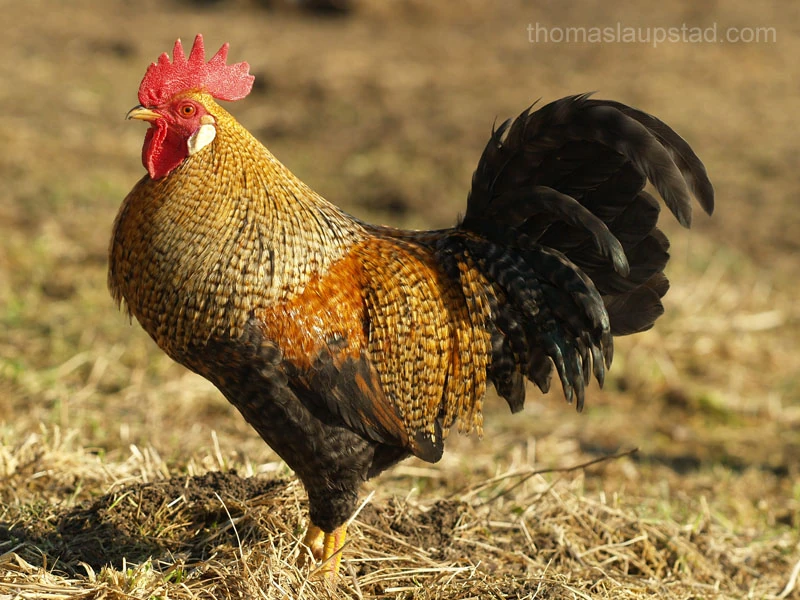
Come identificare Domestic Chicken (Chick)
Gallus gallus domesticus
Visto un uccello? Identificalo all'istante con l'app Birdby
Apri l'appPer identificare correttamente Domestic Chicken (Chick) (Gallus gallus domesticus), controlla ciascuna di queste caratteristiche. Gli uccelli possono essere complicati da riconoscere, perché comportamento, habitat e canto spesso confermano ciò che una sola foto non può.
Dimensioni a colpo d'occhio
- Lunghezza
- Approximately 8-15 cm (3-6 inches)
- Apertura alare
- Approximately 10-20 cm (4-8 inches)
- Peso
- Approximately 30-80 grams (1-3 ounces) at hatching, growing rapidly
Caratteristiche fisiche da controllare
- 1
Piumaggio
Colorazione e disegno generale del piumaggio.
Chicks are covered in soft, dense down feathers. Common colors include yellow, brown, black, white, or a mix, often with stripes or spots, particularly on the back and head, providing camouflage. The specific color depends on the breed of the parent chickens.
- 2
Forma del becco
Forma e colore del becco, un segno di campo chiave.
Small, pointed, and conical, typically yellowish or brownish, adapted for pecking small food items.
- 3
Colore degli occhi
Colore dell'iride e segni distintivi sugli occhi.
Typically dark brown or black, appearing large relative to the head size.
- 4
Colore delle zampe
Colore di zampe e piedi.
Varies by breed, but often yellowish, orange, or grayish, with small scales and undeveloped spurs.
- 5
Caratteristiche distintive
Tratti distintivi che separano questa specie.
Small size, downy plumage, large eyes, and characteristic 'peeping' vocalizations. Often exhibit a 'broody patch' on the back of the head or wings in some breeds, which are darker markings.
- 6
Aspetto giovanile
Come i giovani si differenziano dagli adulti.
The 'Pulcino' itself is the juvenile stage. As they grow, down feathers are replaced by true feathers, and they gradually take on the appearance of adult chickens, with developing combs, wattles, and adult plumage patterns.
- 7
Cambiamenti stagionali
Variazione del piumaggio tra stagione riproduttiva e non.
Not applicable to chicks; their appearance changes with age (development) rather than season.
- 8
Dimorfismo sessuale
Differenze tra maschi e femmine.
Minimal to non-existent in newly hatched chicks. Sexing is often done through vent sexing or feather sexing in specific breeds, but visual differences are not apparent until several weeks or months of age when secondary sexual characteristics (comb, wattles, feathering) begin to develop.
Segni di campo chiave
- Size and Shape. Small, round, fluffy body with relatively large head and eyes. Typically 8-15 cm in length.
- Plumage. Covered in soft, dense down feathers, not true feathers. Colors vary widely (yellow, brown, black, white, striped) depending on breed.
- Vocalization. Characteristic high-pitched 'peep' or 'cheep' calls, varying in intensity based on need.
- Behavior. Active pecking and scratching behavior, often huddling together or staying close to a mother hen/brooder for warmth.
- Legs and Feet. Small, scaly legs with four toes (three forward, one backward), adapted for walking and scratching.
Esplora Domestic Chicken (Chick)
Identifica uccelli ovunque
Gratis su iOS, Android e Web. Identificazione per foto e suono, database completo e la tua lista personale.