
Құс көрдіңіз бе? Birdby қолданбасымен оны бірден анықтаңыз
Қолданбаны ашуСипаттама
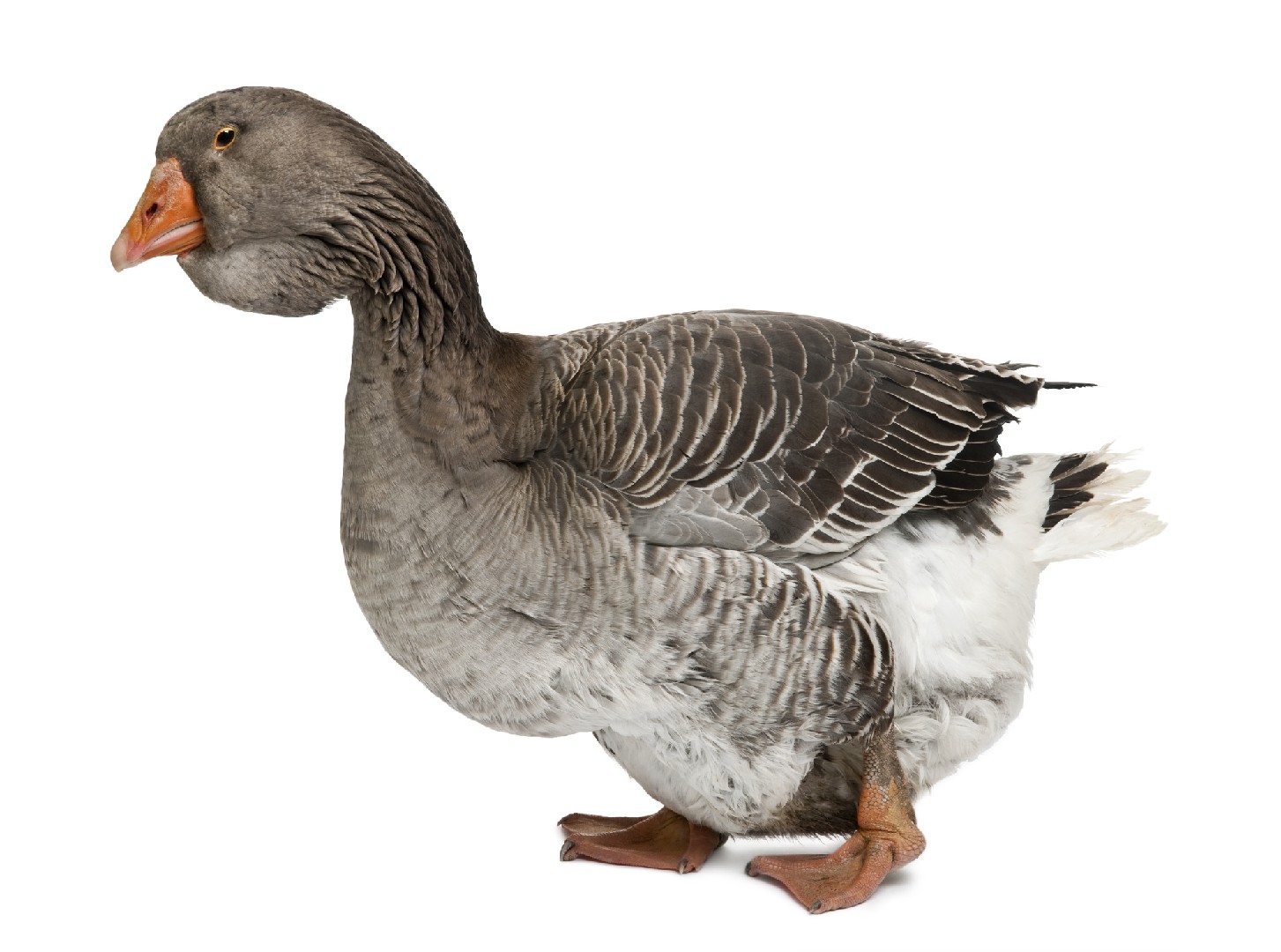
The Domestic Goose, or 'Kaz' in many contexts, is a domesticated descendant of the Greylag Goose (Anser anser) or, less commonly, the Swan Goose (Anser cygnoides). It is primarily raised for meat, eggs, and down feathers. Domestic geese are known for their robust build, strong territorial instincts, and often loud vocalizations. They exhibit a wide range of plumage colors and sizes due to selective breeding over centuries.
Көлемі мен өмір ұзақтығы
- Ұзындық
- 75-110 cm (30-43 in)
- Қанат қанаты
- 130-180 cm (51-71 in)
- Салмақ
- 3-15 kg (6.6-33 lbs), highly variable by breed
- Өмір ұзақтығы
- 10-20 years (up to 30 years in captivity)
- Тамақтану
- Herbivore
Дене бітімі
- Жүн
- Highly variable depending on the breed. Common colors include pure white, grey, pied (grey and white), and buff. Some breeds retain the wild-type grey plumage of the Greylag Goose, often with a white vent. White breeds are common, lacking melanin. Plumage is dense and waterproof.
- Тұмсық пішіні
- Strong, conical, and relatively short, adapted for grazing. Color varies by breed, typically orange, pinkish-orange, or sometimes blackish. Some breeds, like the African Goose, have a prominent knob at the base of the bill.
- Көз түсі
- Usually blue, brown, or hazel, depending on the breed and plumage color.
- Аяқ түсі
- Typically orange or pinkish-orange, stout and webbed for swimming.
- Ерекше белгілер
- Generally larger and heavier-bodied than their wild ancestors. Many breeds have a more upright posture. Some breeds possess a dewlap (a fold of skin under the chin) or a prominent knob on the bill. The loud, honking call is also a key identifier.
- Балапанның сыртқы келбеті
- Goslings are covered in soft down, typically yellow or grey, often with darker markings. They grow rapidly, developing adult plumage within a few months, though full size and sexual maturity take longer.
- Маусымдық өзгерістер
- Domestic geese do not exhibit significant seasonal plumage changes like many wild birds. Their plumage remains consistent year-round, though they undergo molting periods where feathers are replaced.
- Жыныс айырмашылығы
- Males (ganders) are generally larger and heavier than females (geese) within the same breed, and often have a thicker neck and a more pronounced knob on the bill (if present). Behavioral differences, such as ganders being more aggressive, are also noticeable, especially during breeding season.
Қалай анықтау
- 1
Size and Build
Look for a large, heavy-bodied waterfowl, often appearing more robust and less streamlined than wild geese. Many breeds have a distinctly upright posture.
- 2
Plumage Color
Observe the plumage. Pure white, pied (patches of grey and white), or buff colors are strong indicators of domestic geese, as these are rare in wild goose species. Some may be grey, but often with a white vent or other domestic traits.
- 3
Bill and Legs
Note the bill color (often orange or pinkish-orange) and the presence of a knob on the bill (especially in breeds like African or Chinese Geese) or a dewlap under the chin. Legs are typically orange.
- 4
Vocalization
Listen for the characteristic loud, often aggressive honking and hissing. This differs from the calls of most wild geese.
- 5
Behavior and Location
Observe their behavior. Domestic geese are typically found in human-modified environments (farms, parks) and are often less wary of humans than wild geese. Their inability to fly long distances is also a key clue.
Мекендеу және таралу
- Биомдар
- Anthropogenic (human-modified environments), typically found in agricultural settings, farms, parks, and rural homesteads. They are often associated with freshwater sources.
- Географиялық таралу
- Worldwide, wherever humans raise livestock. Originating from Eurasia (Greylag Goose) and East Asia (Swan Goose).
- Биіктік шегі
- Primarily lowlands and agricultural plains, rarely found at high altitudes.
- Ұнатқан орталар
- Pastures, meadows, open fields with access to fresh water (ponds, lakes, slow-moving rivers). They require shelter from extreme weather and predators, often provided by human structures.
Мінез
- Белсенділік уақыты
- Diurnal, active during daylight hours, primarily grazing and foraging.
- Тамақтану әдеттері
- Primarily grazers, feeding on grasses, clover, weeds, and other herbaceous vegetation. They also consume grains, seeds, and some aquatic plants. They use their strong bills to pluck and tear vegetation.
- Әлеуметтік мінез
- Highly social birds, living in flocks. They form strong pair bonds and family units. Known for their protective and territorial nature, especially ganders, who will aggressively defend their flock, nest, and young.
- Ұшу үлгісі
- While capable of flight, many domestic goose breeds are too heavy to fly effectively or sustain long flights. Lighter breeds can fly, often with powerful, direct flight on strong wingbeats. They typically fly in V-formations if migrating or moving in groups.
- Қоныс аудару
- Non-migratory. As domesticated animals, their movements are typically restricted to their immediate environment or managed by humans. Their wild ancestors (Greylag Geese) are migratory.
- Аумақтылық
- Highly territorial, particularly during the breeding season. Ganders will aggressively chase away perceived threats, including humans, other animals, and even vehicles, often hissing and biting.
Ән мен дауыстар
- Ән
- Domestic geese do not have a 'song' in the typical avian sense. Their vocalizations are primarily calls.
- Шақыру
- Loud, resonant honks and hisses. The honk is a characteristic 'Haa-onk' or 'Ga-ga-ga' sound, varying in intensity and rhythm depending on the situation. Hissing is a common warning or threat display, often accompanied by an outstretched neck and open bill.
- Қашан дауыс шығарады
- Vocalize throughout the day, especially when alarmed, communicating with the flock, or during territorial displays. They can be particularly noisy at dawn and dusk, or when disturbed.
Көбею
- Көбею маусымы
- Typically late winter to early summer, varying by climate and breed (e.g., February to June in temperate regions).
- Ұя салу әдеттері
- Nests are usually built on the ground, often in a secluded, sheltered spot near water. The female constructs a shallow depression lined with grass, reeds, and down feathers plucked from her own breast. Ganders guard the nesting site.
- Жұмыртқа саны
- 5-15 eggs, with an average of 8-12. Some breeds are selected for higher egg production.
- Жұмыртқа сипаттамасы
- Large, oval, and typically white or off-white. The shell is thick and smooth. Size varies significantly by breed, ranging from 120-200 grams (4.2-7 oz).
- Инкубация мерзімі
- 28-32 days, primarily by the female, though the gander remains nearby to guard.
- Ұядан шығу мерзімі
- Goslings are precocial, meaning they are covered in down and able to walk and feed themselves shortly after hatching. They remain with their parents for several weeks to months, learning foraging and social behaviors. They are not 'fledged' in the sense of leaving a nest, but rather grow to independence.
- Ата-ана қамқорлығы
- Both parents are highly protective of their goslings. The female leads the young to forage, and the gander actively defends the family unit from predators and other perceived threats.
Қайда табуға болады
Farms and Agricultural Areas
The most common place to find domestic geese, often grazing in pastures or near farm buildings.
Parks and Ponds
Many public parks, especially those with ponds or lakes, keep domestic geese as ornamental birds or for pest control.
Rural Homesteads
Commonly kept by individuals in rural and semi-rural settings for various purposes.
Дала кеңестері
- Look for groups. Domestic geese are social and are almost always found in flocks or family groups.
- Listen for calls. Their loud honking often gives away their presence before they are seen.
- Observe behavior. Note their grazing habits and their often bold or aggressive territorial displays, especially by ganders.
- Check for human association. Their presence in close proximity to human dwellings or managed landscapes is a strong indicator of their domestic nature.
Ұқсас түрлер
Greylag Goose
Anser anser
The wild ancestor. Domestic geese are generally larger, heavier, and often have a more upright posture. Many domestic breeds are pure white or pied, unlike the uniformly grey Greylag. Wild Greylags are migratory, while domestic geese are not. Domestic geese may also have a dewlap or bill knob not present in wild Greylags.
Swan Goose
Anser cygnoides
Another wild ancestor, particularly for some Asian domestic breeds (e.g., African and Chinese Geese). Swan Geese are characterized by a long, slender neck and a prominent black bill with a white line at the base. Domestic breeds derived from Swan Geese often retain the knob on the bill and a more upright stance, but are typically much heavier and come in various colors (white, brown, grey).
Canada Goose
Branta canadensis
Distinctive black neck and head with a white 'chinstrap'. Smaller and more streamlined than most domestic geese. Plumage is typically brown and grey, not white or pied. Calls are different, a more resonant 'honk-a-lonk'.
Жылдам деректер
- Primary Use:
- Meat, eggs, down, weed control, guarding
- Ancestors:
- Greylag Goose (Anser anser) and Swan Goose (Anser cygnoides)
- Flight Capability:
- Variable; many breeds are too heavy for sustained flight
- Social Structure:
- Flocking, strong pair bonds
- Diet:
- Almost exclusively herbaceous vegetation
Қызықты деректер
- Geese were among the first animals to be domesticated, with evidence dating back over 3,000 years in Egypt.
- The famous 'Capitoline Geese' are said to have saved Rome by alerting guards to a Gallic invasion in 390 BC, demonstrating their excellent guarding abilities.
- Some domestic goose breeds, like the Toulouse, are known for their large dewlaps and heavy bodies, making them particularly prized for foie gras production.
- Geese have excellent memories and can recognize individuals, including humans, for many years.
- A group of geese on the ground is called a 'gaggle', while a group in flight is called a 'skein' or 'wedge'.
Ғылыми жіктеу
- Дүние
- Animalia
- Тип
- Chordata
- Класс
- Aves
- Отряд
- Anseriformes
- Тұқымдас
- Anatidae
- Туыс
- Anser
- Түр
- Anser anser domesticus
Domestic Goose туралы көбірек
Кез келген жерде құстарды анықтаңыз
iOS, Android және вебте тегін. Сурет пен дыбыс арқылы анықтау, толық түрлер базасы және жеке тізіміңіз.