
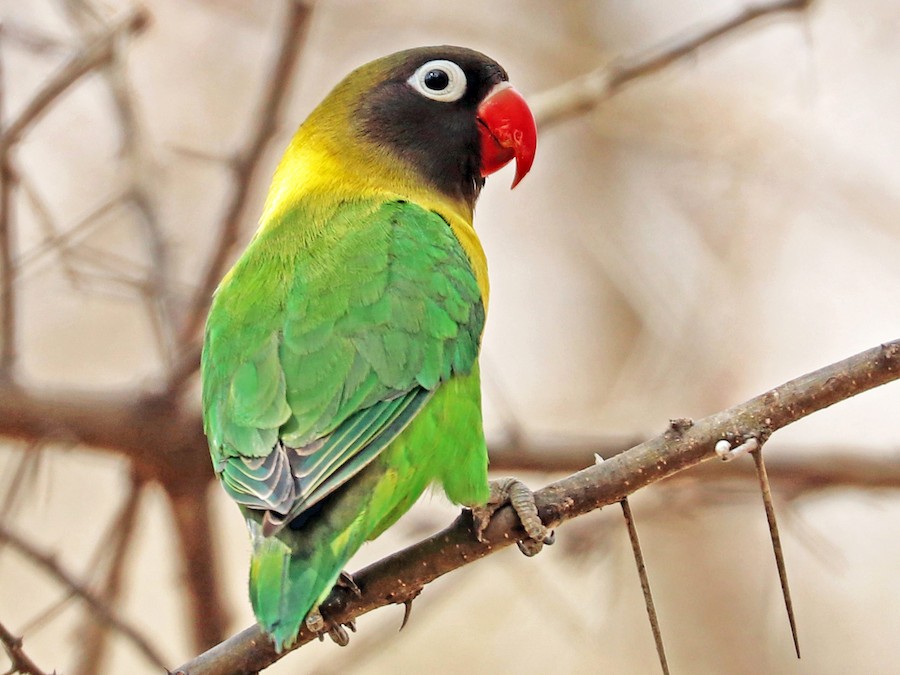
Where does the Yellow-collared Lovebird live?
Agapornis personatus
Spotted a bird? Identify it instantly with the Birdby app
Open the appThe Yellow-collared Lovebird lives in specific habitats and regions. Knowing where, and when, to look improves your chances of a successful sighting.
Biomes
Savanna, dry bushland, cultivated areas, and open woodlands.
Geographic range
Native to north-eastern Tanzania, particularly around the Serengeti National Park and the coastal regions. Feral populations exist in various urban areas worldwide due to escapes from captivity.
Preferred environments
Prefers areas with scattered acacia trees, baobabs, and other large trees for nesting and roosting, often near water sources. They adapt well to human-modified landscapes, including gardens and agricultural fields.
Elevation range
Typically found at elevations between 1,100 and 1,700 meters above sea level.
Where to look
Savanna and Bushland
Search in the dry savanna and bushland regions of north-eastern Tanzania, particularly areas with acacia and baobab trees.
Cultivated Areas and Gardens
They can often be found in agricultural fields, gardens, and suburban areas where food and nesting sites are available, especially in their native range and where feral populations exist.
Near Water Sources
Look for them near rivers, lakes, and other water bodies, as they require regular access to water.
Field tips
- Listen for Calls. Their loud, chattering calls often give away their presence before they are seen. Listen for these distinctive vocalizations, especially in the morning and late afternoon.
- Observe Flocks. Yellow-collared Lovebirds are highly social. Look for small to medium-sized flocks feeding on the ground or perched in trees.
- Check Tree Cavities. During the breeding season, observe tree cavities, especially in large acacia or baobab trees, as these are preferred nesting sites.
- Visit Waterholes. They visit waterholes regularly, especially during dry periods. Waiting near a water source can increase your chances of spotting them.
Migration
Resident; generally non-migratory, but may undertake local movements in search of food and water, especially during dry seasons.
Explore the Yellow-collared Lovebird
Identify birds anywhere
Free on iOS, Android, and Web. Photo & sound identification, full species database, and your personal life list.