
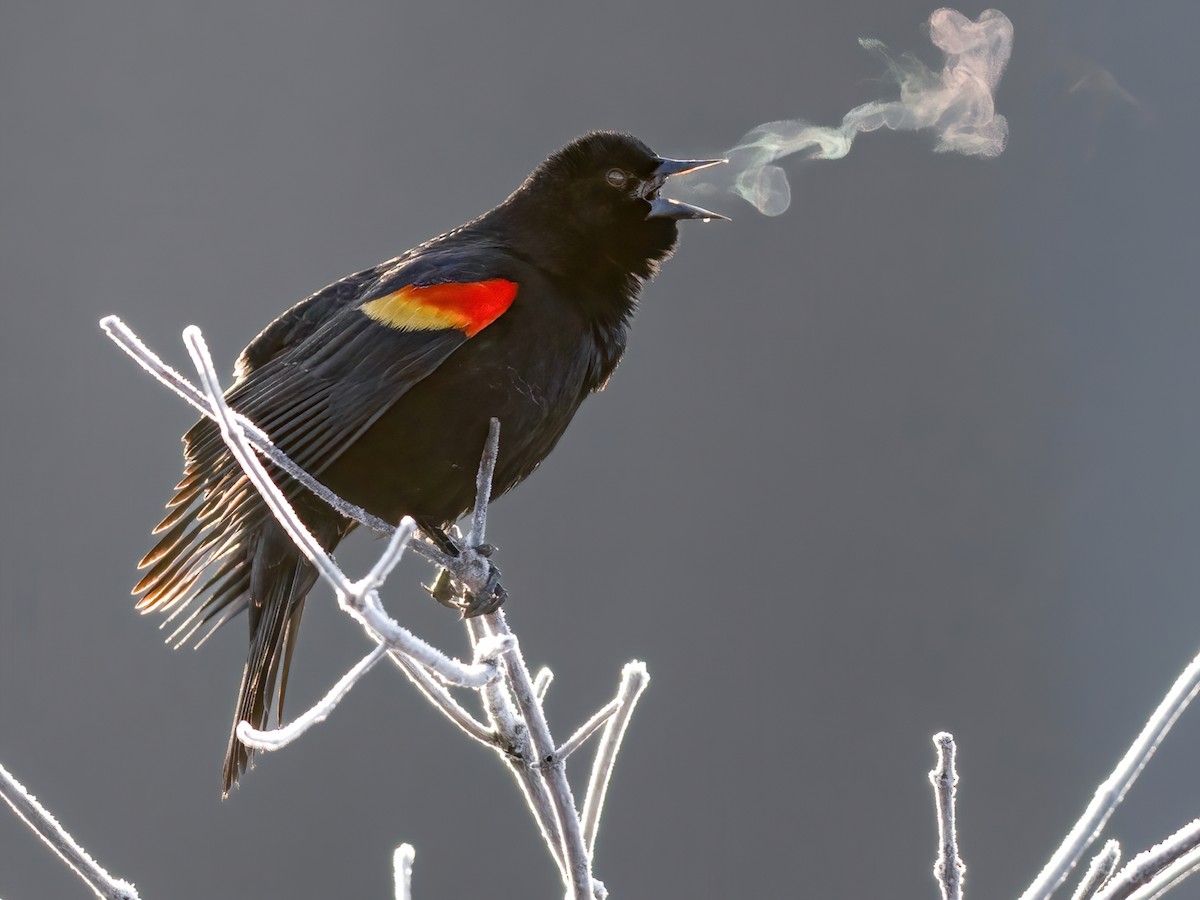
Where does the Red-winged Blackbird live?
Agelaius phoeniceus
Spotted a bird? Identify it instantly with the Birdby app
Open the appThe Red-winged Blackbird lives in specific habitats and regions. Knowing where, and when, to look improves your chances of a successful sighting.
Biomes
Wetlands, marshes, wet meadows, agricultural fields, open woodlands, suburban areas.
Geographic range
Breeds across most of North America, from Alaska and Canada south through the United States and into Central America. Winters across the southern United States and Mexico.
Preferred environments
Prefers areas with dense emergent vegetation (cattails, reeds) near water for nesting, and open fields or agricultural lands for foraging. Also common in roadside ditches and damp pastures.
Elevation range
Sea level up to approximately 2,500 meters (8,200 feet), primarily in lowlands.
Where to look
Marshes and Wetlands
These are prime breeding habitats. Look among cattails, reeds, and other emergent vegetation.
Agricultural Fields
Common in cornfields, rice paddies, and other grain fields, especially during migration and winter.
Roadsides and Ditches
Often seen perched on fences, utility lines, or in vegetation along roadsides, particularly in rural areas.
Bird Feeders
Will visit feeders, especially those offering black oil sunflower seeds or cracked corn, particularly in winter.
Field tips
- Listen for the song. The male's 'conk-la-ree!' song is very distinctive and often given from a prominent perch, making them easy to locate even before seeing them.
- Look for males displaying. During the breeding season, males frequently perch conspicuously and display their red epaulets, making them highly visible.
- Scan flocks in winter. In winter, look for large, mixed-species blackbird flocks in agricultural areas or roosting sites. Red-winged Blackbirds will be a dominant component.
- Check wetland edges. Walk along the edges of marshes and ponds; they are often perched on vegetation or flying low over the water.
Migration
Northern populations are migratory, moving south for the winter. Southern populations are largely resident. Migration occurs in large flocks, often at night, in early spring and late fall.
Explore the Red-winged Blackbird
Identify birds anywhere
Free on iOS, Android, and Web. Photo & sound identification, full species database, and your personal life list.