
How to identify the Red-winged Blackbird
Agelaius phoeniceus
Spotted a bird? Identify it instantly with the Birdby app
Open the appTo correctly identify the Red-winged Blackbird (Agelaius phoeniceus), check each of these features. Birds can be tricky: habit, habitat, and call often confirm a sighting that a single photo cannot.
Size at a glance
- Length
- 17-23 cm (6.7-9.1 in)
- Wingspan
- 31-40 cm (12.2-15.7 in)
- Weight
- 40-80 g (1.4-2.8 oz), males typically larger than females
Physical features to check
- 1
Plumage
Overall feather coloration and pattern.
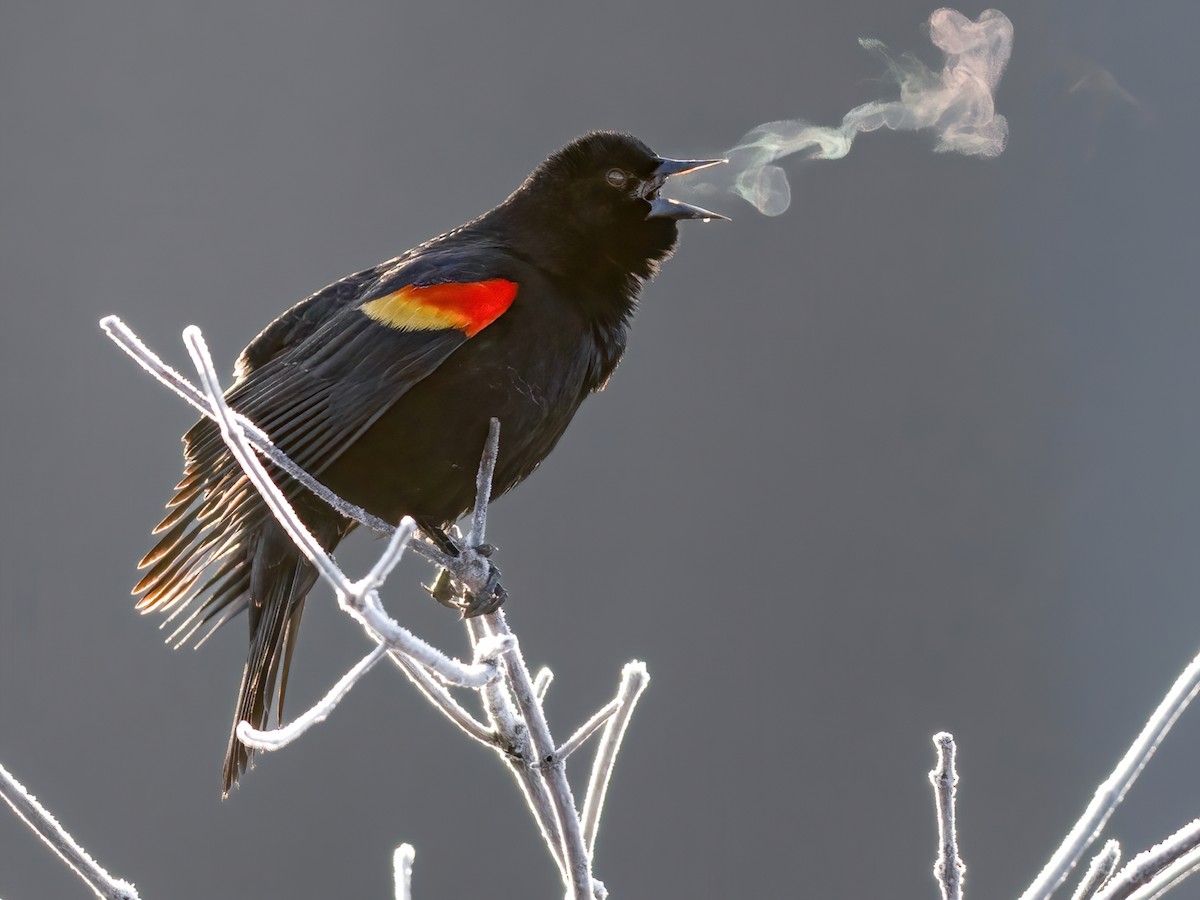
Adult males are glossy black with distinctive red shoulder patches (epaulets) bordered by a narrow band of yellow. Adult females are streaky brown overall, resembling a large sparrow, with a pale eyebrow, often a reddish tint on the shoulders, and sometimes a faint yellow wash on the throat. Juvenile males resemble females but may show some orange or dull red on the shoulders. Juvenile females are similar to adult females but often paler and more buffy.
- 2
Beak shape
Shape and color of the bill: a key field mark.
Conical, sharply pointed, black in color.
- 3
Eye color
Iris color and any distinctive eye markings.
Dark brown
- 4
Leg color
Leg and foot color.
Black
- 5
Distinguishing features
Standout features that separate this species.
The male's bright red and yellow epaulets are unmistakable. Females are identified by their streaky brown plumage, pale eyebrow, and often a sharp, pointed bill. The overall shape is robust with a relatively long tail.
- 6
Juvenile appearance
How young birds differ from adults.
Juveniles of both sexes are streaky brown, similar to adult females. Young males gradually acquire black plumage and dull orange-red epaulets, which become brighter with age. Young females are generally paler and more buffy than adult females.
- 7
Seasonal changes
Plumage variation between breeding and non-breeding seasons.
Plumage generally remains consistent year-round for adults. Males may show slightly duller epaulets in fresh fall plumage due to pale feather edgings that wear off by spring, revealing the brighter colors. Females show little seasonal variation.
- 8
Sexual dimorphism
How males and females differ.
Highly sexually dimorphic. Males are entirely glossy black with prominent red and yellow epaulets. Females are streaky brown with a pale eyebrow and lack the prominent red epaulets, though some may show a reddish wash on the shoulders.
Key field marks
- Male Plumage. Look for the unmistakable glossy black body with bright red shoulder patches bordered by yellow. These epaulets are often flared during displays.
- Female Plumage. Identify by the heavily streaked brown body, pale eyebrow, and often a reddish or buffy wash on the shoulders. They resemble large, dark sparrows but have a more pointed bill.
- Song. Listen for the distinctive 'conk-la-ree!' song, a gurgling, liquid sound often given from a high perch in wetlands.
- Habitat. Often found in wetlands, marshes, and open fields, especially near water. Their presence in such habitats is a strong clue.
- Behavior. Observe their territorial displays (males flaring epaulets) and their tendency to form large, noisy flocks outside the breeding season.
Explore the Red-winged Blackbird
Identify birds anywhere
Free on iOS, Android, and Web. Photo & sound identification, full species database, and your personal life list.