
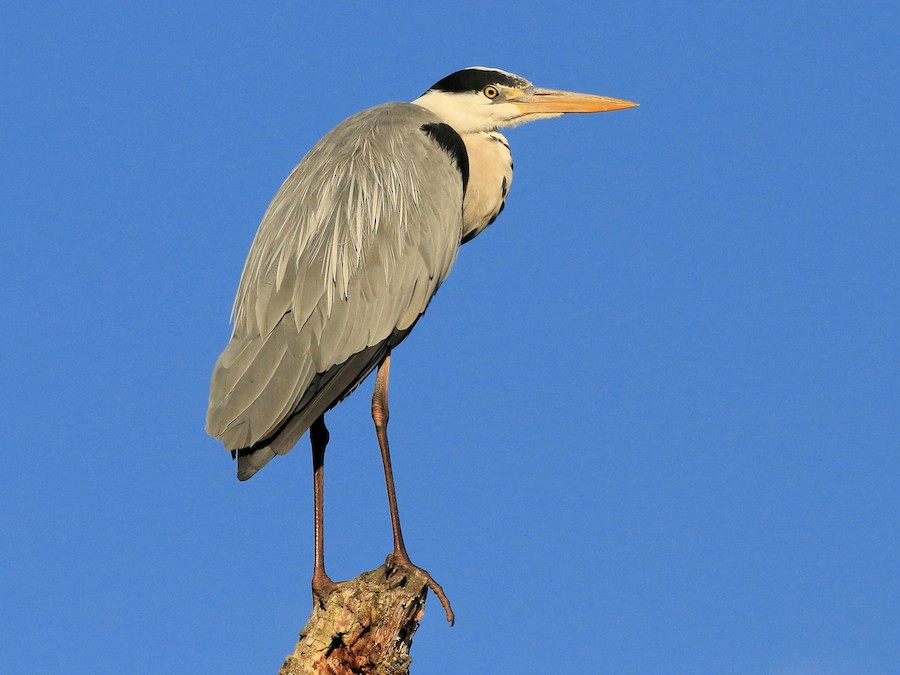
Where does the Grey Heron live?
Ardea cinerea
Spotted a bird? Identify it instantly with the Birdby app
Open the appThe Grey Heron lives in specific habitats and regions. Knowing where, and when, to look improves your chances of a successful sighting.
Biomes
Wetlands, freshwater and brackish water bodies, coastal areas, estuaries, rivers, lakes, ponds, marshes, flooded meadows, and even urban parks with suitable water features.
Geographic range
Widespread across Europe, Asia (from the Middle East to Japan), and parts of Africa (south of the Sahara).
Preferred environments
Shallow, calm waters with abundant fish and amphibians, often with nearby trees for nesting. They tolerate human disturbance well and can be found in suburban and urban environments.
Elevation range
Typically found from sea level up to 1,000 meters, occasionally higher in some parts of its range.
Where to look
Rivers and Lakes
Look along the banks of slow-moving rivers, large lakes, and reservoirs, especially in areas with reeds or overhanging vegetation.
Ponds and Marshes
Small ponds, marshy areas, and flooded fields are prime feeding grounds.
Coastal Areas
Estuaries, mudflats, and sheltered coastal lagoons are also frequented, especially outside the breeding season.
Urban Parks
Surprisingly common in urban and suburban parks with ornamental ponds or lakes, often becoming quite habituated to human presence.
Field tips
- Patience is Key. Grey Herons are often very still when hunting. Scan the water's edge carefully, looking for their upright, statuesque form.
- Look for Movement. If you see a heron, watch for the sudden, rapid strike of its neck and bill as it catches prey.
- Check Heronries. During the breeding season, locate known heronries (colonies) in tall trees, often near water. The activity and noise will be obvious.
- Listen for Calls. Their harsh 'fraaank' call is often the first indication of their presence, especially when they take flight.
- Dawn and Dusk. While primarily diurnal, they can be active at dawn and dusk, and even at night, especially when feeding young.
Migration
Northern populations are migratory, moving south for the winter. Southern and western European populations are largely resident or undertake short-distance dispersal. African populations are generally resident. Migration occurs mainly at night.
Explore the Grey Heron
Identify birds anywhere
Free on iOS, Android, and Web. Photo & sound identification, full species database, and your personal life list.