
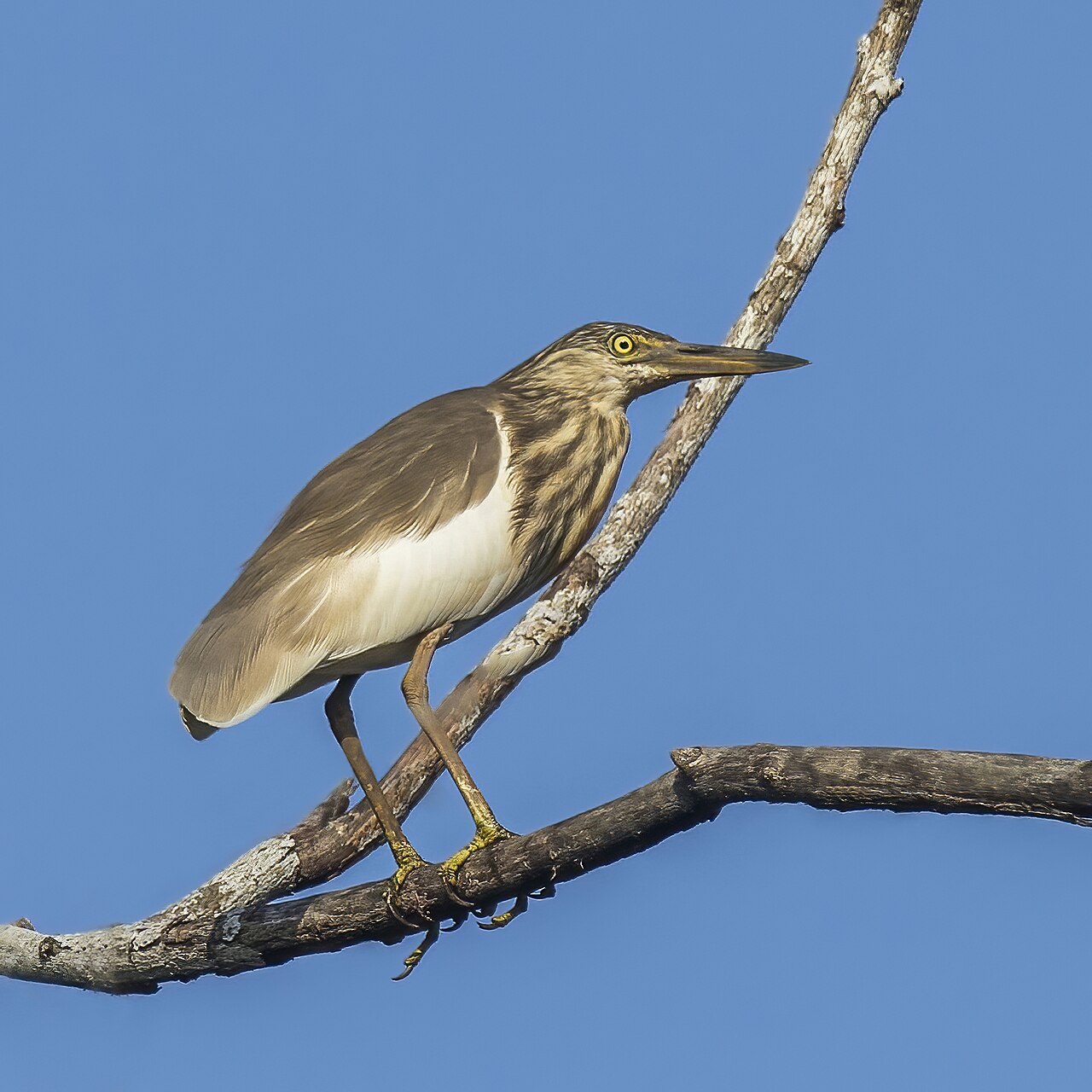
How to identify the Indian Pond Heron
Ardeola grayii
Spotted a bird? Identify it instantly with the Birdby app
Open the appTo correctly identify the Indian Pond Heron (Ardeola grayii), check each of these features. Birds can be tricky: habit, habitat, and call often confirm a sighting that a single photo cannot.
Size at a glance
- Length
- 40-50 cm
- Wingspan
- 75-90 cm
- Weight
- 230-270 g
Physical features to check
- 1
Plumage
Overall feather coloration and pattern.
Non-breeding plumage: Dull, streaky brown on the back, head, and neck; white underparts. Breeding plumage: Rich chestnut-brown back, deep purple-brown head and neck with elongated plumes, white wings (conspicuous in flight), and white belly. The breast plumes are buffy.
- 2
Beak shape
Shape and color of the bill: a key field mark.
Short, thick, and pointed. Non-breeding: Yellowish-green with a dark tip. Breeding: Blue at the base, yellow in the middle, and black at the tip.
- 3
Eye color
Iris color and any distinctive eye markings.
Yellow
- 4
Leg color
Leg and foot color.
Non-breeding: Dull greenish-yellow. Breeding: Bright yellow to reddish-yellow.
- 5
Distinguishing features
Standout features that separate this species.
The most distinctive feature is the dramatic contrast between its drab, streaky brown appearance when perched and its brilliant white wings when in flight. The hunched posture is also characteristic.
- 6
Juvenile appearance
How young birds differ from adults.
Juveniles resemble non-breeding adults but are duller, with more streaking on the breast and a less defined cap. Their bill is duller, and legs are greenish.
- 7
Seasonal changes
Plumage variation between breeding and non-breeding seasons.
Undergoes a significant plumage change for the breeding season. The dull brown streaky plumage is replaced by rich chestnut-brown on the back, purple-brown on the head and neck with elongated plumes, and bright yellow legs and bill coloration.
- 8
Sexual dimorphism
How males and females differ.
Males and females are generally similar in plumage, though males may have slightly more developed breeding plumes.
Key field marks
- Plumage (Perched). Look for a stocky, hunched heron with dull, streaky brown plumage on the back, head, and neck, and white underparts. It blends remarkably well with dry vegetation.
- Plumage (In Flight). The most striking identification feature: when it takes flight, the brilliant white wings contrast sharply with the brown body, making it unmistakable. This 'drab to dazzling' transformation is key.
- Breeding Plumage. During the breeding season (monsoon), observe the rich chestnut-brown back, deep purple-brown head and neck with elongated plumes, and bright yellow legs and bill. This is a dramatic change from its non-breeding appearance.
- Posture. Often seen standing motionless with a hunched posture, neck retracted, waiting patiently for prey.
- Habitat. Typically found in shallow freshwater bodies, rice paddies, and marshes. If you see a small heron in such a habitat in the Indian subcontinent, it's likely an Indian Pond Heron.
Explore the Indian Pond Heron
Identify birds anywhere
Free on iOS, Android, and Web. Photo & sound identification, full species database, and your personal life list.