
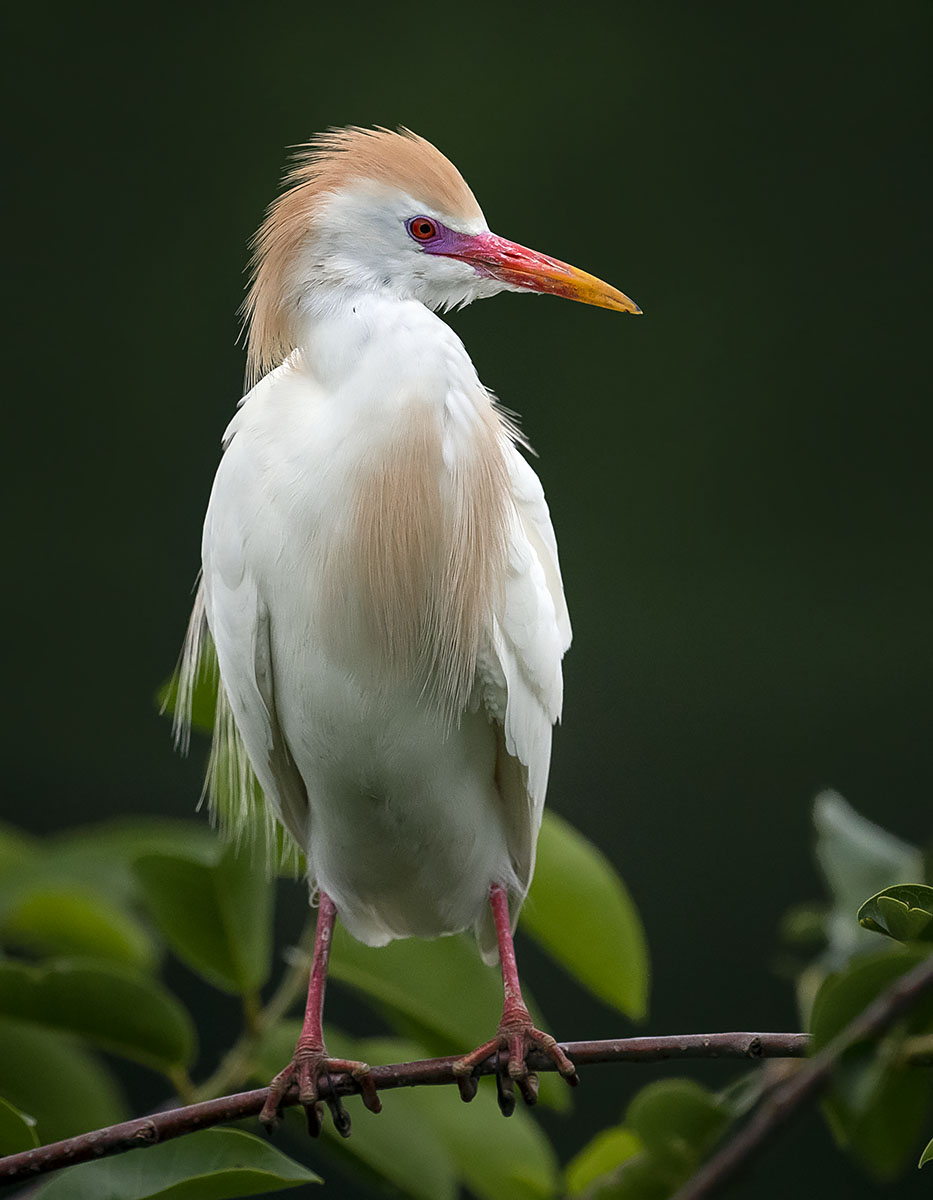
Where does the Cattle Egret live?
Bubulcus ibis
Spotted a bird? Identify it instantly with the Birdby app
Open the appThe Cattle Egret lives in specific habitats and regions. Knowing where, and when, to look improves your chances of a successful sighting.
Biomes
Grasslands, savannas, agricultural fields, pastures, wetlands (edges), and open woodlands.
Geographic range
Nearly cosmopolitan. Native to Africa, Asia, and Europe. Colonized the Americas in the late 19th/early 20th century and Australia in the mid-20th century. Found across most tropical and subtropical regions globally, extending into warm temperate zones.
Preferred environments
Open, grassy habitats, especially those with grazing livestock (cattle, horses, sheep) or agricultural machinery that disturb insects. Also found near ponds, marshes, and rice paddies, but generally prefers drier habitats than most other egrets.
Elevation range
Primarily lowlands, from sea level up to approximately 2,000 meters (6,500 feet), though less common at higher altitudes.
Where to look
Pastures and Agricultural Fields
The most reliable places to find Cattle Egrets, especially where cattle or other livestock are grazing. They follow animals to catch flushed insects.
Wetland Edges and Marshes
While preferring drier habitats, they can also be found at the edges of wetlands, ponds, and rice paddies, particularly if there are open grassy areas nearby.
Roadsides
Often seen foraging in ditches and grassy verges along roads, especially in rural areas.
Roosts and Colonies
During non-breeding season, look for large communal roosts in trees, often near water. During breeding, locate mixed-species heronries in trees or dense shrubs.
Field tips
- Look for Livestock. If you see cattle or horses in a field, scan the ground around them for small white birds. Cattle Egrets are almost always associated with grazing animals.
- Observe Foraging Behavior. Watch for birds walking close to animals, darting to catch insects disturbed by their hooves. They also follow tractors and other farm equipment.
- Check for Breeding Plumage. During spring and summer, look for the distinctive buff-orange patches on the head, back, and breast, and the bright red/orange bill and legs, which make identification easier.
- Visit Communal Roosts. At dawn or dusk, observe large trees or stands of vegetation near water, where they gather in large numbers to roost, often with other heron species.
Migration
Many populations are migratory, particularly those in temperate regions, moving to warmer climates for winter. Tropical populations are often resident or undertake local dispersive movements. The species is known for its strong dispersal capabilities, which have facilitated its global expansion.
Explore the Cattle Egret
Identify birds anywhere
Free on iOS, Android, and Web. Photo & sound identification, full species database, and your personal life list.