
How to identify the Umbrella Cockatoo
Cacatua alba
Spotted a bird? Identify it instantly with the Birdby app
Open the appTo correctly identify the Umbrella Cockatoo (Cacatua alba), check each of these features. Birds can be tricky: habit, habitat, and call often confirm a sighting that a single photo cannot.
Size at a glance
- Length
- 43-50 cm (17-20 in)
- Wingspan
- 80-90 cm (31-35 in)
- Weight
- 400-800 g (0.9-1.8 lbs)
Physical features to check
- 1
Plumage
Overall feather coloration and pattern.
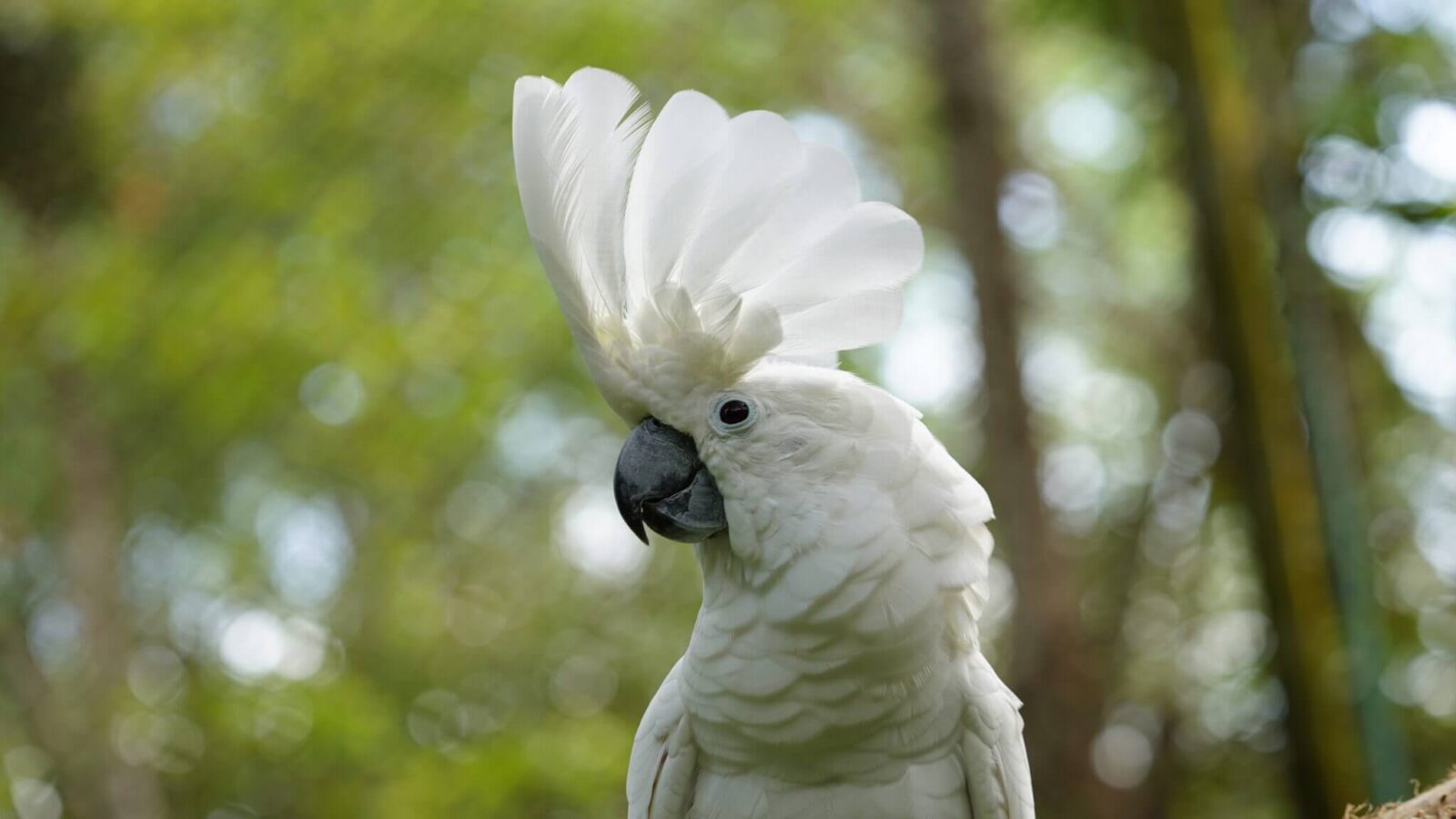
Entirely white plumage, with a pale yellow wash on the underside of the wings and tail feathers, visible during flight or when the wings are spread. The most striking feature is the large, erectile crest of white feathers on its head.
- 2
Beak shape
Shape and color of the bill: a key field mark.
Large, powerful, dark grey to black beak, strongly curved for cracking nuts and seeds.
- 3
Eye color
Iris color and any distinctive eye markings.
Males typically have dark brown to black eyes; females often have reddish-brown eyes.
- 4
Leg color
Leg and foot color.
Dark grey to black
- 5
Distinguishing features
Standout features that separate this species.
The prominent, broad, umbrella-like crest that can be raised and lowered. The pale yellow wash on the underwings and undertail is a key field mark.
- 6
Juvenile appearance
How young birds differ from adults.
Juveniles resemble adults but may have slightly duller plumage and a less developed crest. Their eyes are typically dark brown, similar to adult males, making sexing by eye color unreliable until maturity.
- 7
Seasonal changes
Plumage variation between breeding and non-breeding seasons.
No significant seasonal plumage changes. Plumage remains consistently white throughout the year.
- 8
Sexual dimorphism
How males and females differ.
Subtle sexual dimorphism exists primarily in eye color (males dark brown/black, females reddish-brown), though this can be difficult to discern in the field. Females may also be slightly smaller on average.
Key field marks
- Plumage Color. Look for an entirely white body plumage. Any strong pink or yellow coloration on the body or crest would indicate a different species.
- Crest Shape and Color. Observe the large, broad, all-white crest. When raised, it forms a distinctive umbrella-like shape. This is a key identifier distinguishing it from other white cockatoos with colored crests.
- Underwing/Undertail Wash. In flight or when wings are spread, look for a subtle, pale yellow wash on the underside of the wings and tail feathers. This is less prominent than in some other species but present.
- Eye Color (Sexing). If close enough, note the eye color. Males typically have dark brown/black eyes, while females often have reddish-brown eyes. This is a useful, though not always definitive, indicator of sex.
- Vocalizations. Listen for their characteristic loud, piercing 'raah-ah' calls and various squawks and screeches. Their vocalizations are distinct from other cockatoo species.
Explore the Umbrella Cockatoo
Identify birds anywhere
Free on iOS, Android, and Web. Photo & sound identification, full species database, and your personal life list.