
How to identify the Sulphur-crested Cockatoo
Cacatua galerita
Spotted a bird? Identify it instantly with the Birdby app
Open the appTo correctly identify the Sulphur-crested Cockatoo (Cacatua galerita), check each of these features. Birds can be tricky: habit, habitat, and call often confirm a sighting that a single photo cannot.
Size at a glance
- Length
- 45-55 cm
- Wingspan
- 90-110 cm
- Weight
- 700-1200 g
Physical features to check
- 1
Plumage
Overall feather coloration and pattern.
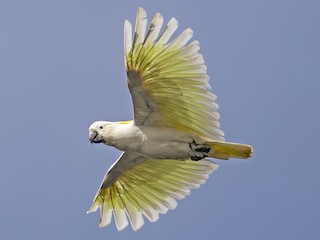
Predominantly white plumage with a distinctive forward-curving, erectile sulphur-yellow crest. The underside of the wings and tail feathers show a pale yellow wash, most noticeable in flight. The feathers around the ear coverts can also have a faint yellow tinge.
- 2
Beak shape
Shape and color of the bill: a key field mark.
Large, powerful, dark grey to black beak, strongly hooked, adapted for cracking hard nuts and seeds.
- 3
Eye color
Iris color and any distinctive eye markings.
Males typically have dark brown to black irises, while females often have reddish-brown irises. Juveniles have dark irises.
- 4
Leg color
Leg and foot color.
Dark grey to black
- 5
Distinguishing features
Standout features that separate this species.
The prominent, erectile sulphur-yellow crest is the most defining feature. When relaxed, the crest lies flat, but when alarmed, excited, or displaying, it is raised prominently. The large size and all-white body with yellow underwings are also key identifiers.
- 6
Juvenile appearance
How young birds differ from adults.
Juveniles resemble adults but may have a slightly duller yellow crest and often have darker irises, similar to adult males, making sexing by eye color unreliable until maturity (around 2-3 years). Their calls may also be less developed.
- 7
Seasonal changes
Plumage variation between breeding and non-breeding seasons.
No significant seasonal plumage changes. Plumage remains consistent year-round.
- 8
Sexual dimorphism
How males and females differ.
Subtle sexual dimorphism exists primarily in eye color: males typically have dark brown/black irises, and females have reddish-brown irises. This difference is not always easy to discern in the field, especially in poor light or at a distance. Males may also be slightly larger on average, but this is not a reliable field mark.
Key field marks
- Size and Overall Color. Look for a large, entirely white parrot. Its substantial size (45-55 cm) makes it stand out among most other white cockatoos.
- Crest. The most definitive feature is the prominent, forward-curving, sulphur-yellow crest. Observe if it is raised (indicating excitement, alarm, or display) or laid flat.
- Underwing/Undertail Color. In flight, look for the distinct pale yellow wash on the underside of the wings and tail feathers. This is a key differentiator from other white cockatoos.
- Vocalizations. Listen for its extremely loud, harsh, screeching 'kaa-ark' calls. These are unmistakable and often heard before the bird is seen.
- Eye Color (for sexing). If close enough, observe eye color: dark brown/black for males, reddish-brown for females. This is a subtle but reliable indicator in adults.
Explore the Sulphur-crested Cockatoo
Identify birds anywhere
Free on iOS, Android, and Web. Photo & sound identification, full species database, and your personal life list.