
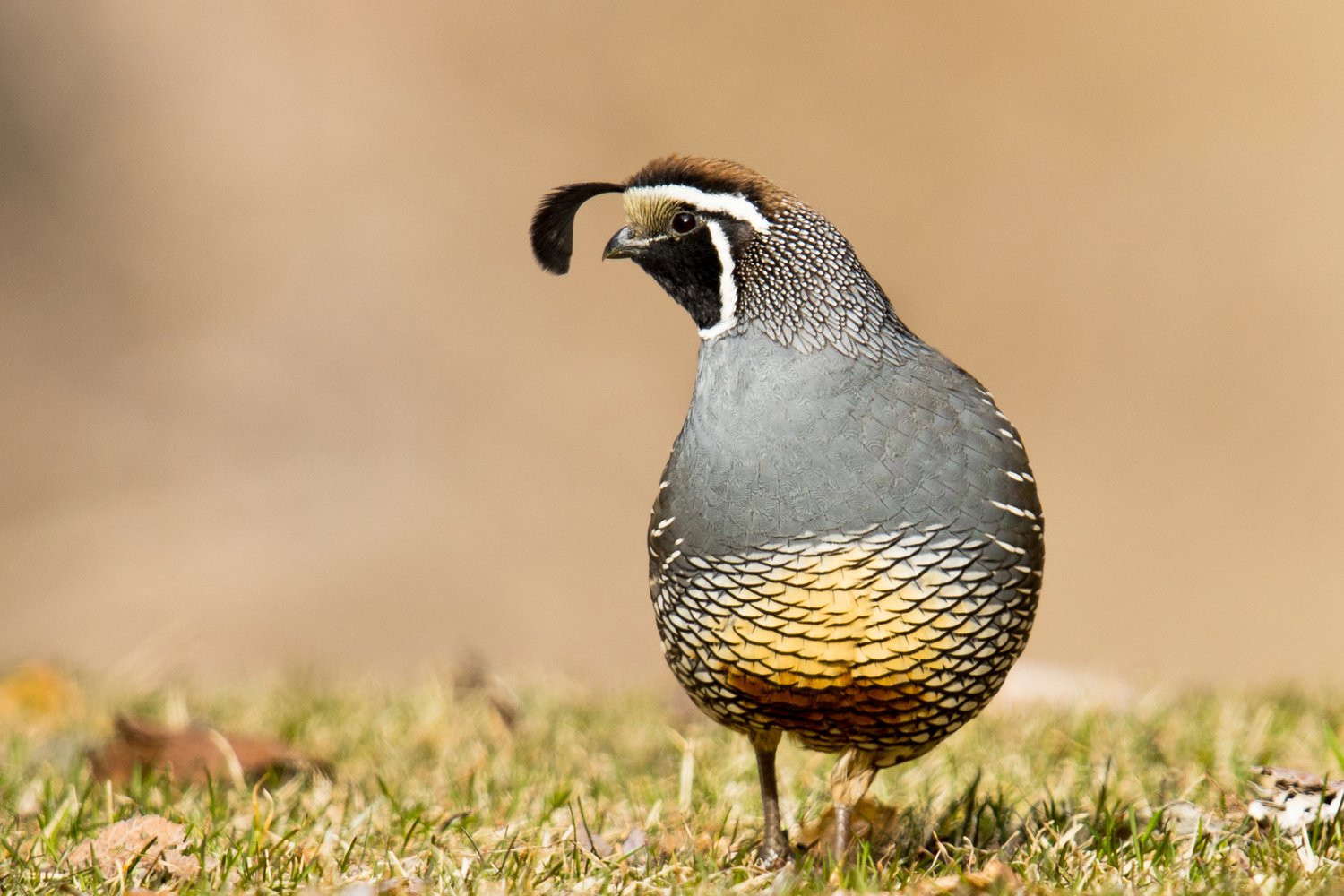
Where does the California Quail live?
Callipepla californica
Spotted a bird? Identify it instantly with the Birdby app
Open the appThe California Quail lives in specific habitats and regions. Knowing where, and when, to look improves your chances of a successful sighting.
Biomes
Chaparral, oak woodlands, grasslands, agricultural areas, suburban gardens, riparian zones.
Geographic range
Native to California, Oregon, Washington, Nevada, and parts of Idaho, Utah, Arizona, and Baja California (Mexico). Introduced populations exist in British Columbia, Hawaii, New Zealand, and Chile.
Preferred environments
Prefers areas with dense shrub cover for protection and roosting, interspersed with open ground for foraging. Often found near water sources and in areas with a mix of brushy cover and grassy clearings.
Elevation range
Sea level up to 2,000 meters (6,500 feet), occasionally higher.
Where to look
Chaparral and Shrublands
Look in dense, brushy areas with good cover, especially near water sources.
Oak Woodlands
Often found at the edges of oak woodlands, where there's a mix of trees and undergrowth.
Suburban Gardens and Parks
Common in well-vegetated suburban areas, especially those with native plants and good ground cover.
Agricultural Edges
Can be found along the borders of farms and orchards, where there's cover and food.
Field tips
- Listen for their call. Their distinctive 'chi-ca-go' call is often the first indication of their presence. Learn to recognize it.
- Look near cover. California Quail rarely venture far from dense shrubs or brush, which they use for escape and roosting. Scan the edges of these areas.
- Observe at dawn and dusk. They are most active during the early morning and late afternoon when foraging. This is the best time to spot them.
- Watch for movement on the ground. They are ground-dwelling birds and often move in groups. Look for subtle movements in the undergrowth.
- Be patient and quiet. Quail can be shy. Move slowly and quietly, and use binoculars to scan potential habitats.
Migration
Non-migratory; they are resident birds throughout their range, though some local movements may occur in response to food availability or severe weather.
Explore the California Quail
Identify birds anywhere
Free on iOS, Android, and Web. Photo & sound identification, full species database, and your personal life list.