
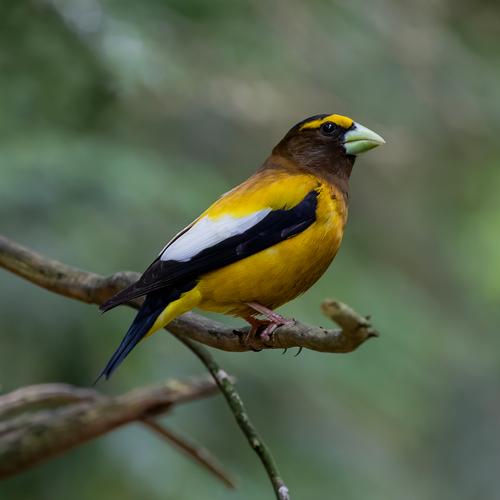
Where does the Evening Grosbeak live?
Coccothraustes vespertinus
Spotted a bird? Identify it instantly with the Birdby app
Open the appThe Evening Grosbeak lives in specific habitats and regions. Knowing where, and when, to look improves your chances of a successful sighting.
Biomes
Coniferous forests, mixed forests, deciduous forests, suburban areas with mature trees.
Geographic range
North America, from central Canada south through the western mountains of the United States and into Mexico. Irruptive movements can bring them further east and south during winter.
Preferred environments
Mature forests, especially those with spruce, fir, pine, and aspen. They are also attracted to orchards, parks, and backyard feeders, particularly during non-breeding seasons.
Elevation range
Sea level to over 3,000 meters (10,000 feet), typically breeding at higher elevations in the western mountains.
Where to look
Coniferous and Mixed Forests
Especially in the western mountains and boreal forests of North America. Look for areas with spruce, fir, and pine.
Bird Feeders
They are frequent visitors to feeders, particularly those offering black oil sunflower seeds, especially during winter and irruptive years.
Parks and Suburban Areas
Mature trees in parks and backyards can attract them, especially if feeders are present.
Field tips
- Listen for calls. Their distinctive 'cleep' call is often heard before the birds are seen, especially when they are flying overhead in flocks.
- Check feeders. If you live within their range, keeping a feeder stocked with black oil sunflower seeds can attract them, particularly in winter.
- Look for flocks. Evening Grosbeaks are highly social and are almost always found in flocks, sometimes quite large ones. Scan tree tops and feeders for groups of birds.
- Observe feeding behavior. Watch them crack open seeds with their powerful bills; this behavior is characteristic.
Migration
Partial migrant. Northern populations are migratory, moving south for winter. Western populations are often resident or undertake altitudinal migrations. Known for irruptive movements, where large numbers move far outside their typical winter range in response to food shortages.
Explore the Evening Grosbeak
Identify birds anywhere
Free on iOS, Android, and Web. Photo & sound identification, full species database, and your personal life list.