
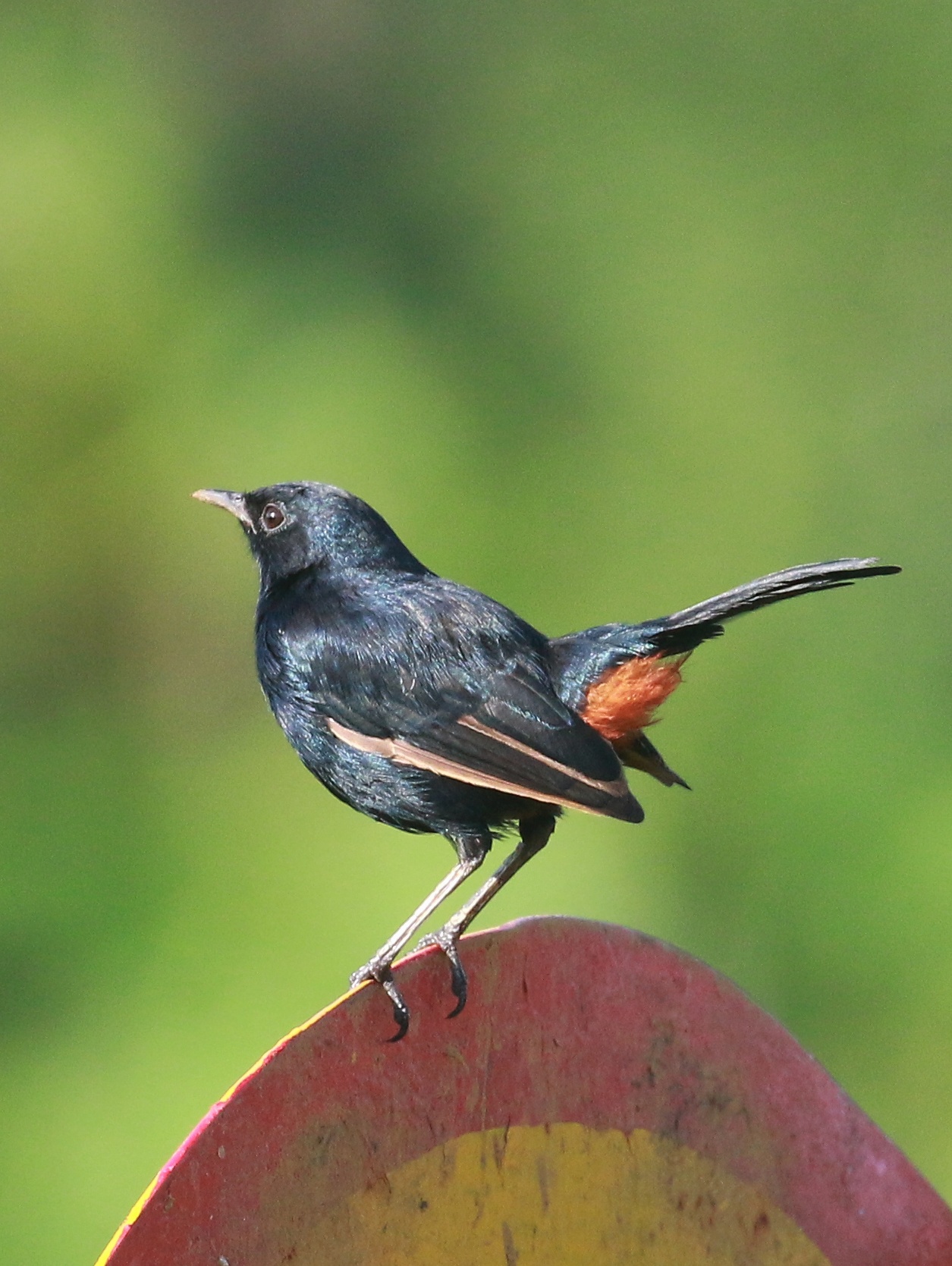
Where does the Indian Robin live?
Copsychus fulicatus
Spotted a bird? Identify it instantly with the Birdby app
Open the appThe Indian Robin lives in specific habitats and regions. Knowing where, and when, to look improves your chances of a successful sighting.
Biomes
Tropical and subtropical dry broadleaf forests, grasslands, shrublands, deserts, and urban areas.
Geographic range
Widespread across the Indian subcontinent, including India, Pakistan, Bangladesh, Sri Lanka, and parts of Nepal and Bhutan.
Preferred environments
Open scrubland, dry deciduous forests, cultivated areas, gardens, parks, and human habitations. They prefer areas with scattered bushes, short grass, and bare ground for foraging.
Elevation range
Sea level up to approximately 1,500 meters (occasionally higher in some regions).
Where to look
Gardens and Parks
Common in urban and suburban gardens and parks with some open ground and shrubs.
Agricultural Fields
Frequently found in cultivated lands, especially those with hedges or scattered trees.
Open Scrubland
Its preferred natural habitat, look for them in dry, open areas with thorny bushes and sparse vegetation.
Roadsides and Villages
Often seen along roadsides, in village peripheries, and around human settlements.
Field tips
- Look on the ground. Indian Robins are primarily ground foragers, so scan open patches of ground, lawns, and under bushes.
- Listen for their song. Their melodious song is a good indicator of their presence, especially in the breeding season. They often sing from prominent perches.
- Observe tail movements. The constant tail-flicking is a very distinctive behavioral trait that helps in identification, even from a distance.
- Check for rufous vent. The chestnut-red vent is a key field mark for both sexes, though more prominent in males. Try to get a view of the undertail.
Migration
Resident throughout its range, with some local movements in response to food availability or weather conditions. Not a migratory species.
Explore the Indian Robin
Identify birds anywhere
Free on iOS, Android, and Web. Photo & sound identification, full species database, and your personal life list.