
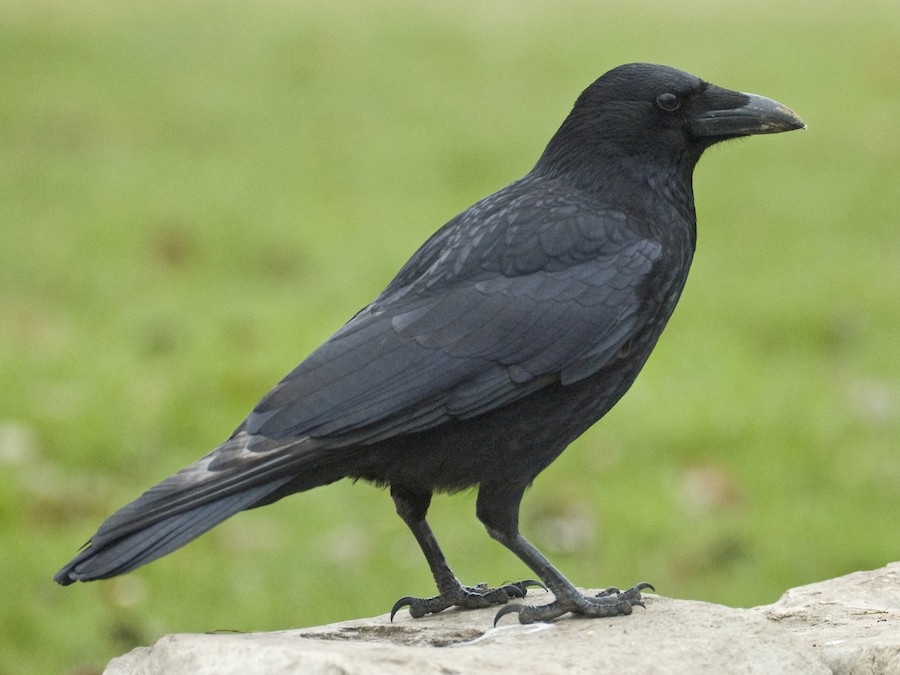
Where does the Carrion Crow live?
Corvus corone
Spotted a bird? Identify it instantly with the Birdby app
Open the appThe Carrion Crow lives in specific habitats and regions. Knowing where, and when, to look improves your chances of a successful sighting.
Biomes
Temperate forests, woodlands, agricultural land, urban and suburban areas, coastal cliffs, moorlands.
Geographic range
Western Europe (west of the Elbe River in Germany), British Isles, and parts of Asia (eastern Siberia, Japan, China). The species complex 'Corvus corone' is split into the Western Carrion Crow (Corvus corone corone) and the Eastern Hooded Crow (Corvus corone cornix), which hybridize in a narrow zone.
Preferred environments
Highly adaptable, preferring open country with scattered trees, parks, gardens, cultivated land, and urban environments where food sources are abundant and nesting sites are available.
Elevation range
Sea level up to 2,000 meters, occasionally higher in mountainous regions.
Where to look
Urban and Suburban Areas
Parks, gardens, city centers, residential areas, and refuse dumps are common places to find them due to abundant food sources.
Agricultural Land
Open fields, pastures, and cultivated areas, especially where crops are grown or livestock are present.
Woodlands and Forests
Edges of woodlands, scattered trees in open country, and small copses provide nesting and roosting sites.
Coastal Areas
Cliffs, beaches, and estuaries, where they scavenge for food.
Field tips
- Listen for Calls. Their distinctive 'caw' call is often the first indication of their presence. Learn to distinguish it from other corvid calls.
- Look for Scavenging Behavior. Observe areas with potential food sources like roadsides (carrion), bins, or freshly ploughed fields.
- Check High Perches. They often perch on prominent high points like treetops, lampposts, or buildings to survey their territory.
- Observe Flight. Their direct, powerful flight with steady wingbeats is characteristic. Look for the fan-shaped tail.
Migration
Mostly resident throughout its range. Northern populations may undertake short-distance movements or partial migrations to milder areas during harsh winters, but long-distance migration is uncommon.
Explore the Carrion Crow
Identify birds anywhere
Free on iOS, Android, and Web. Photo & sound identification, full species database, and your personal life list.