
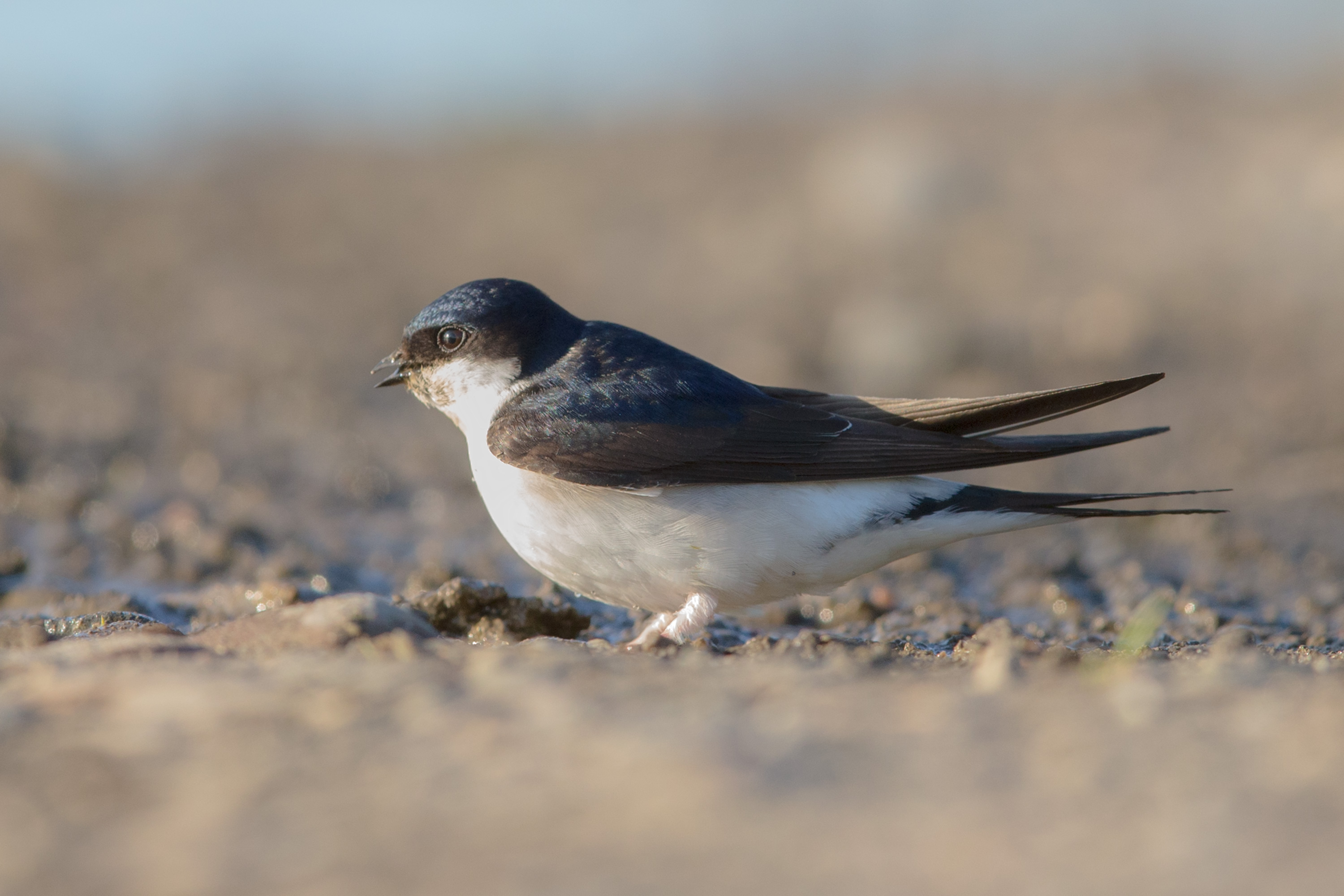
Where does the House Martin live?
Delichon urbicum
Spotted a bird? Identify it instantly with the Birdby app
Open the appThe House Martin lives in specific habitats and regions. Knowing where, and when, to look improves your chances of a successful sighting.
Biomes
Temperate grasslands, open country, agricultural areas, urban and suburban environments.
Geographic range
Breeds across most of Europe and temperate Asia, from Ireland and Portugal east to Japan and Kamchatka. Winters in sub-Saharan Africa and tropical Asia.
Preferred environments
Prefers open country with access to water and suitable nesting sites, primarily man-made structures like houses, bridges, and cliffs. Often found near human habitation.
Elevation range
Typically found from sea level up to 2,000 meters, occasionally higher in mountainous regions during migration.
Where to look
Urban and Suburban Areas
Look for them nesting on houses, churches, and other buildings, especially under eaves or sheltered ledges.
Open Countryside
Forage over fields, meadows, and agricultural land, particularly near water bodies.
Lakes and Rivers
Often seen foraging over water, where insect abundance is high, and skimming to drink.
Coastal Cliffs
In some areas, they will nest on natural cliff faces, especially where human structures are scarce.
Field tips
- Look Up. House Martins spend most of their time in the air. Scan the sky above buildings, open fields, and water bodies.
- Observe Nests. During the breeding season (spring/summer), locate colonies of mud nests under eaves. Birds will be constantly flying to and from these nests.
- Listen for Calls. Their characteristic 'chip' or 'chrrrp' calls are often heard as they fly, especially near colonies.
- Migration Hotspots. During spring and autumn migration, large flocks can be seen passing through coastal areas, mountain passes, or gathering at roost sites.
- Watch for Foraging. Observe their agile, buoyant flight as they chase insects. They often fly higher than Barn Swallows.
Migration
Long-distance migratory. European populations migrate south to sub-Saharan Africa for the winter, while Asian populations winter in tropical Asia. They migrate in large flocks, often following broad fronts.
Explore the House Martin
Identify birds anywhere
Free on iOS, Android, and Web. Photo & sound identification, full species database, and your personal life list.