
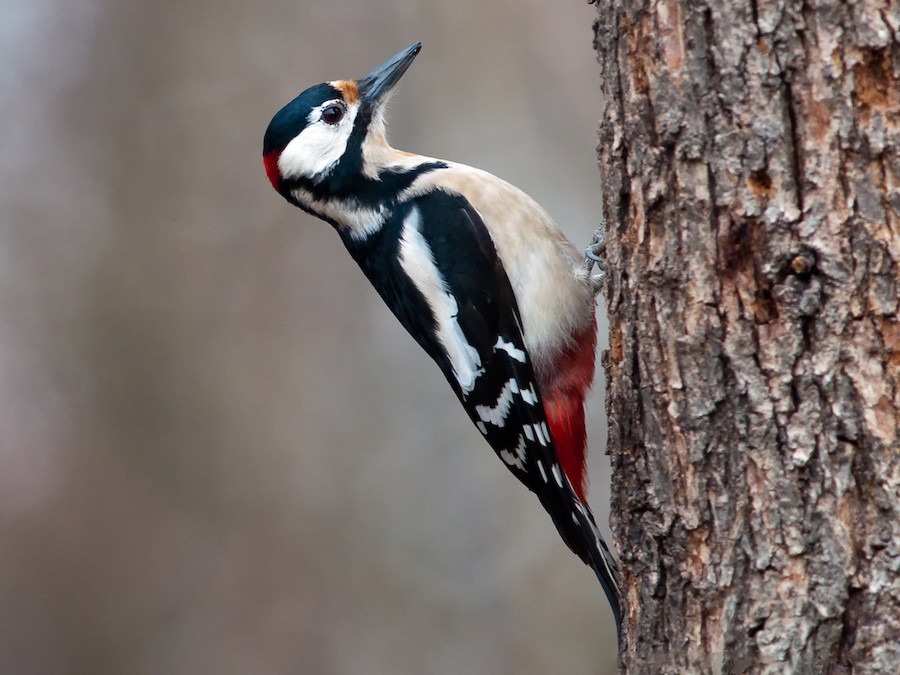
Where does the Great Spotted Woodpecker live?
Dendrocopos major
Spotted a bird? Identify it instantly with the Birdby app
Open the appThe Great Spotted Woodpecker lives in specific habitats and regions. Knowing where, and when, to look improves your chances of a successful sighting.
Biomes
Temperate forests, boreal forests, mixed woodlands, parks, gardens, orchards.
Geographic range
Widespread across the Palearctic, from Western Europe and North Africa through Asia to Japan. Absent from Iceland, Ireland, and parts of the Mediterranean islands.
Preferred environments
Prefers mature deciduous and coniferous woodlands, but is highly adaptable and can be found in suburban parks and large gardens with mature trees. Requires trees for foraging, nesting, and roosting.
Elevation range
Sea level up to 2,000 meters, occasionally higher in mountainous regions.
Where to look
Forests and Woodlands
Deciduous, coniferous, and mixed forests are prime habitats. Look for them on tree trunks and larger branches.
Parks and Gardens
Common in urban and suburban areas with mature trees, especially those with older or dead wood. They frequently visit bird feeders.
Orchards and Avenues
Areas with scattered trees, such as orchards, avenues, and hedgerows, can also host Great Spotted Woodpeckers.
Field tips
- Listen for Drumming. In late winter and spring, listen for their distinctive, rapid drumming. This is often the first indication of their presence.
- Look for Foraging Signs. Scan tree trunks for holes, flaked bark, or areas where they have been excavating for insects. They often work their way up a tree.
- Check Bird Feeders. They are frequent visitors to feeders offering suet, peanuts, and sunflower seeds, especially in winter.
- Patience and Stealth. Woodpeckers can be shy. Move slowly and quietly through wooded areas. Binoculars are essential for detailed observation.
- Observe Flight. If you see a bird flying between trees, look for the characteristic undulating flight pattern.
Migration
Mostly resident throughout its range. Northern populations may undertake short-distance irruptive movements in years of poor cone crops, moving south or west.
Explore the Great Spotted Woodpecker
Identify birds anywhere
Free on iOS, Android, and Web. Photo & sound identification, full species database, and your personal life list.