
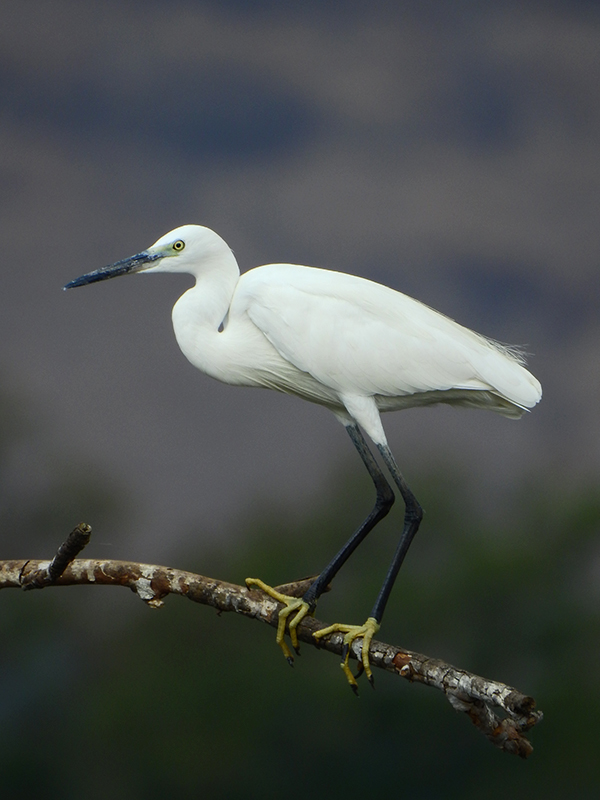
Where does the Little Egret live?
Egretta garzetta
Spotted a bird? Identify it instantly with the Birdby app
Open the appThe Little Egret lives in specific habitats and regions. Knowing where, and when, to look improves your chances of a successful sighting.
Biomes
Wetlands, coastal areas, estuaries, marshes, rivers, lakes, rice paddies, flooded fields.
Geographic range
Widespread across Europe, Africa, Asia, and Australia. Has expanded its range into the Americas (Caribbean, North and South America) in recent decades.
Preferred environments
Shallow freshwater and saltwater habitats, including estuaries, lagoons, mudflats, saltmarshes, rivers, lakes, and artificial wetlands like fish farms and irrigation channels. Prefers areas with emergent vegetation for nesting and roosting.
Elevation range
Typically found from sea level up to 1,000 meters (3,300 feet), occasionally higher in some regions.
Where to look
Coastal Wetlands
Estuaries, lagoons, mudflats, and saltmarshes are prime locations, especially during migration and winter.
Inland Wetlands
Rivers, lakes, ponds, marshes, and flooded fields, particularly those with shallow water and emergent vegetation.
Artificial Habitats
Fish farms, sewage treatment works, irrigation channels, and rice paddies often attract Little Egrets.
Field tips
- Look for yellow feet. This is the most crucial identification feature. Even from a distance, the contrast of yellow feet against black legs is often visible.
- Observe foraging behavior. Their active and varied hunting techniques, such as foot-stirring, are characteristic and can help confirm identification.
- Check bill color. A slender, entirely black bill distinguishes it from other white egrets like Cattle or Great Egrets.
- Visit heronries. During the breeding season, Little Egrets gather in large, often mixed-species, colonies. These can be noisy and active places to observe them.
- Scan shallow waters. They prefer shallow water for foraging, so focus your search in these areas.
Migration
Northern populations are migratory, moving south for the winter. Southern populations are largely resident or undertake local dispersive movements. European birds typically migrate to Africa, while Asian populations move to Southeast Asia. The species has shown significant range expansion, including colonization of the New World.
Explore the Little Egret
Identify birds anywhere
Free on iOS, Android, and Web. Photo & sound identification, full species database, and your personal life list.