
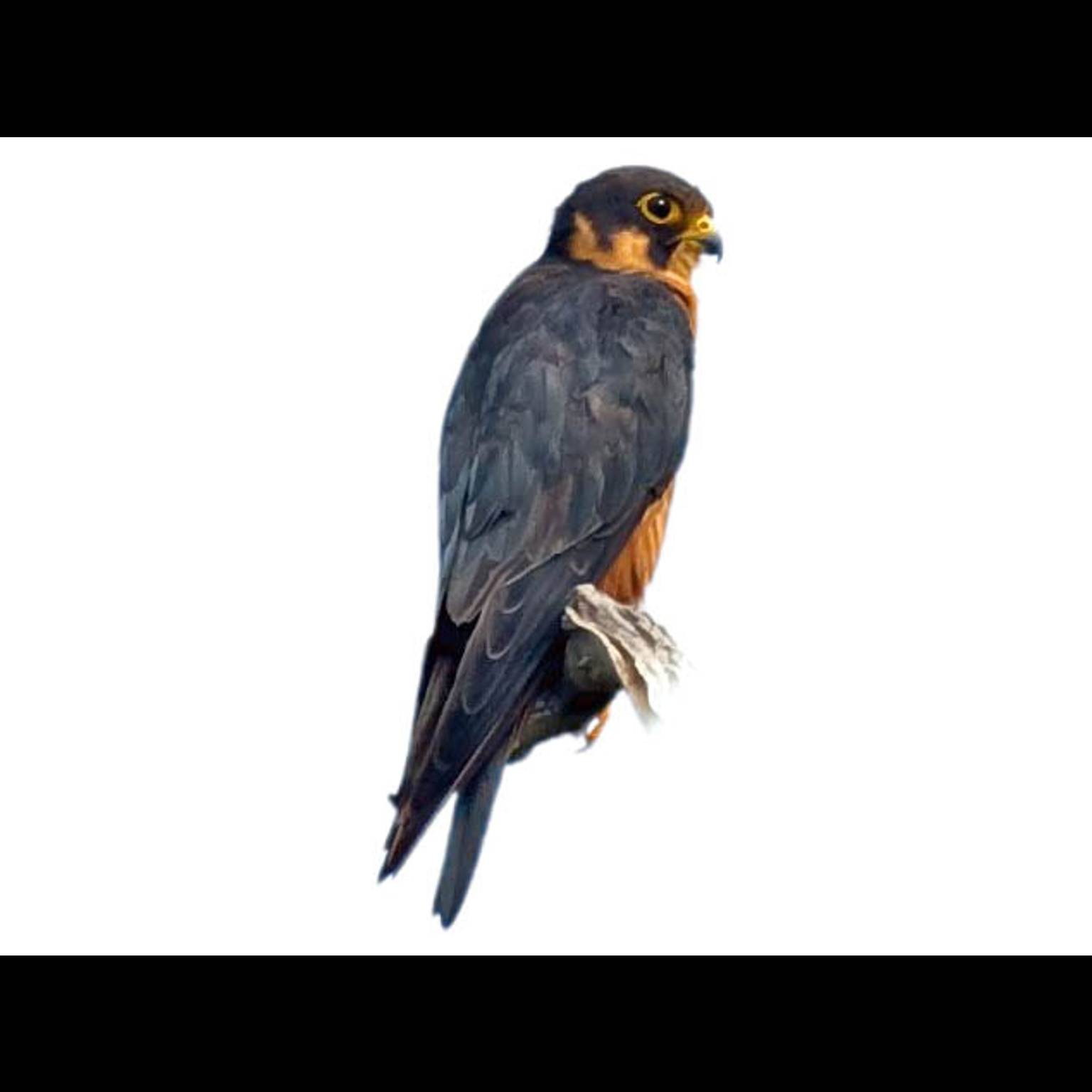
Where does the African Hobby live?
Falco cuvierii
Spotted a bird? Identify it instantly with the Birdby app
Open the appThe African Hobby lives in specific habitats and regions. Knowing where, and when, to look improves your chances of a successful sighting.
Biomes
Savanna, open woodlands, forest edges, clearings, cultivated areas, and sometimes urban parks.
Geographic range
Widespread across sub-Saharan Africa, from Senegal and Gambia east to Ethiopia and south to Angola, northern Namibia, Botswana, and northeastern South Africa.
Preferred environments
Prefers areas with scattered tall trees for perching and nesting, adjacent to open spaces for hunting. Often associated with riparian woodlands and areas near water bodies.
Elevation range
Typically found from sea level up to 2,000 meters, occasionally higher.
Where to look
Savanna and Open Woodlands
These are primary habitats. Look for them perched on tall trees overlooking open areas.
Forest Edges and Clearings
They often hunt along the interface between dense forest and open ground.
Riparian Zones
Areas near rivers and lakes with tall trees can be good, as these often attract abundant insect life.
Cultivated Areas and Parks
In some regions, they adapt to human-modified landscapes, especially if suitable trees and prey are available.
Field tips
- Scan the Skies at Dusk and Dawn. African Hobbies are often most active during these crepuscular periods, hawking for insects.
- Look for High Perches. They frequently perch conspicuously on the highest branches of dead trees or tall snags, providing a good vantage point for hunting.
- Observe Aerial Hunters. If you see a falcon rapidly pursuing insects or small birds with great agility, it's likely a hobby. Pay attention to its plumage details.
- Listen for Calls. Their distinctive calls can often alert you to their presence, especially if they are agitated or interacting with other birds.
Migration
Partially migratory or nomadic in some parts of its range, particularly in response to rainfall and insect availability. Northern populations may move south during the dry season, and southern populations may move north. However, many populations are resident.
Explore the African Hobby
Identify birds anywhere
Free on iOS, Android, and Web. Photo & sound identification, full species database, and your personal life list.