
How to identify the Common Kestrel
Falco tinnunculus
Spotted a bird? Identify it instantly with the Birdby app
Open the appTo correctly identify the Common Kestrel (Falco tinnunculus), check each of these features. Birds can be tricky: habit, habitat, and call often confirm a sighting that a single photo cannot.
Size at a glance
- Length
- 32-39 cm (13-15 in)
- Wingspan
- 65-82 cm (26-32 in)
- Weight
- Males: 136-252 g (4.8-8.9 oz), Females: 154-314 g (5.4-11.1 oz)
Physical features to check
- 1
Plumage
Overall feather coloration and pattern.
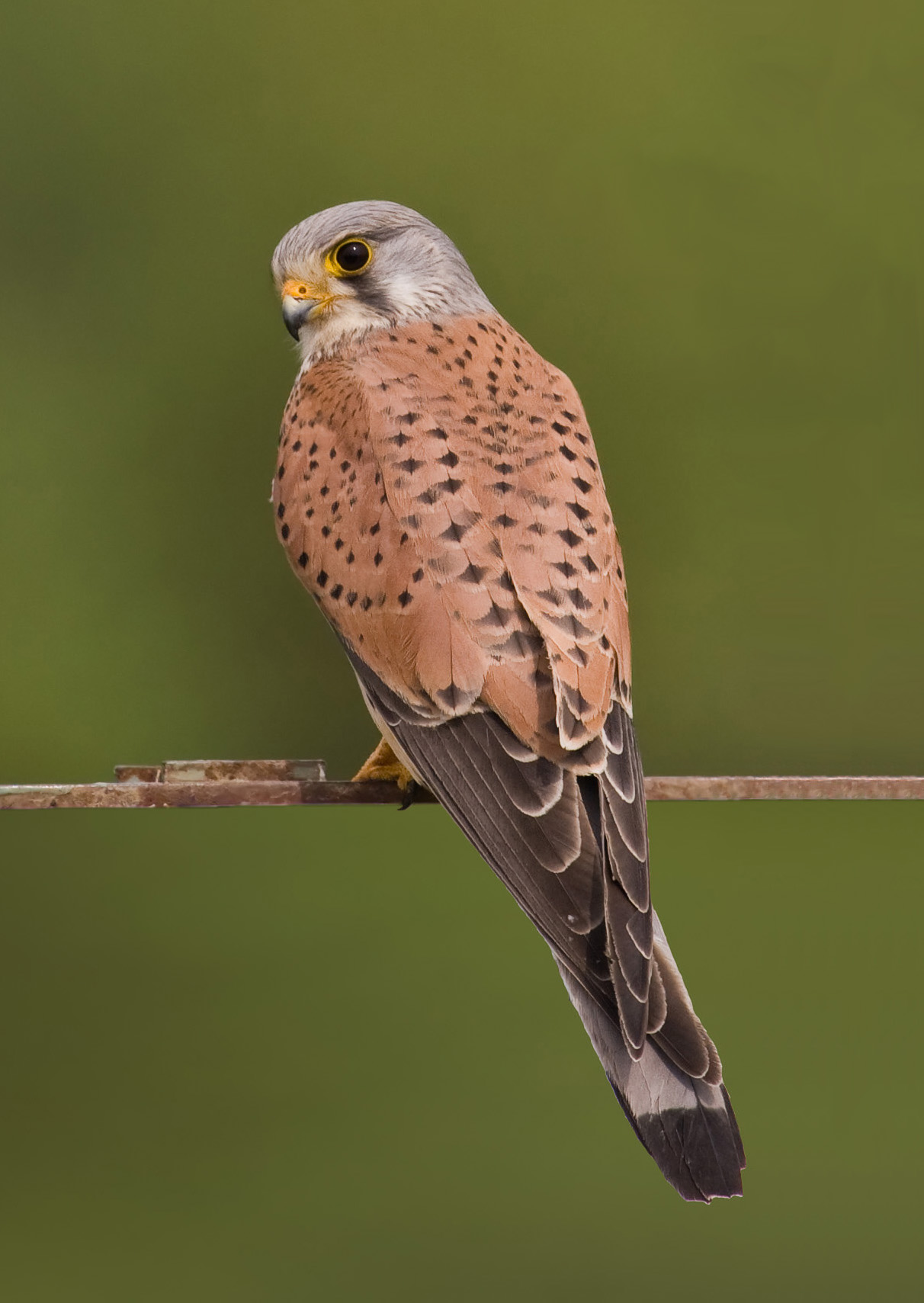
Adult male: Rufous-brown back with dark spots, grey head, grey rump and tail with a broad black subterminal band and white tip. Underparts are pale buff, streaked with brown. Adult female: Uniformly rufous-brown above with heavier dark barring and spotting, rufous-brown head, and rufous-brown tail with multiple dark bars and a broader subterminal band. Underparts are streaked brown on a buff background. Juvenile: Resembles adult female, but typically more heavily streaked below and often looks scruffier.
- 2
Beak shape
Shape and color of the bill: a key field mark.
Short, hooked, and sharp, typical of falcons, optimized for tearing prey.
- 3
Eye color
Iris color and any distinctive eye markings.
Dark brown
- 4
Leg color
Leg and foot color.
Yellow
- 5
Distinguishing features
Standout features that separate this species.
Long, pointed wings in flight. Distinctive hovering flight with rapid wing beats while holding the head still, scanning the ground. Males have a clear grey head and tail, females and juveniles are browner overall. Black 'tear' stripe below the eye is often visible.
- 6
Juvenile appearance
How young birds differ from adults.
Similar to adult females, but often with heavier streaking on the underparts and a less refined plumage overall. The tail barring is usually more irregular or finely barred than in adult females.
- 7
Seasonal changes
Plumage variation between breeding and non-breeding seasons.
No significant seasonal plumage changes. Plumage wear can make colors appear duller or lighter towards the end of a breeding season.
- 8
Sexual dimorphism
How males and females differ.
Pronounced. Males have a grey head, rump, and tail with a single black subterminal band, and a less heavily spotted rufous back. Females are larger, with an all rufous-brown head, barred rufous-brown tail, and more heavily barred and spotted rufous-brown back.
Key field marks
- Hovering Flight. Look for a bird maintaining a fixed position in the air, facing the wind, with rapid wing beats. This is a primary hunting technique for Common Kestrels.
- Plumage (Male). Identify by the distinctive blue-grey head, blue-grey tail with a single broad black subterminal band, and rufous-brown back with black spots.
- Plumage (Female/Juvenile). Observe the overall rufous-brown coloration with dark barring on the back and tail (multiple bars on tail), and heavy streaking on the underparts.
- Silhouette. In flight, look for long, pointed falcon wings and a relatively long tail. When perched, they appear compact with an upright posture.
- Calls. Listen for their characteristic high-pitched, rapid 'kee-kee-kee-kee' or 'kik-kik-kik-kik' calls.
Explore the Common Kestrel
Identify birds anywhere
Free on iOS, Android, and Web. Photo & sound identification, full species database, and your personal life list.