
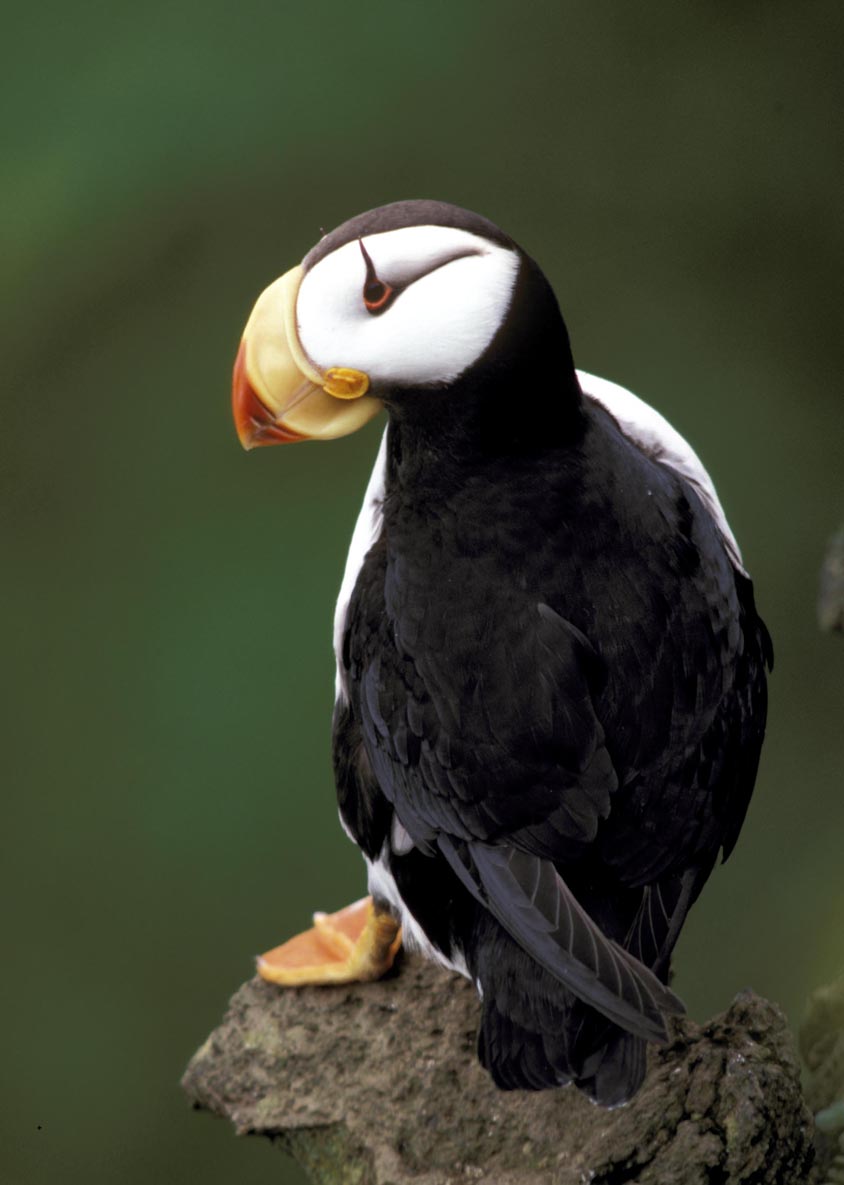
How to identify the Horned Puffin
Fratercula corniculata
Spotted a bird? Identify it instantly with the Birdby app
Open the appTo correctly identify the Horned Puffin (Fratercula corniculata), check each of these features. Birds can be tricky: habit, habitat, and call often confirm a sighting that a single photo cannot.
Size at a glance
- Length
- 37-41 cm (14.6-16.1 inches)
- Wingspan
- 63-66 cm (24.8-26 inches)
- Weight
- 610-780 g (1.3-1.7 lbs)
Physical features to check
- 1
Plumage
Overall feather coloration and pattern.
Breeding adults have a glossy black back and neck, with clean white underparts. The head is white with a black crown and a prominent, fleshy, black, horn-like protrusion above each eye. There is also a thin black stripe extending rearward from the eye. Non-breeding plumage is duller; the white face becomes mottled grey, and the horn above the eye is shed. Juveniles resemble non-breeding adults but have a smaller, duller bill.
- 2
Beak shape
Shape and color of the bill: a key field mark.
During breeding, the bill is large and triangular, laterally compressed, with a bright orange tip, a yellow base, and a small blue-grey area at the gape. The bill darkens in non-breeding plumage, becoming smaller and duller orange-red with a grey base.
- 3
Eye color
Iris color and any distinctive eye markings.
Iris is dark, appearing black. A small fleshy 'horn' is present above each eye during breeding.
- 4
Leg color
Leg and foot color.
Bright orange-red legs and feet during the breeding season, duller orange to yellowish outside of breeding.
- 5
Distinguishing features
Standout features that separate this species.
The most defining feature is the small, fleshy, black horn-like projection above each eye during the breeding season. This, combined with its distinctive orange and yellow bill and white face, makes it unmistakable in its breeding range. The dark throat and white breast are also key.
- 6
Juvenile appearance
How young birds differ from adults.
Juveniles are similar to non-breeding adults but have a smaller, duller, mostly dark bill (lacking bright orange/yellow), a dark greyish-brown face and throat, and no horn above the eye. Their feet are duller yellowish-orange.
- 7
Seasonal changes
Plumage variation between breeding and non-breeding seasons.
Pronounced seasonal changes. Breeding adults have bright orange and yellow bills with fleshy black horns, and a clean white face. Non-breeding birds shed the horn, their bill becomes smaller and duller, and the face becomes mottled grey, often with a dark line extending from the gape.
- 8
Sexual dimorphism
How males and females differ.
Males and females are similar in appearance, though males can be slightly larger and have slightly larger bills on average.
Key field marks
- Horn above the eye. During the breeding season, look for the small, fleshy, black horn-like projection just above each eye. This is unique to the Horned Puffin among puffins.
- Bill coloration. Observe the bill's bright colors: a vivid orange tip, a distinct yellow base, and a small blue-grey area at the gape during breeding plumage.
- Head pattern. Note the clean white face contrasting sharply with the black crown and hindneck, along with the thin black line extending backward from the eye.
- Underparts. Look for immaculate white underparts, which stand out against the black upperparts.
Explore the Horned Puffin
Identify birds anywhere
Free on iOS, Android, and Web. Photo & sound identification, full species database, and your personal life list.