
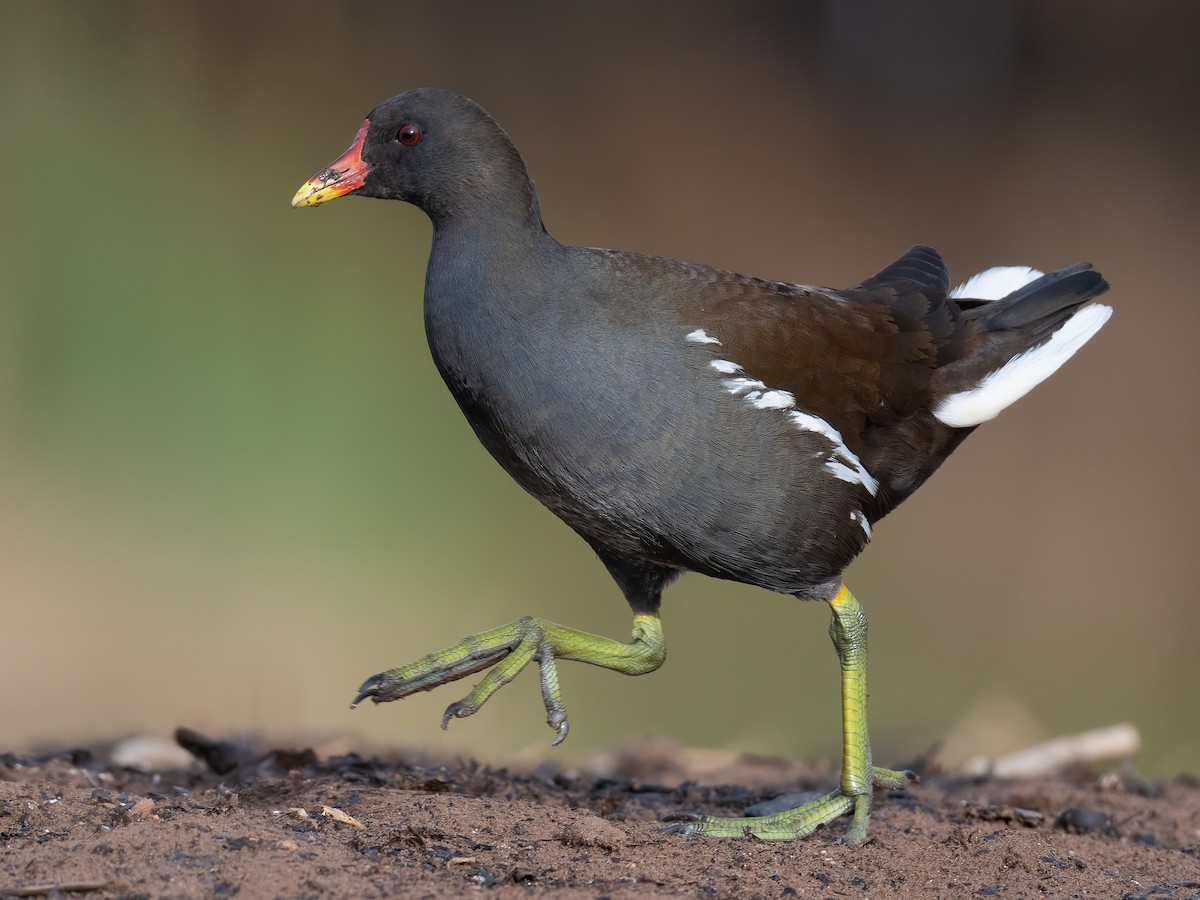
Where does the Eurasian Moorhen live?
Gallinula chloropus
Spotted a bird? Identify it instantly with the Birdby app
Open the appThe Eurasian Moorhen lives in specific habitats and regions. Knowing where, and when, to look improves your chances of a successful sighting.
Biomes
Freshwater wetlands, marshes, ponds, lakes, slow-moving rivers, canals, and ditches.
Geographic range
Widespread across Europe, Asia, and Africa. Also found in parts of North and South America (where it is known as the Common Gallinule, though some authorities now treat the American population as a separate species, Gallinula galeata).
Preferred environments
Prefers still or slow-moving water bodies with dense emergent vegetation (reeds, rushes, sedges) along the edges for cover, foraging, and nesting. Can also be found in more open water if sufficient cover is nearby.
Elevation range
Typically found from sea level up to 2,000 meters, occasionally higher in some parts of its range.
Where to look
Ponds and Lakes
Look along the vegetated edges of freshwater ponds, lakes, and reservoirs.
Rivers and Canals
Often found in slow-moving sections of rivers, canals, and ditches with ample bankside vegetation.
Marshes and Wetlands
Dense reedbeds and marshy areas provide ideal habitat for foraging and nesting.
Urban Parks
Common in urban and suburban parks with suitable water features, often becoming quite tame.
Field tips
- Look for movement in vegetation. Moorhens are often secretive and prefer to stay hidden in dense cover. Watch for rustling reeds or subtle movements along the water's edge.
- Observe head-bobbing. Their characteristic head-bobbing motion while swimming or walking is a good indicator of their presence.
- Listen for calls. Their loud, sharp calls are often heard before the bird is seen, especially when disturbed or communicating.
- Check for juveniles. During summer, look for duller, browner juveniles accompanying adults, often begging for food.
- Be patient. While common, they can be shy. Patience and quiet observation will often reward you with good views.
Migration
Northern populations are migratory, moving south for the winter. Southern populations are largely resident. Migration occurs at night. Some populations exhibit partial migration, with some individuals remaining while others move.
Explore the Eurasian Moorhen
Identify birds anywhere
Free on iOS, Android, and Web. Photo & sound identification, full species database, and your personal life list.