
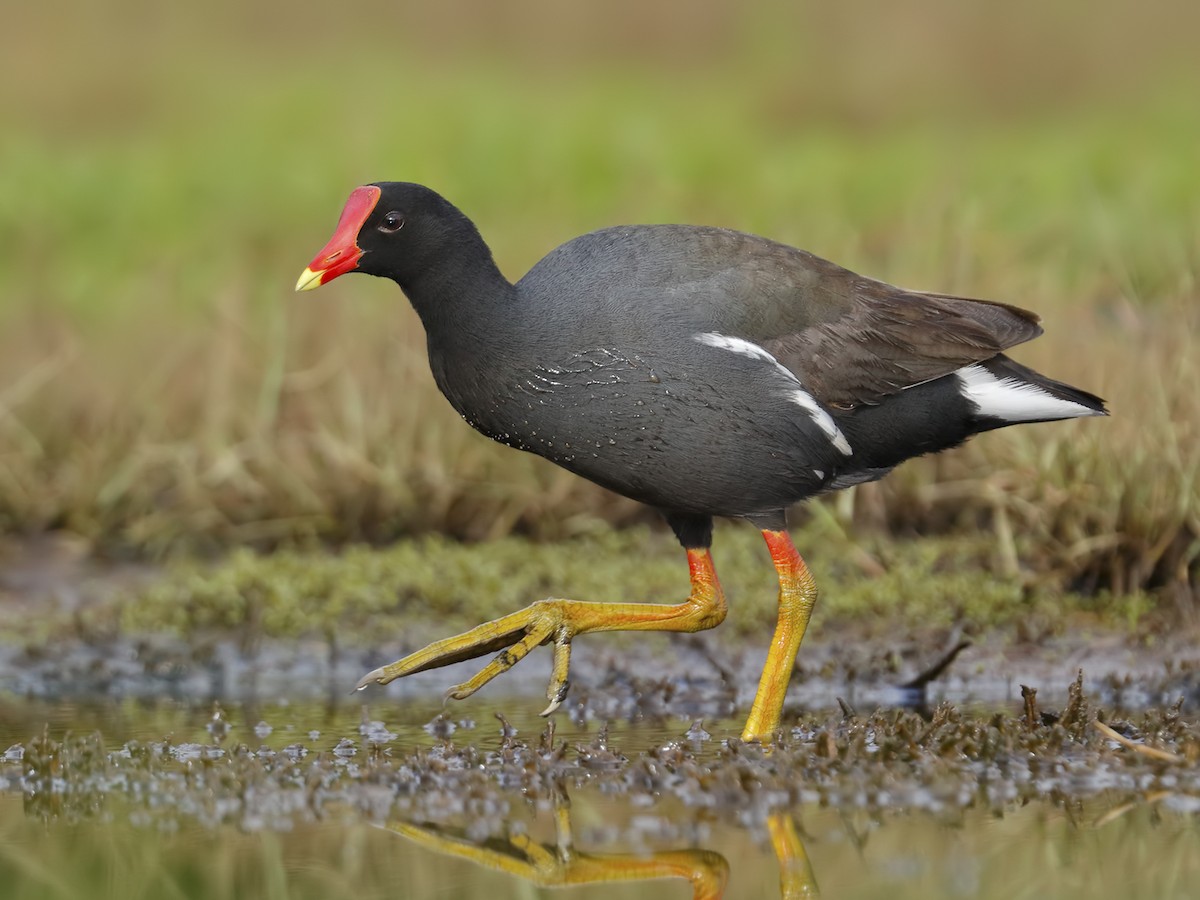
Where does the Common Gallinule live?
Gallinula galeata
Spotted a bird? Identify it instantly with the Birdby app
Open the appThe Common Gallinule lives in specific habitats and regions. Knowing where, and when, to look improves your chances of a successful sighting.
Biomes
Freshwater wetlands, marshes, ponds, lakes, slow-moving rivers, canals.
Geographic range
Widespread across the Americas, from southern Canada through the United States, Mexico, Central America, and much of South America. Also found in the Caribbean.
Preferred environments
Prefers shallow freshwater with dense emergent vegetation (e.g., cattails, reeds, sedges) for cover and nesting, and open water for foraging. Often found in areas with a mix of open water and dense vegetation.
Elevation range
Primarily lowlands, from sea level up to approximately 2,000 meters (6,500 feet) in some parts of its range.
Where to look
Freshwater Marshes
Look in areas with dense emergent vegetation like cattails, reeds, and sedges, especially where there are small patches of open water.
Ponds and Lakes
Check the vegetated edges of ponds, lakes, and slow-moving rivers. They prefer shallow areas.
Canals and Ditches
In agricultural or suburban areas, they can often be found in vegetated canals, ditches, and retention ponds.
Field tips
- Be Patient and Quiet. Common Gallinules are often shy and will retreat into cover if they feel threatened. Approach quietly and be prepared to wait for them to emerge.
- Look for Movement in Vegetation. Scan the edges of dense aquatic vegetation for subtle movements or glimpses of their dark bodies. They often walk on top of floating plants.
- Listen for Calls. Their distinctive clucking and cackling calls can often reveal their presence even when they are hidden from view.
- Use Binoculars. Binoculars are essential for observing their subtle field marks, especially the red frontal shield and flank stripe, from a distance.
Migration
Northern populations are migratory, moving south for the winter. Southern populations are resident year-round. Migration occurs at night.
Explore the Common Gallinule
Identify birds anywhere
Free on iOS, Android, and Web. Photo & sound identification, full species database, and your personal life list.