
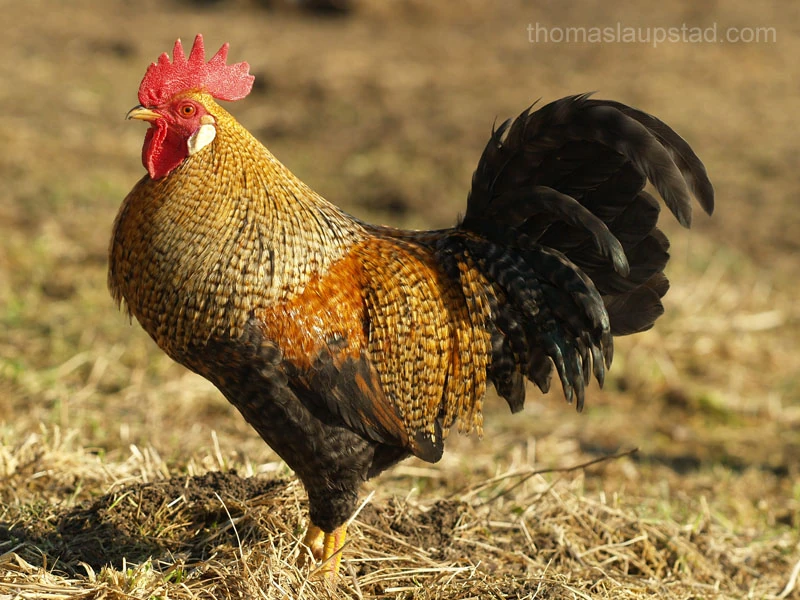
How to identify the Chicken
Gallus gallus domesticus
Spotted a bird? Identify it instantly with the Birdby app
Open the appTo correctly identify the Chicken (Gallus gallus domesticus), check each of these features. Birds can be tricky: habit, habitat, and call often confirm a sighting that a single photo cannot.
Size at a glance
- Length
- 40-70 cm (16-28 in)
- Wingspan
- 60-100 cm (24-39 in)
- Weight
- 1.5-5 kg (3.3-11 lbs), highly variable by breed and sex
Physical features to check
- 1
Plumage
Overall feather coloration and pattern.
Highly variable depending on breed. Common colors include white, black, brown, red, buff, grey, and various barred, laced, or mottled patterns. Roosters often have more vibrant and iridescent plumage, especially on the neck (hackle) and tail feathers.
- 2
Beak shape
Shape and color of the bill: a key field mark.
Short, conical, and strong, typically yellowish to horn-colored, adapted for pecking and foraging.
- 3
Eye color
Iris color and any distinctive eye markings.
Usually reddish-orange to brown, but can vary by breed.
- 4
Leg color
Leg and foot color.
Typically yellow, grey, or black, often scaly, with four toes (three forward, one backward) and a prominent spur on roosters.
- 5
Distinguishing features
Standout features that separate this species.
Prominent fleshy comb (usually red) on the head and wattles (fleshy growths) below the beak. Roosters have larger, more elaborate combs and wattles, and long, curving tail feathers (sickle feathers).
- 6
Juvenile appearance
How young birds differ from adults.
Chicks are covered in down, typically yellow, brown, or mixed patterns, often with stripes. As they mature, they gradually develop adult plumage, with young males (cockerels) beginning to show signs of comb and wattle development and longer tail feathers.
- 7
Seasonal changes
Plumage variation between breeding and non-breeding seasons.
No significant seasonal plumage changes. Plumage is generally consistent year-round, though molting occurs annually, during which feathers are shed and replaced.
- 8
Sexual dimorphism
How males and females differ.
Pronounced. Roosters (males) are generally larger, heavier, and more brightly colored than hens (females). They possess larger combs and wattles, longer and more pointed hackle and saddle feathers, and prominent spurs on their legs. Hens are typically duller in coloration and lack the long, flowing tail feathers and spurs of roosters.
Key field marks
- Size and Build. Domestic chickens vary greatly in size and build depending on the breed, from small bantams to large meat breeds. Look for a robust body, short wings, and strong legs.
- Head Ornamentation. Presence of a fleshy comb on the head and wattles below the beak. These are typically red, but size and shape vary significantly by breed and sex (larger in roosters).
- Plumage Coloration. Observe the wide array of plumage colors and patterns. Roosters often have more vibrant, iridescent feathers, especially on the neck and tail.
- Legs and Spurs. Scaly legs, typically yellow, grey, or black. Roosters possess prominent, sharp spurs on the back of their legs, which are absent or much smaller in hens.
- Vocalizations. The distinctive 'cock-a-doodle-doo' of the rooster and the various clucking and cackling sounds of hens are unmistakable.
- Behavior. Ground-foraging behavior (scratching and pecking), short, low flights, and social flocking behavior are characteristic.
Explore the Chicken
Identify birds anywhere
Free on iOS, Android, and Web. Photo & sound identification, full species database, and your personal life list.