
How to identify the Diamond Dove
Geopelia cuneata
Spotted a bird? Identify it instantly with the Birdby app
Open the appTo correctly identify the Diamond Dove (Geopelia cuneata), check each of these features. Birds can be tricky: habit, habitat, and call often confirm a sighting that a single photo cannot.
Size at a glance
- Length
- 19-21 cm
- Wingspan
- 26-30 cm
- Weight
- 23-32 g
Physical features to check
- 1
Plumage
Overall feather coloration and pattern.
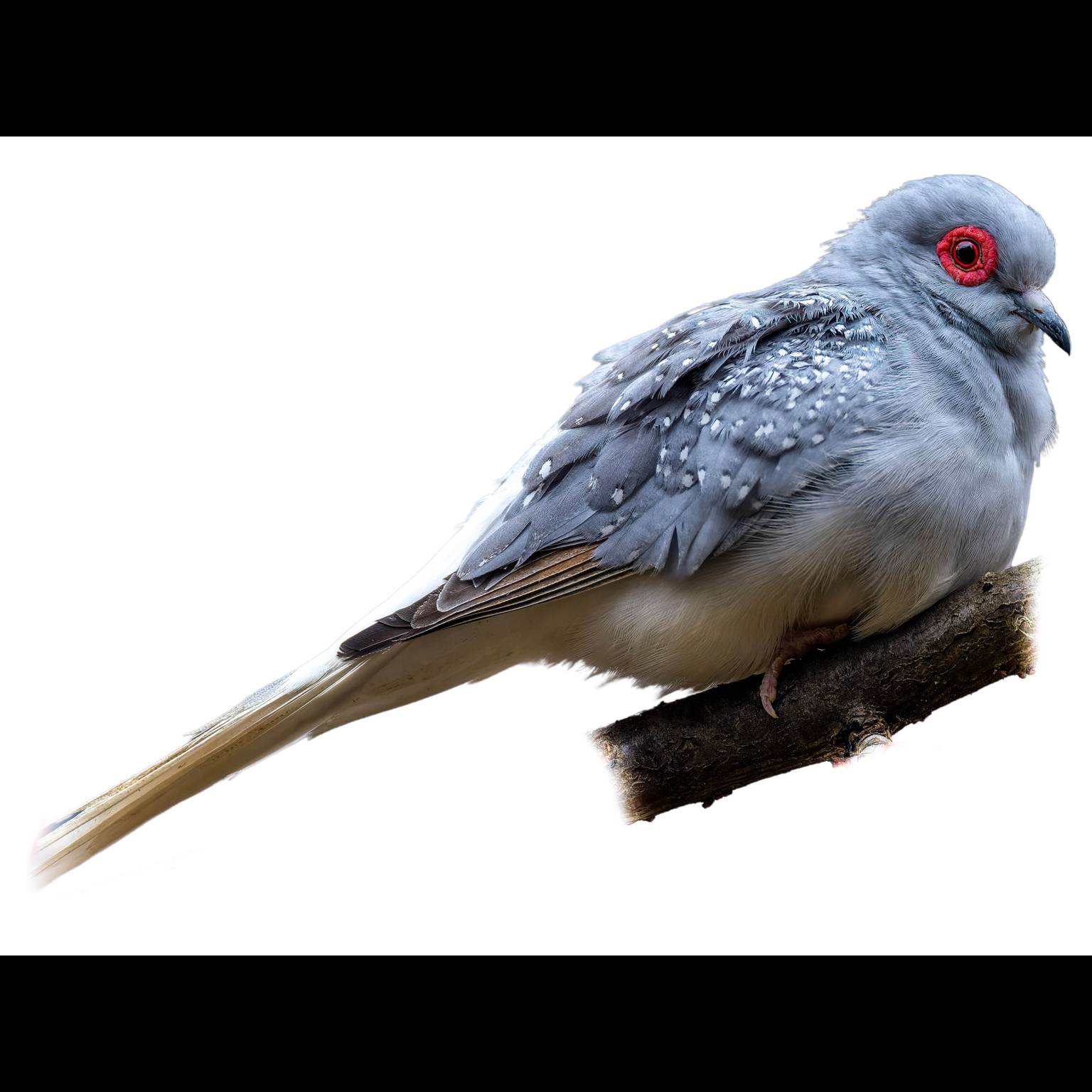
Adults have a grey body, with a white belly. The wings are brownish-grey with prominent white spots (diamonds) edged in black. The primary flight feathers are dark brown. The tail is long and graduated, with white outer tail feathers visible in flight. The rump is grey.
- 2
Beak shape
Shape and color of the bill: a key field mark.
Small, slender, dark grey to black beak.
- 3
Eye color
Iris color and any distinctive eye markings.
Red iris, surrounded by a distinctive bright orange-red orbital ring (bare skin around the eye).
- 4
Leg color
Leg and foot color.
Pinkish-red.
- 5
Distinguishing features
Standout features that separate this species.
The most distinctive feature is the bright orange-red orbital ring and the white 'diamond' spots on the wings. Its small size and long tail are also key identifiers.
- 6
Juvenile appearance
How young birds differ from adults.
Juveniles are duller overall, with a brownish-grey plumage and less distinct white spots on the wings. The orbital ring is greyish or dull orange, not yet the vibrant red of adults. The beak is darker, and the legs are duller pink.
- 7
Seasonal changes
Plumage variation between breeding and non-breeding seasons.
No significant seasonal plumage changes. The intensity of the orbital ring may vary slightly with breeding condition, becoming more vibrant during courtship.
- 8
Sexual dimorphism
How males and females differ.
Males typically have a more intense and vibrant orange-red orbital ring, and their grey plumage may appear slightly darker or more bluish than females. Females generally have a duller orbital ring and slightly paler grey plumage. These differences can be subtle and are not always reliable for sexing without direct comparison.
Key field marks
- Size and Shape. Look for a very small, slender dove with a relatively long, pointed tail.
- Wing Pattern. Observe the wings for distinctive small, round white spots ('diamonds') on a brownish-grey background. This is a key field mark.
- Head and Eye. Note the bright orange-red bare skin around the eye (orbital ring). This is a very striking and reliable identification feature in adults.
- Plumage Color. Overall grey body with a white belly. The grey can appear slightly bluish in males.
- Behavior. Watch for its ground-feeding habits, often pecking at small seeds. Its swift, direct flight with rapid wing beats is also characteristic.
- Vocalization. Listen for its soft, mournful, cooing 'coo-coo-coo' call, which is quite distinctive.
Explore the Diamond Dove
Identify birds anywhere
Free on iOS, Android, and Web. Photo & sound identification, full species database, and your personal life list.