
How to identify the Black-winged Stilt
Himantopus himantopus
Spotted a bird? Identify it instantly with the Birdby app
Open the appTo correctly identify the Black-winged Stilt (Himantopus himantopus), check each of these features. Birds can be tricky: habit, habitat, and call often confirm a sighting that a single photo cannot.
Size at a glance
- Length
- 33-36 cm (13-14 in)
- Wingspan
- 67-83 cm (26-33 in)
- Weight
- 136-205 g (4.8-7.2 oz)
Physical features to check
- 1
Plumage
Overall feather coloration and pattern.
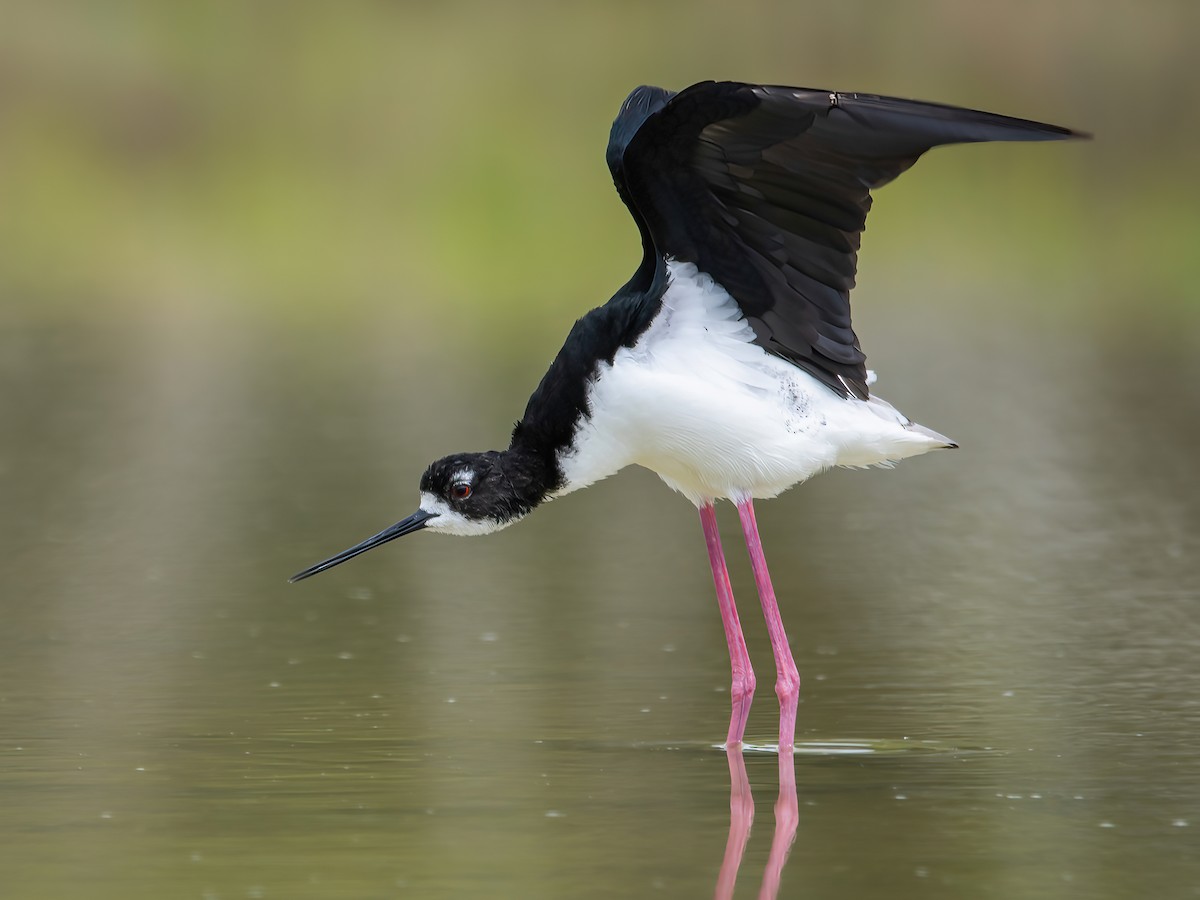
Adults have pure white underparts, head, and neck, contrasting sharply with glossy black wings and a black back. Some individuals, particularly males, may have a black cap or a black streak behind the eye, extending to the nape. The amount of black on the head and neck varies geographically and individually.
- 2
Beak shape
Shape and color of the bill: a key field mark.
Long, very thin, needle-like, and straight, entirely black.
- 3
Eye color
Iris color and any distinctive eye markings.
Dark brown with a small, dark pupil.
- 4
Leg color
Leg and foot color.
Extremely long, slender, bright pink to reddish-pink.
- 5
Distinguishing features
Standout features that separate this species.
Unmistakable due to its extremely long pink legs (proportionally the longest of any bird relative to body size), slender black bill, and stark black-and-white plumage. Its elegant, upright posture is also characteristic.
- 6
Juvenile appearance
How young birds differ from adults.
Juveniles resemble females but have a duller, brownish-black back and wings, often with pale feather fringes giving a scaly appearance. Their legs are duller pink, sometimes grayish-pink, and their heads are typically pure white or with very faint dusky markings.
- 7
Seasonal changes
Plumage variation between breeding and non-breeding seasons.
No significant seasonal plumage changes, though breeding adults may show slightly more intense black coloration. The primary variations are age and sex-related.
- 8
Sexual dimorphism
How males and females differ.
Males typically have a more extensive black cap and nape, often extending further down the hindneck, and a more intense black on the back. Females tend to have a browner or duller black back, and less black on the head, often appearing pure white-headed or with only a small dark patch behind the eye. These differences can be subtle and vary geographically.
Key field marks
- Legs. Look for exceptionally long, slender, bright pink legs that trail far behind the tail in flight. This is the most distinctive feature.
- Plumage Contrast. Observe the stark contrast between the pure white body (underparts, most of head and neck) and the glossy black wings and back. Note the variation in black on the head/nape for sex and age identification.
Explore the Black-winged Stilt
Identify birds anywhere
Free on iOS, Android, and Web. Photo & sound identification, full species database, and your personal life list.