
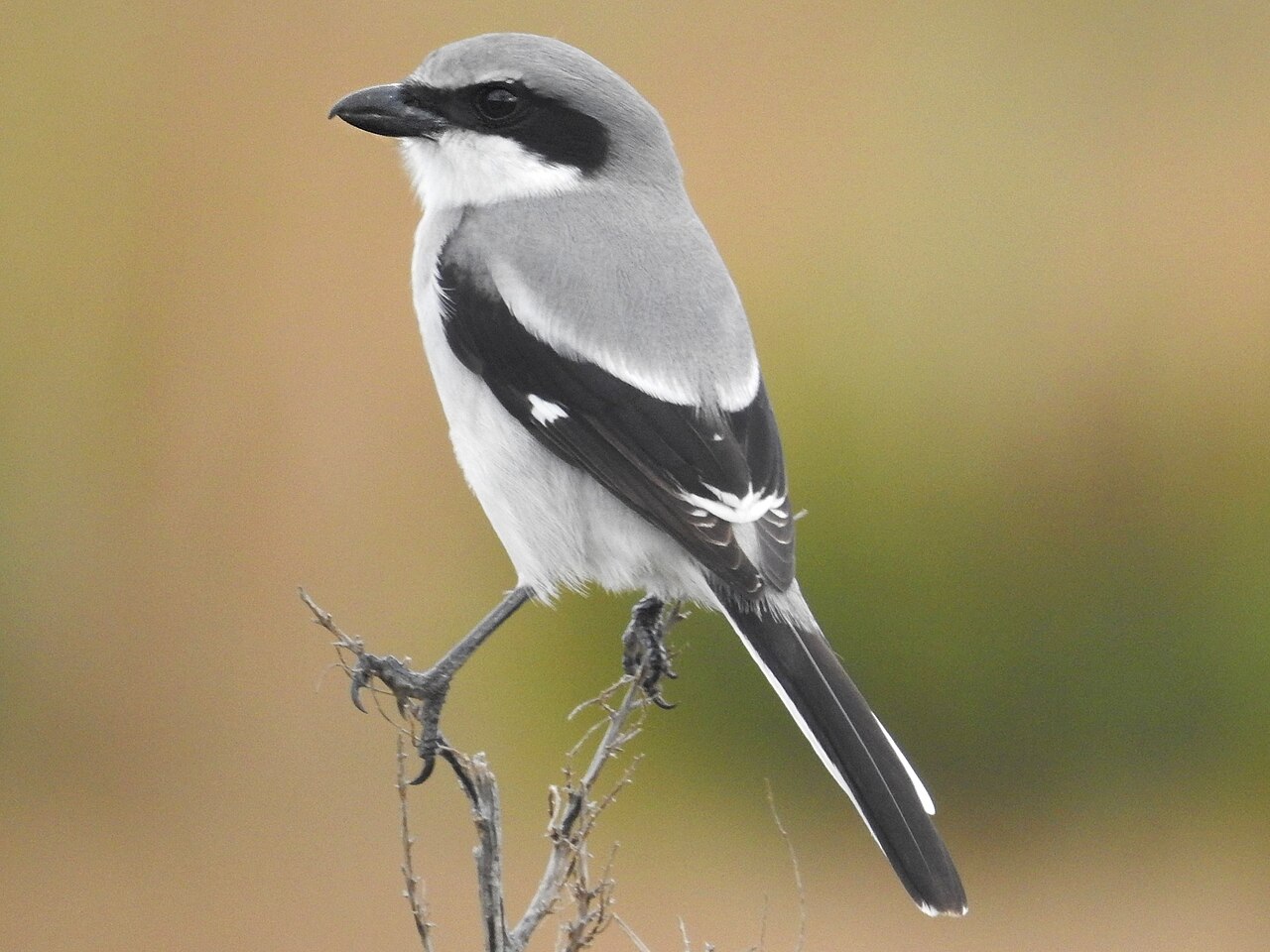
Where does the Loggerhead Shrike live?
Lanius ludovicianus
Spotted a bird? Identify it instantly with the Birdby app
Open the appThe Loggerhead Shrike lives in specific habitats and regions. Knowing where, and when, to look improves your chances of a successful sighting.
Biomes
Grasslands, shrublands, open woodlands, agricultural fields, pastures, deserts, and savannas.
Geographic range
Breeds across much of North America, from southern Canada through the United States, and into Mexico. Winters in the southern parts of its breeding range and further south into Mexico and Central America.
Preferred environments
Prefers open country with scattered shrubs, small trees, or fences that provide perches for hunting and impaling prey. Requires areas with short grass or bare ground for foraging and dense thorny vegetation for nesting and caching.
Elevation range
Typically found from sea level up to approximately 2,000 meters (6,500 feet), though occasionally higher in some regions.
Where to look
Open Grasslands and Pastures
Look in areas with short grass and scattered shrubs or trees, often near agricultural fields.
Shrub-steppe Habitats
Arid and semi-arid regions with sagebrush and other low, dense shrubs provide ideal habitat.
Roadsides and Fencelines
Often perch on utility wires, fence posts, or roadside vegetation, making them relatively easy to spot from a vehicle.
Orchards and Hedgerows
These provide both hunting perches and dense nesting sites.
Field tips
- Scan Perches. Loggerhead Shrikes are often conspicuous, perching on the highest available point to survey their territory. Use binoculars to scan fence posts, power lines, and prominent shrub tops.
- Look for Impaled Prey. In suitable habitat, look for their 'larders' – insects or small vertebrates impaled on thorns or barbed wire. This is a definitive sign of shrike presence.
- Listen for Calls. Familiarize yourself with their calls and songs. Their harsh alarm calls can alert you to their presence, even if they are hidden.
- Observe Hunting Behavior. Watch for their characteristic hunting style: a quick dive from a perch to the ground to capture prey.
- Visit Appropriate Habitats. Focus your search in open, semi-arid areas with scattered shrubs and short vegetation, avoiding dense forests.
Migration
Northern populations are migratory, moving south for the winter. Southern populations are largely resident. Migrants typically move short to medium distances, arriving on breeding grounds in early spring and departing in late summer or early fall.
Explore the Loggerhead Shrike
Identify birds anywhere
Free on iOS, Android, and Web. Photo & sound identification, full species database, and your personal life list.