
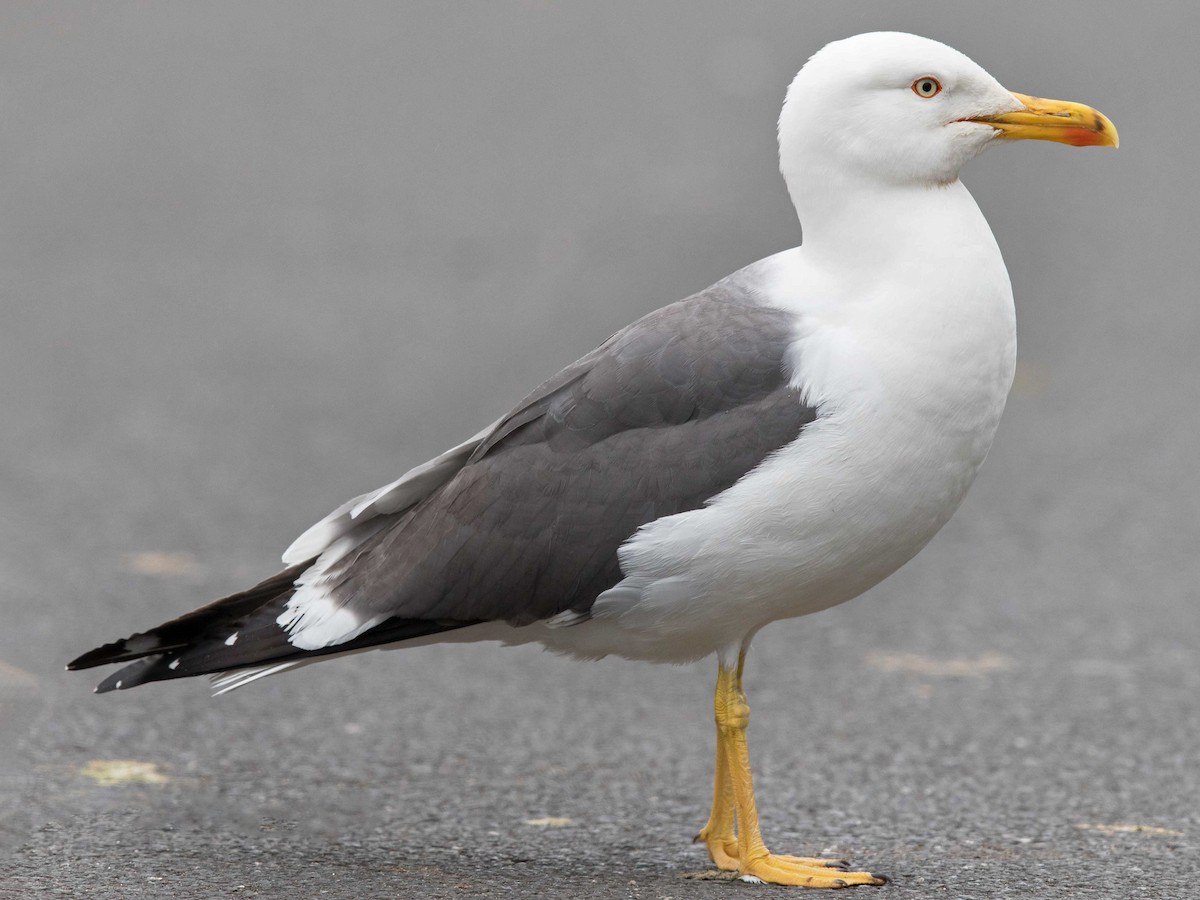
Where does the Lesser Black-backed Gull live?
Larus fuscus
Spotted a bird? Identify it instantly with the Birdby app
Open the appThe Lesser Black-backed Gull lives in specific habitats and regions. Knowing where, and when, to look improves your chances of a successful sighting.
Biomes
Coastal areas, estuaries, wetlands, agricultural land, urban environments, open sea.
Geographic range
Breeds in Northern Europe (from Iceland and the UK eastward to Russia) and winters along the coasts of Western Europe, the Mediterranean, Africa (especially West Africa), and occasionally the eastern seaboard of North America and South America.
Preferred environments
Coastal cliffs, islands, dunes, saltmarshes, estuaries, reservoirs, lakes, and increasingly urban rooftops and landfill sites for breeding and foraging.
Elevation range
Primarily sea level to low altitudes, rarely found at higher elevations.
Where to look
Coastal Areas
Look along coastlines, estuaries, beaches, and rocky shores, especially during migration and winter.
Urban Environments
Increasingly found in cities, particularly on rooftops for nesting and around food sources like markets and refuse dumps.
Agricultural Land
Often seen foraging in ploughed fields, especially during migration and winter, following tractors for invertebrates.
Inland Water Bodies
Can be found around large lakes, reservoirs, and rivers, particularly during migration or in areas with abundant food.
Landfills/Refuse Dumps
A common and often dominant species at these sites, where they scavenge for food.
Field tips
- Focus on Leg Color. This is often the quickest and most reliable way to distinguish it from Herring Gulls and Great Black-backed Gulls at a distance.
- Compare Mantle Shade. If Herring Gulls are present, compare the mantle color directly. The Lesser Black-backed's mantle will be noticeably darker grey.
- Listen for Calls. Their calls are loud and distinctive, often a deeper, more resonant version of a Herring Gull's call. Learning the vocalizations can aid identification, especially in mixed flocks.
- Observe Behavior. Their opportunistic feeding habits mean they can be found in diverse locations. Look for them scavenging, following boats, or foraging in fields.
- Study Age Classes. Be aware of the different plumages of juvenile and immature birds, as they can look quite different from adults. Focus on the developing mantle color and leg/bill color changes.
Migration
A strong migratory species. Northern populations migrate south for the winter, with many individuals from Northern Europe traveling to the coasts of Western Europe and Africa. Some populations, particularly in the UK, are becoming increasingly resident or undertaking shorter migrations.
Explore the Lesser Black-backed Gull
Identify birds anywhere
Free on iOS, Android, and Web. Photo & sound identification, full species database, and your personal life list.