
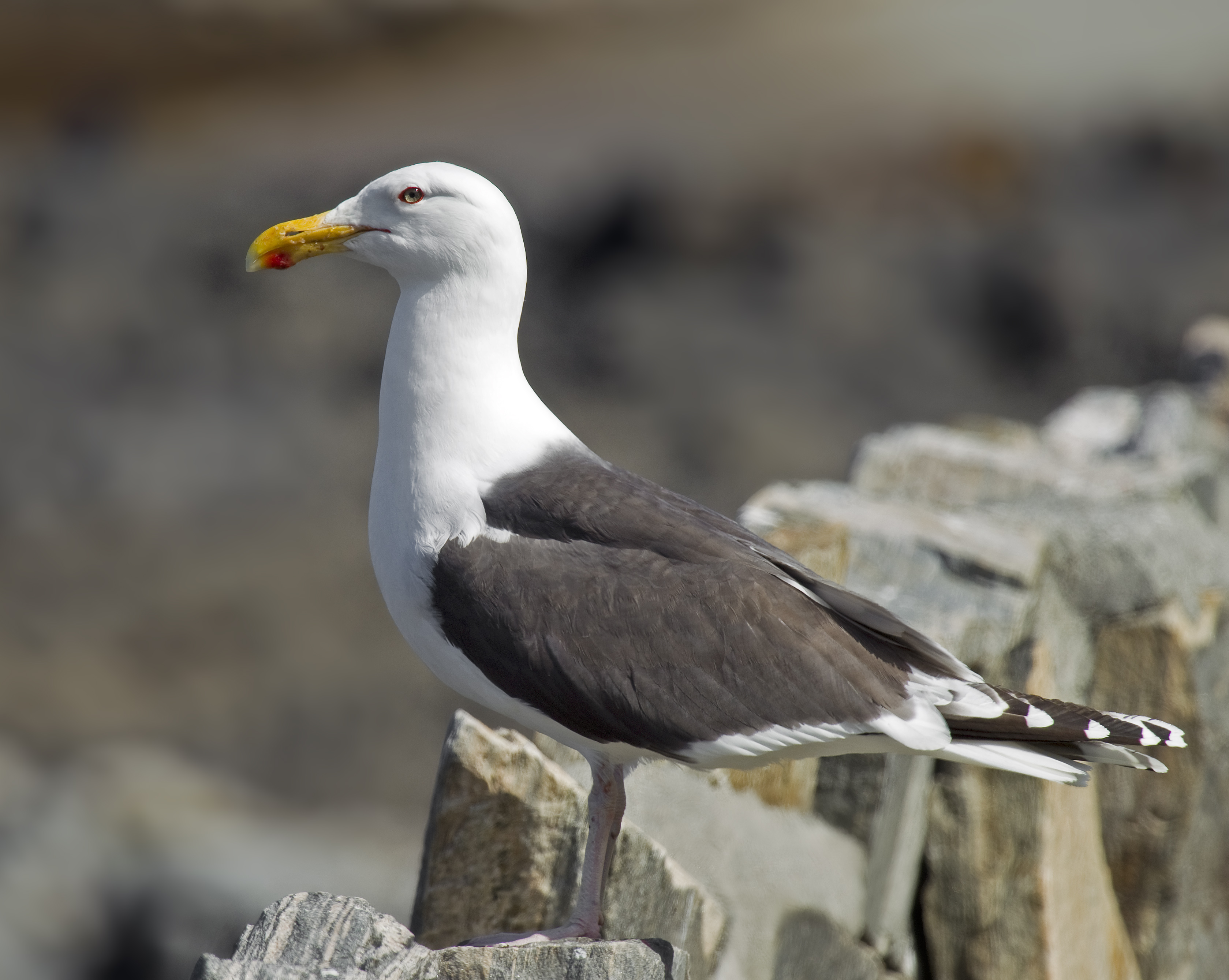
Where does the Great Black-backed Gull live?
Larus marinus
Spotted a bird? Identify it instantly with the Birdby app
Open the appThe Great Black-backed Gull lives in specific habitats and regions. Knowing where, and when, to look improves your chances of a successful sighting.
Biomes
Coastal marine, estuaries, large lakes, agricultural land, urban areas near coastlines.
Geographic range
Breeds across the North Atlantic coasts of Europe and North America, from northern France, the British Isles, and Scandinavia, eastward to northwest Russia, and westward to Greenland, Iceland, and northeastern North America (from Newfoundland south to North Carolina). Winters primarily within its breeding range, but some southern movements occur.
Preferred environments
Rocky coastlines, sandy beaches, estuaries, harbors, offshore islands, fish docks, refuse tips, and increasingly, agricultural fields and urban environments near the coast.
Elevation range
Primarily sea level to low elevations along coastlines; rarely observed far inland or at significant altitudes.
Where to look
Coastal Areas
Look along rocky shores, beaches, cliffs, and estuaries. They are common in harbors, fishing ports, and fish processing plants where food is readily available.
Offshore Islands
Often found nesting on remote, undisturbed offshore islands, particularly those with seabird colonies, which provide a reliable food source.
Refuse Dumps
Known to frequent landfills and refuse sites, especially those near coastal regions, for scavenging opportunities.
Agricultural Fields
Increasingly observed inland in agricultural areas, particularly during plowing or harvesting, where they can feed on invertebrates and small rodents.
Field tips
- Scan for Large Size. When observing gulls, seek out the largest individual. Its sheer size often stands out immediately.
- Observe Mantle Coloration. Even from a distance, the deep, dark mantle against the white head and underparts is a strong indicator.
- Look at Bill Structure. Use binoculars to carefully examine the bill. Its robust nature and the red spot are key adult features.
- Listen for Calls. Become familiar with its deep, powerful calls, which differ from the higher-pitched calls of other gulls.
- Check Leg Color. If close enough, confirm the pinkish leg color to rule out Lesser Black-backed Gull.
Migration
Generally a partial migrant. Many northern populations move south for the winter, while southern populations remain resident year-round. Young birds disperse widely. Migration routes are typically coastal.
Explore the Great Black-backed Gull
Identify birds anywhere
Free on iOS, Android, and Web. Photo & sound identification, full species database, and your personal life list.