
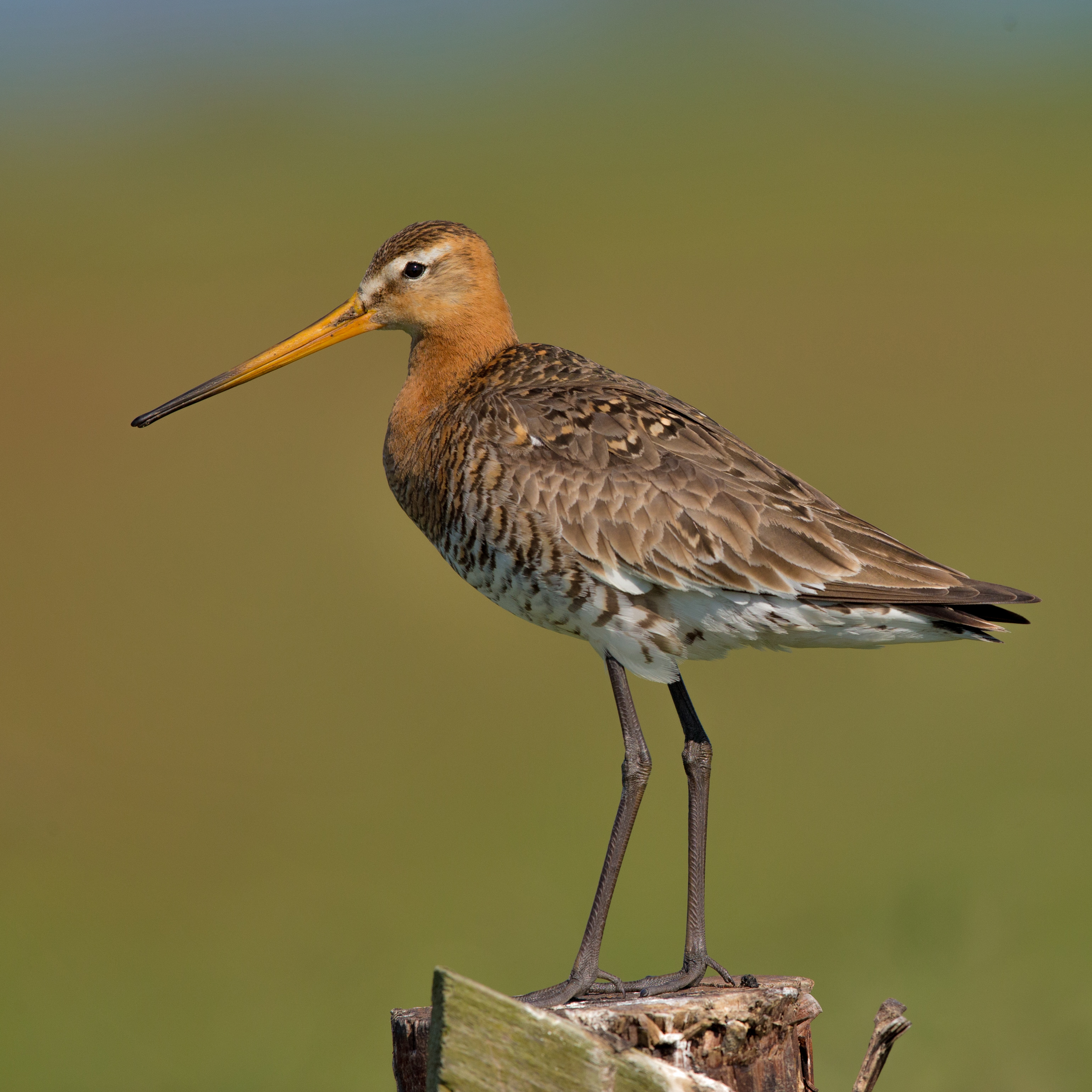
Where does the Black-tailed Godwit live?
Limosa limosa
Spotted a bird? Identify it instantly with the Birdby app
Open the appThe Black-tailed Godwit lives in specific habitats and regions. Knowing where, and when, to look improves your chances of a successful sighting.
Biomes
Wetlands, grasslands, marshes, estuaries, floodplains, agricultural fields (especially wet meadows and rice paddies).
Geographic range
Breeds across temperate Eurasia from Iceland and Western Europe to Central Asia and Siberia. Winters in Western and Southern Europe, Africa (especially sub-Saharan), the Middle East, India, Southeast Asia, and Australia.
Preferred environments
Shallow freshwater wetlands, wet grasslands, sedge meadows, floodplains for breeding. Estuaries, coastal lagoons, mudflats, and rice fields for wintering and migration.
Elevation range
Primarily lowlands, typically below 500 meters, but can be found at higher altitudes during migration.
Where to look
Wet Grasslands
Prime breeding habitat in temperate Eurasia, especially traditional hay meadows and floodplains.
Estuaries and Mudflats
Key wintering and migratory stopover sites, particularly along coastlines and large river deltas.
Rice Paddies
Important wintering habitat in parts of Asia, where they feed in flooded fields.
Shallow Freshwater Wetlands
Used for both breeding and migration, including marshes, fens, and flooded fields.
Field tips
- Scan open wetlands. Black-tailed Godwits prefer open, shallow water or wet ground where they can easily probe for food. Use a scope or binoculars to scan large areas.
- Look for flocks. Outside the breeding season, they are highly gregarious. Look for large, often noisy, flocks feeding together or resting on mudflats.
- Observe flight. The flight pattern and especially the wing and tail markings are crucial for identification. Watch birds taking off or flying overhead.
- Listen for calls. Their distinctive calls, particularly the 'grutto' or 'wicka-wicka', can often alert you to their presence before you see them.
- Visit during migration. Spring and autumn migration periods offer excellent opportunities to see large numbers of godwits at stopover sites.
Migration
Long-distance migrant. Northern populations migrate south to Africa and southern Asia, while western European populations may winter closer to their breeding grounds or move to southern Europe/North Africa. Migration occurs in broad fronts, often with stopovers at key wetland sites.
Explore the Black-tailed Godwit
Identify birds anywhere
Free on iOS, Android, and Web. Photo & sound identification, full species database, and your personal life list.