
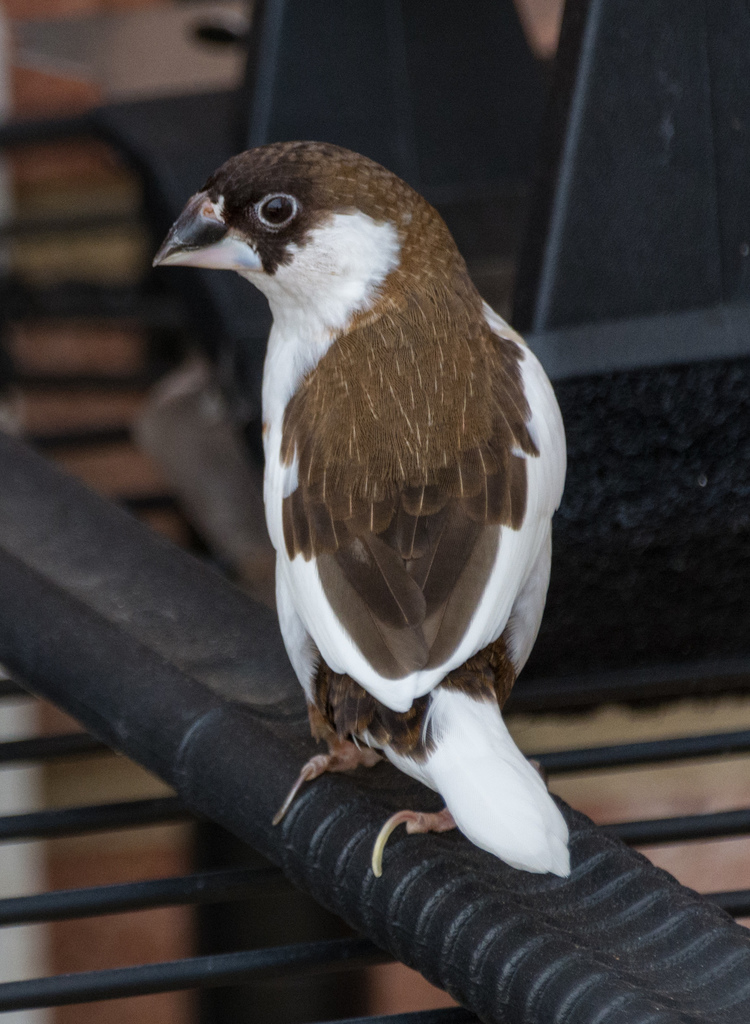
How to identify the Society Finch
Lonchura domestica
Spotted a bird? Identify it instantly with the Birdby app
Open the appTo correctly identify the Society Finch (Lonchura domestica), check each of these features. Birds can be tricky: habit, habitat, and call often confirm a sighting that a single photo cannot.
Size at a glance
- Length
- 10-12 cm
- Wingspan
- 15-17 cm
- Weight
- 12-18 g
Physical features to check
- 1
Plumage
Overall feather coloration and pattern.
Highly variable due to selective breeding. Common colorations include chocolate brown, fawn, white, pied (patches of brown/fawn and white), and cream. Patterns can include solid, self, clearwing, crested, and pearl. The underparts are typically lighter than the upperparts, often with fine barring or scaling on the flanks and breast, especially in brown varieties.
- 2
Beak shape
Shape and color of the bill: a key field mark.
Conical, short, and stout, adapted for cracking seeds. Color ranges from light horn to dark grey.
- 3
Eye color
Iris color and any distinctive eye markings.
Dark brown to black
- 4
Leg color
Leg and foot color.
Pinkish-grey to dark grey
- 5
Distinguishing features
Standout features that separate this species.
Its domesticated origin means there is no single 'wild type' appearance. Key features include its small size, conical beak, and the wide array of color mutations. The overall impression is a neat, compact finch.
- 6
Juvenile appearance
How young birds differ from adults.
Juveniles generally resemble adults but may have duller plumage, less distinct markings, and a slightly softer, less defined beak. Their calls are also softer and less developed.
- 7
Seasonal changes
Plumage variation between breeding and non-breeding seasons.
None. As a domesticated species, plumage does not change seasonally for breeding or non-breeding purposes.
- 8
Sexual dimorphism
How males and females differ.
None. Males and females are virtually identical in plumage and size. Sexing typically requires observing breeding behavior (males sing more frequently and intensely) or DNA testing.
Key field marks
- Domesticated Appearance. Recognize the wide variety of color mutations (brown, white, pied, fawn, crested) not typically seen in wild finch species. This is the primary indicator of a Society Finch.
- Size and Shape. Small, compact finch (approx. 10-12 cm) with a short, conical beak. They have a neat, well-proportioned body.
- Behavior. Observe their highly social nature. They are almost always seen in groups, huddling together, and are generally very docile and non-aggressive, even with other species. Males sing a soft, warbling song.
- Habitat. If encountered, they will always be in a captive setting (aviary, cage, pet store), as they do not exist in the wild.
Explore the Society Finch
Identify birds anywhere
Free on iOS, Android, and Web. Photo & sound identification, full species database, and your personal life list.