
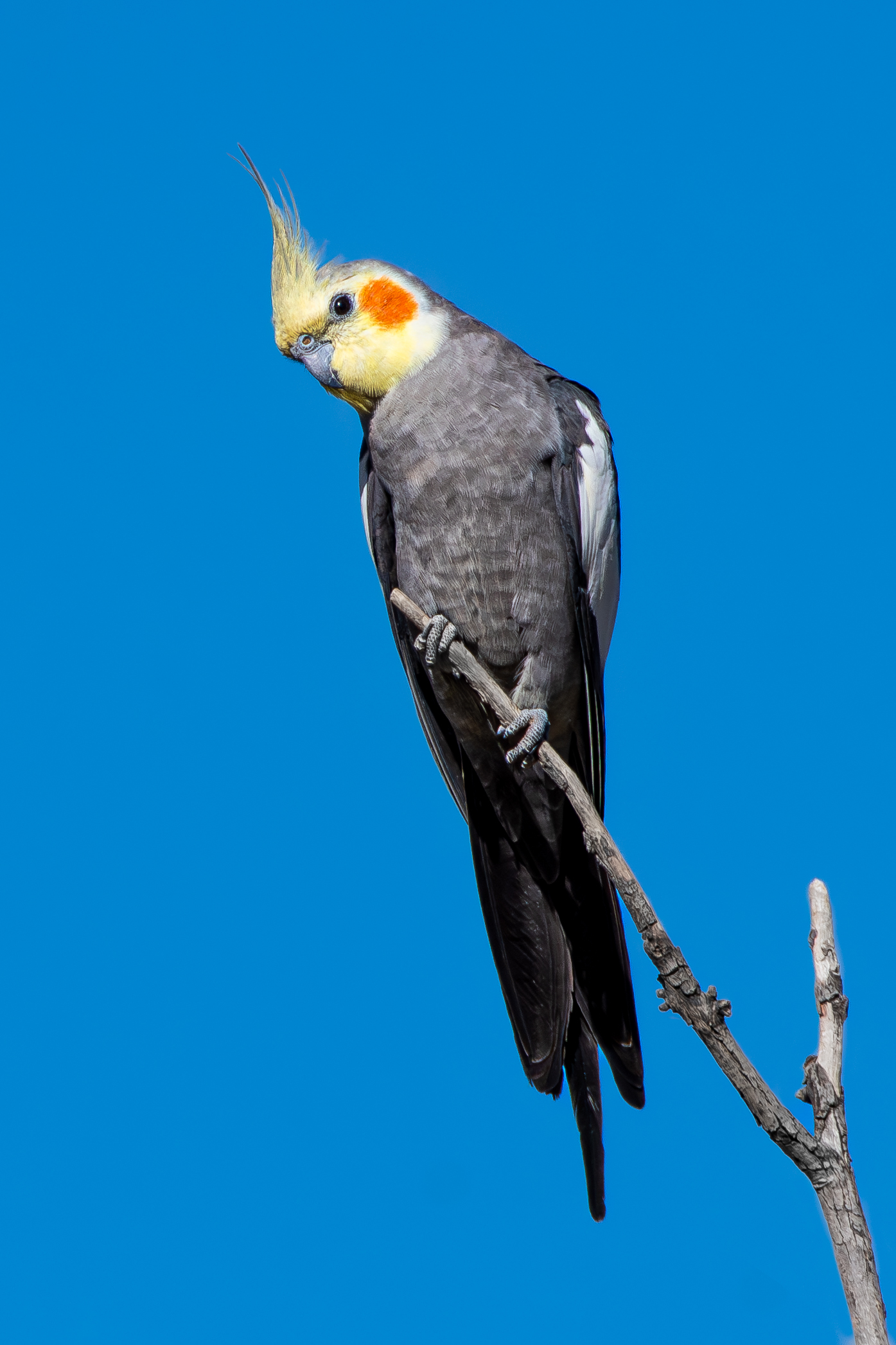
How to identify the Cockatiel
Nymphicus hollandicus
Spotted a bird? Identify it instantly with the Birdby app
Open the appTo correctly identify the Cockatiel (Nymphicus hollandicus), check each of these features. Birds can be tricky: habit, habitat, and call often confirm a sighting that a single photo cannot.
Size at a glance
- Length
- 30-33 cm (12-13 in) including tail
- Wingspan
- 30-35 cm (12-14 in)
- Weight
- 70-120 g (2.5-4.2 oz)
Physical features to check
- 1
Plumage
Overall feather coloration and pattern.
Wild-type (normal grey) Cockatiels have a predominantly grey body with prominent white flashes on the outer edges of each wing. The face is typically yellow or white, with a distinct orange patch covering the ear opening. The crest is grey, often tipped with yellow. The underside of the tail feathers is dark grey.
- 2
Beak shape
Shape and color of the bill: a key field mark.
Short, strongly curved, dark grey to black beak, typical of parrots for cracking seeds.
- 3
Eye color
Iris color and any distinctive eye markings.
Dark brown.
- 4
Leg color
Leg and foot color.
Dark grey to blackish-grey zygodactyl feet (two toes forward, two toes backward).
- 5
Distinguishing features
Standout features that separate this species.
The most distinctive feature is the prominent, erectile crest on the head, which can be raised or lowered to indicate the bird's mood. The long, tapering tail, often nearly half the bird's total length, is also characteristic. The bright orange ear patches on a yellow or white face are key identifiers for wild-type males.
- 6
Juvenile appearance
How young birds differ from adults.
Juveniles of both sexes resemble adult females, with duller facial coloration, less vibrant orange cheek patches, and barring on the underside of the tail feathers. Males will gradually develop their brighter adult plumage after their first molt, typically around 6-9 months of age.
- 7
Seasonal changes
Plumage variation between breeding and non-breeding seasons.
No significant seasonal plumage changes. Plumage remains consistent year-round, with variations primarily due to age and sex.
- 8
Sexual dimorphism
How males and females differ.
Pronounced in wild-type birds: Adult males have bright yellow faces and crests with vivid orange cheek patches. Adult females have duller grey faces and crests, with less intense orange cheek patches, and horizontal barring on the underside of their tail feathers and sometimes on the primary flight feathers. Juvenile birds resemble females.
Key field marks
- Crest. Look for the prominent, erectile crest on the head. Its position indicates the bird's mood (upright when alert/excited, flattened when relaxed/fearful).
- Facial Markings. Observe the bright orange cheek patches on a yellow or white face (more vivid in males, duller in females/juveniles). This is a key field mark for wild-type birds.
- Tail Length. Note the long, tapering tail, which is almost as long as the body, giving the bird a slender silhouette.
- Wing Patches. Identify the distinct white flashes on the outer edges of the wings, visible in flight and when perched.
- Vocalization. Listen for their characteristic 'weero' call or the male's complex whistling songs.
- Behavior. Look for them foraging on the ground in open areas, often near water, or flying in cohesive flocks.
Explore the Cockatiel
Identify birds anywhere
Free on iOS, Android, and Web. Photo & sound identification, full species database, and your personal life list.