
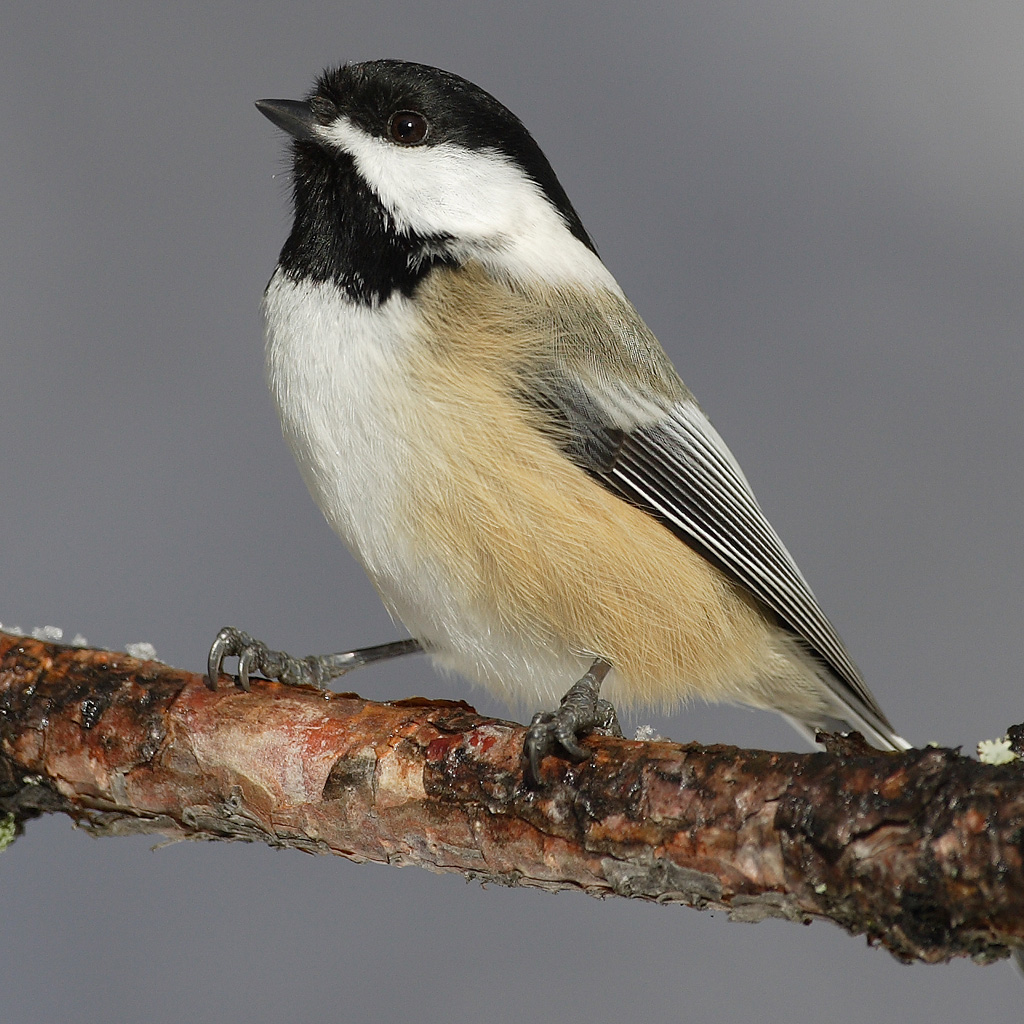
Where does the Black-capped Chickadee live?
Poecile atricapillus
Spotted a bird? Identify it instantly with the Birdby app
Open the appThe Black-capped Chickadee lives in specific habitats and regions. Knowing where, and when, to look improves your chances of a successful sighting.
Biomes
Deciduous and mixed forests, woodlands, suburban parks, gardens, and riparian areas.
Geographic range
Widespread across Canada, Alaska, and the northern two-thirds of the United States, extending south into the Appalachian Mountains.
Preferred environments
Prefers areas with mature trees for foraging and nesting, often near water sources. Highly adaptable to human-modified landscapes, including suburban and urban parks with sufficient tree cover.
Elevation range
Sea level up to approximately 2,000 meters (6,500 feet), depending on the region and availability of suitable habitat.
Where to look
Forests and Woodlands
Common in deciduous, mixed, and coniferous forests, especially those with mature trees and some dead snags for nesting.
Suburban Parks and Gardens
Frequently found in residential areas with ample trees and shrubs, often visiting bird feeders.
Riparian Areas
Can be found along rivers and streams where tree cover is present.
Field tips
- Listen for Calls. Their distinctive 'chick-a-dee-dee-dee' call is often the first indication of their presence. Learn to distinguish it from the similar Carolina Chickadee call.
- Check Bird Feeders. They are frequent visitors to feeders, especially in winter, where they prefer black oil sunflower seeds and suet. Look for them taking a seed and flying off to cache it.
- Look for Movement. Chickadees are constantly on the move, flitting from branch to branch, often hanging upside down. Their activity makes them easier to spot.
- Mixed-Species Flocks. In non-breeding seasons, they often join mixed-species foraging flocks. If you find one chickadee, others, and potentially other species, may be nearby.
- Patience and Observation. While active, they can be quick. Find a comfortable spot and observe their movements and foraging patterns.
Migration
Primarily a permanent resident throughout its range. Some irruptive movements may occur in winter, especially in northern populations, in response to food scarcity.
Explore the Black-capped Chickadee
Identify birds anywhere
Free on iOS, Android, and Web. Photo & sound identification, full species database, and your personal life list.