
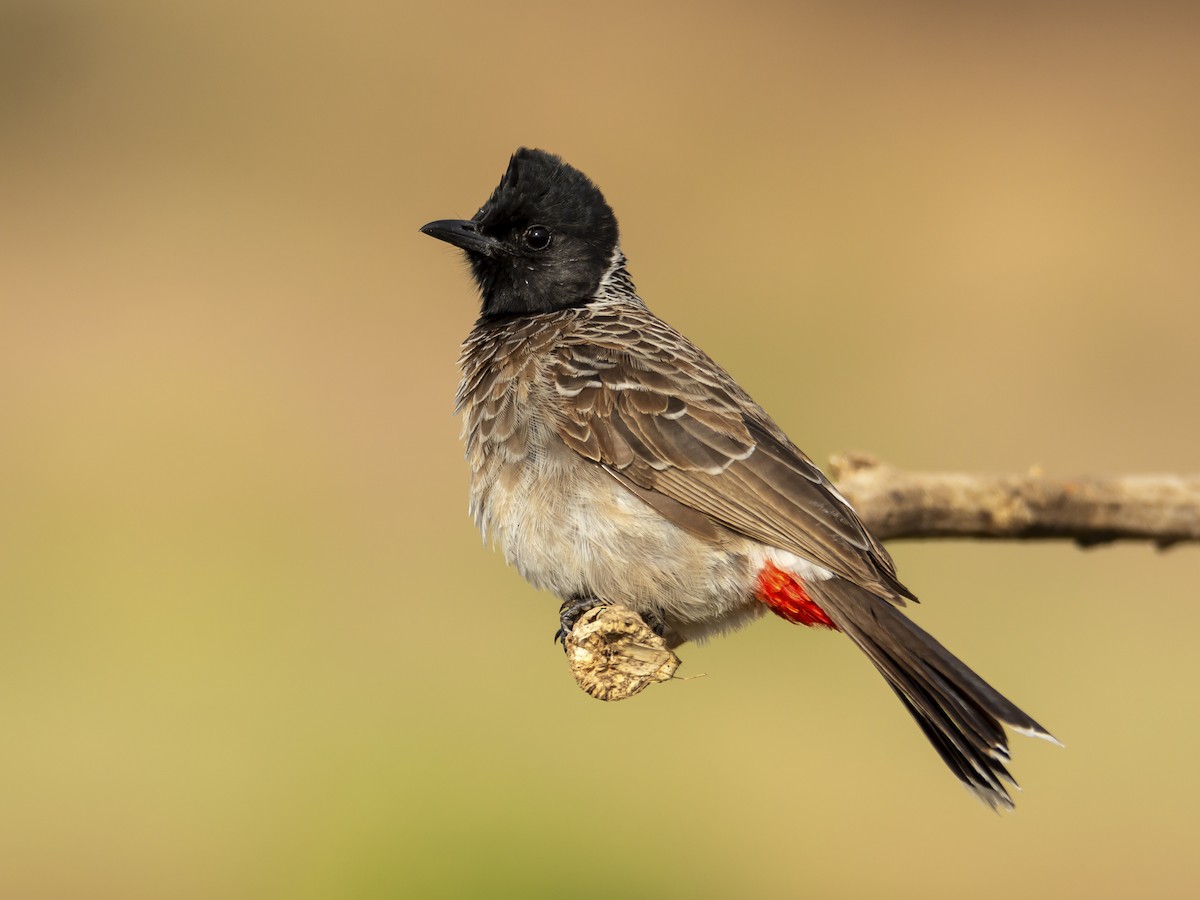
Where does the Red-vented Bulbul live?
Pycnonotus cafer
Spotted a bird? Identify it instantly with the Birdby app
Open the appThe Red-vented Bulbul lives in specific habitats and regions. Knowing where, and when, to look improves your chances of a successful sighting.
Biomes
Tropical and subtropical dry forests, moist lowland forests, mangroves, savanna, shrubland, grasslands, gardens, rural gardens, urban areas, plantations, cultivated land, coastal areas.
Geographic range
Native to the Indian subcontinent and parts of Southeast Asia, including India, Nepal, Bangladesh, Bhutan, Pakistan, Afghanistan, Myanmar, Thailand, and parts of China. Introduced populations are widespread globally, including in Fiji, Hawaii, New Zealand, New Caledonia, Mauritius, Seychelles, Samoa, Tonga, and various parts of the Arabian Peninsula.
Preferred environments
Highly adaptable, prefers open woodlands, scrub, gardens, orchards, agricultural areas, and urban parks. It thrives in human-modified landscapes and is a common sight in towns and cities.
Elevation range
Sea level up to approximately 2000 meters (6500 feet) in its native range, occasionally higher.
Where to look
Urban Gardens and Parks
One of the easiest places to find them, as they are very comfortable around human habitation and readily visit feeders or fruit-bearing trees.
Orchards and Agricultural Areas
Abundant food sources make these ideal locations. Look among fruit trees and flowering shrubs.
Open Woodlands and Scrubland
Native habitats where they forage among trees and bushes. Listen for their calls to locate them.
Roadsides and Edges of Forests
Often seen perched on wires, fences, or low branches along roadsides, especially in areas with shrubs and trees.
Introduced Ranges
In areas where they are introduced (e.g., Hawaii, Fiji), they have adapted to similar urban, suburban, and agricultural environments.
Field tips
- Listen for calls. Their noisy and varied vocalizations are often the first sign of their presence. They are quite vocal, especially during the breeding season.
- Look for movement in fruiting trees. They are highly attracted to ripe fruits and berries. Observe any fruit-bearing trees or shrubs; you're likely to spot them foraging.
- Check for foraging in dense bushes. While often in the open, they also spend considerable time gleaning insects and berries from dense undergrowth. Patience may be required.
- Observe near human settlements. They have successfully adapted to human-altered landscapes, so gardens, parks, and even bustling city areas can be prime viewing spots.
Migration
Generally resident throughout its native and introduced range, exhibiting only local movements or dispersal rather than long-distance migration.
Explore the Red-vented Bulbul
Identify birds anywhere
Free on iOS, Android, and Web. Photo & sound identification, full species database, and your personal life list.