
How to identify the Green-cheeked Parakeet
Pyrrhura molinae
Spotted a bird? Identify it instantly with the Birdby app
Open the appTo correctly identify the Green-cheeked Parakeet (Pyrrhura molinae), check each of these features. Birds can be tricky: habit, habitat, and call often confirm a sighting that a single photo cannot.
Size at a glance
- Length
- 24-26 cm (9.4-10.2 in)
- Wingspan
- 30-35 cm (11.8-13.8 in)
- Weight
- 60-80 g (2.1-2.8 oz)
Physical features to check
- 1
Plumage
Overall feather coloration and pattern.
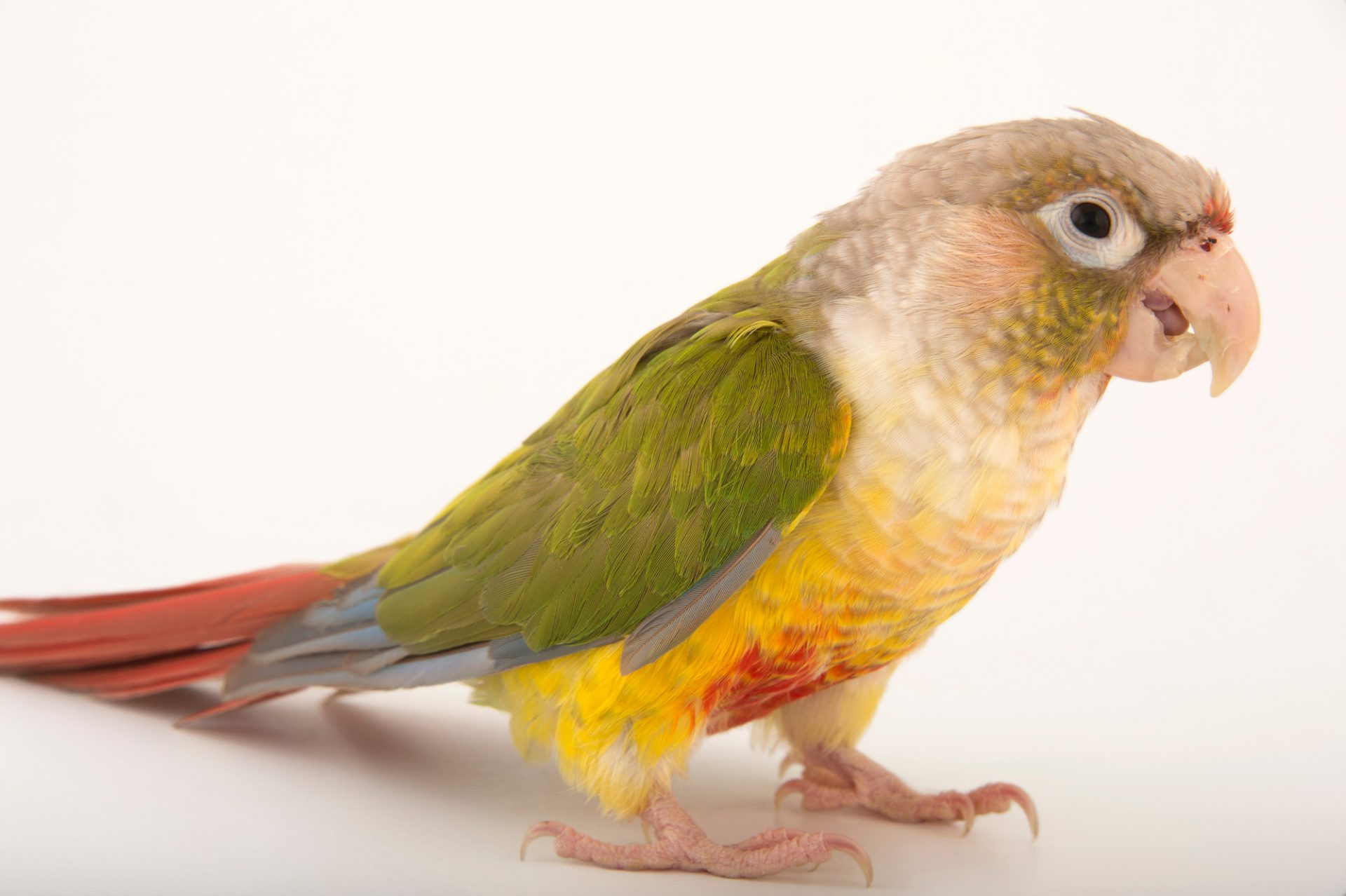
Predominantly green plumage. The crown is brownish-black, transitioning to a dull green on the nape. Cheeks are green, giving the bird its common name. The breast is barred with brown and white, becoming reddish-brown on the belly and lower back. Primary flight feathers are blue, and the tail is maroon, especially visible from below. A distinctive red patch is often present on the bend of the wing (carpal joint), though this can vary in prominence among individuals and subspecies.
- 2
Beak shape
Shape and color of the bill: a key field mark.
Small, hooked, and dark grey to black.
- 3
Eye color
Iris color and any distinctive eye markings.
Dark brown with a white periophthalmic ring (bare eye-ring).
- 4
Leg color
Leg and foot color.
Dark grey.
- 5
Distinguishing features
Standout features that separate this species.
Green cheeks, brownish-black crown, barred breast, reddish-brown belly/lower back, blue primary flight feathers, and maroon tail. The white eye-ring is also a good field mark.
- 6
Juvenile appearance
How young birds differ from adults.
Juveniles resemble adults but may have duller plumage, particularly less prominent reddish-brown on the belly and a less distinct barred pattern on the breast. Their eye-ring may also be less defined.
- 7
Seasonal changes
Plumage variation between breeding and non-breeding seasons.
No significant seasonal plumage changes.
- 8
Sexual dimorphism
How males and females differ.
None. Males and females are visually identical.
Key field marks
- Green Cheeks. Look for the distinct green coloration on the sides of the head, which contrasts with the brownish-black crown.
- Barred Breast. Observe the fine brown and whitish barring pattern on the breast, which transitions to a reddish-brown on the lower belly.
- Maroon Tail. Note the maroon coloration of the tail, especially visible when the bird is in flight or perched with its tail fanned.
- White Eye-ring. A thin, bare white ring around the dark eye is a consistent and helpful field mark.
- Vocalizations. Listen for their characteristic high-pitched, chattering, and squeaky calls, often given in rapid succession.
Explore the Green-cheeked Parakeet
Identify birds anywhere
Free on iOS, Android, and Web. Photo & sound identification, full species database, and your personal life list.