
Where does the American Avocet live?
Recurvirostra americana
Spotted a bird? Identify it instantly with the Birdby app
Open the appThe American Avocet lives in specific habitats and regions. Knowing where, and when, to look improves your chances of a successful sighting.
Biomes
Wetlands, grasslands, deserts, coastal areas.
Geographic range
Breeds across western and central North America, from southern Canada south through the western United States. Winters along the Pacific and Atlantic coasts of the United States, and south into Mexico and Central America.
Preferred environments
Shallow, brackish or saline wetlands, alkaline lakes, mudflats, salt ponds, flooded fields, and estuaries. They prefer open areas with sparse vegetation for foraging and nesting.
Elevation range
Primarily found in low-lying areas, from sea level up to approximately 2,000 meters (6,500 feet) in some interior basins.
Where to look
Shallow Wetlands
Look in shallow, open water bodies, especially those with brackish or saline conditions, such as salt ponds, alkaline lakes, and estuaries.
Mudflats and Flooded Fields
They often forage on exposed mudflats or in temporarily flooded agricultural fields.
Coastal Lagoons
During migration and winter, they can be found in coastal lagoons and sheltered bays along the Pacific and Atlantic coasts.
Interior Basins
In the western U.S., they are common breeders in the Great Basin and other interior wetland complexes.
Field tips
- Scan Open Water. Avocets prefer open, shallow water. Use binoculars or a scope to scan large expanses of water and mudflats.
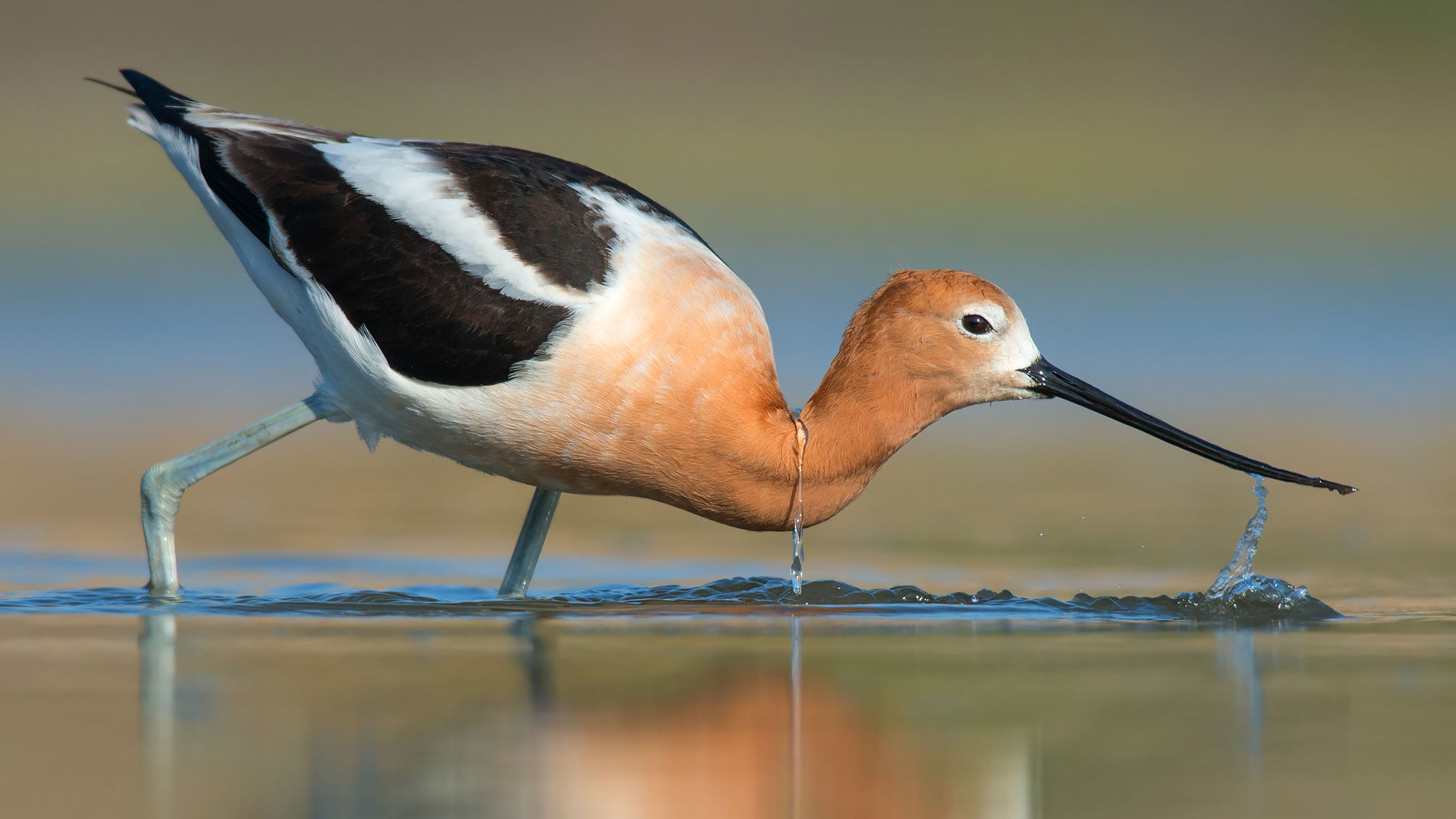
- Observe Feeding Behavior. Their unique sweeping feeding motion is a strong identification clue. Look for birds with their heads partially submerged, moving their bills side to side.
- Look for Flocks. They are often found in groups, so if you see one, there are likely more nearby. Their black and white plumage makes them stand out against water or mud.
- Listen for Calls. Their distinctive 'wheet' calls can often alert you to their presence before you see them.
- Check Seasonal Presence. Be aware of their migratory patterns. They are most widespread in their breeding grounds during spring and summer, and in wintering grounds during fall and winter.
Migration
Long-distance migrant. Most populations breed in the interior West and Great Plains of North America and migrate to coastal areas of the southern U.S. and Mexico for winter. Some populations along the Pacific coast may be resident or undertake shorter migrations.
Explore the American Avocet
Identify birds anywhere
Free on iOS, Android, and Web. Photo & sound identification, full species database, and your personal life list.