
How to identify the Pied Avocet
Recurvirostra avosetta
Spotted a bird? Identify it instantly with the Birdby app
Open the appTo correctly identify the Pied Avocet (Recurvirostra avosetta), check each of these features. Birds can be tricky: habit, habitat, and call often confirm a sighting that a single photo cannot.
Size at a glance
- Length
- 42-45 cm (16.5-17.7 in)
- Wingspan
- 67-77 cm (26.4-30.3 in)
- Weight
- 225-400 g (7.9-14.1 oz)
Physical features to check
- 1
Plumage
Overall feather coloration and pattern.
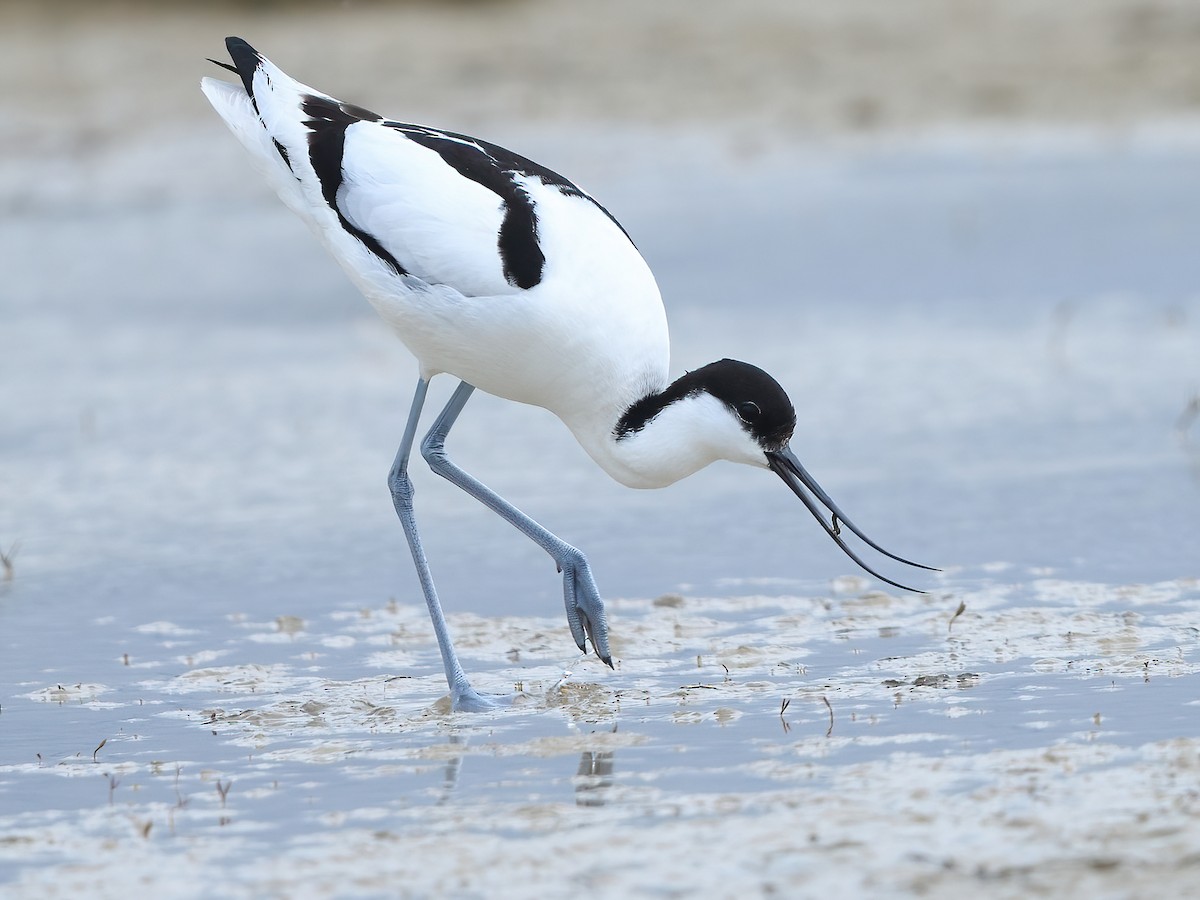
Adults have a pristine white body with bold black markings. These include a black cap extending from the bill to the nape, two broad black stripes on the back, and black primary and secondary flight feathers. The underparts are pure white.
- 2
Beak shape
Shape and color of the bill: a key field mark.
Long, slender, and distinctly upcurved, black in color. This unique shape is adapted for its specialized feeding method.
- 3
Eye color
Iris color and any distinctive eye markings.
Dark brown, almost black.
- 4
Leg color
Leg and foot color.
Long, slender, bluish-grey legs and feet.
- 5
Distinguishing features
Standout features that separate this species.
The combination of its pied black and white plumage, long bluish-grey legs, and especially its unique upcurved bill makes it unmistakable. In flight, the long legs trail behind the tail, and the black and white wing pattern is prominent.
- 6
Juvenile appearance
How young birds differ from adults.
Juveniles resemble adults but have a duller, browner tinge to the black markings, particularly on the head and back. The black areas may appear more greyish-brown, and the white plumage might be less pristine.
- 7
Seasonal changes
Plumage variation between breeding and non-breeding seasons.
There are no significant seasonal plumage changes in adults. Breeding and non-breeding plumages are essentially identical.
- 8
Sexual dimorphism
How males and females differ.
Males and females are generally monomorphic in plumage, though females may appear slightly smaller and have a slightly less pronounced bill curvature. These differences are subtle and not reliable for field identification.
Key field marks
- Plumage. Look for the striking black and white pattern: pure white body, black cap, and two prominent black stripes on the back. Black primary and secondary flight feathers are visible in flight.
- Bill Shape. The long, slender, and distinctly upcurved black bill is the most unique and defining feature, used in its characteristic sweeping feeding motion.
- Legs. Observe the long, slender, bluish-grey legs, which extend well beyond the tail in flight.
- Behavior. Watch for its distinctive feeding behavior: wading in shallow water and sweeping its bill from side to side. Often seen in flocks.
- Call. Listen for its clear, repeated 'kluit' or 'klooit' call, especially when disturbed or in flight.
Explore the Pied Avocet
Identify birds anywhere
Free on iOS, Android, and Web. Photo & sound identification, full species database, and your personal life list.