
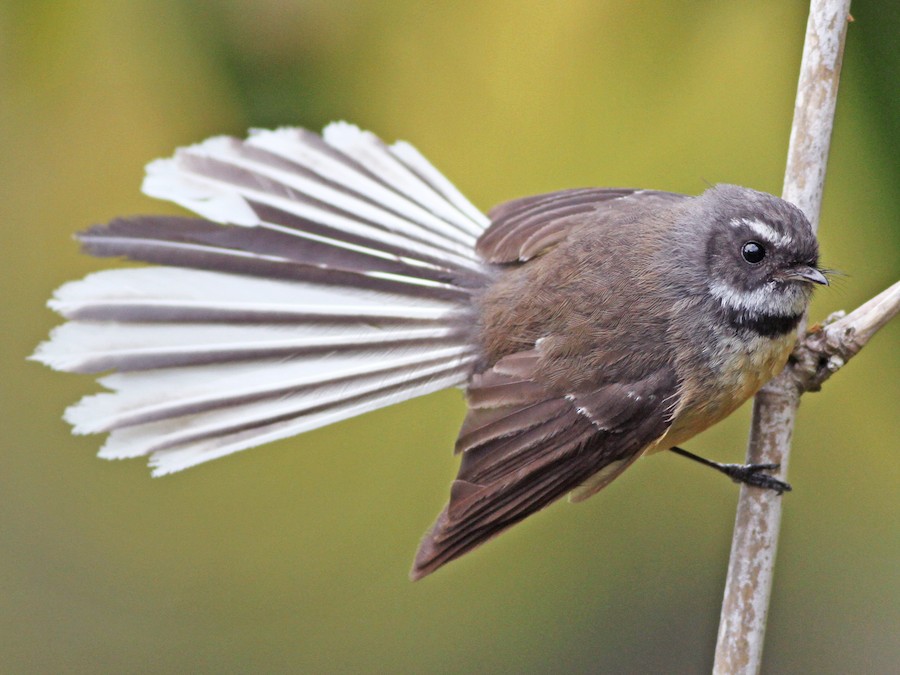
Where does the Grey Fantail live?
Rhipidura fuliginosa
Spotted a bird? Identify it instantly with the Birdby app
Open the appThe Grey Fantail lives in specific habitats and regions. Knowing where, and when, to look improves your chances of a successful sighting.
Biomes
Forests, woodlands, scrublands, open country with scattered trees, parks, and gardens.
Geographic range
Australia (widespread), New Zealand (widespread), New Caledonia, Vanuatu, Solomon Islands, Lord Howe Island, Norfolk Island, and New Guinea.
Preferred environments
Prefers areas with dense undergrowth, open woodlands, and forest edges where it can actively pursue insects. Commonly found in gardens and urban parks with sufficient tree cover.
Elevation range
Sea level up to 1,500 meters, occasionally higher in some parts of its range.
Where to look
Woodlands
Search in natural woodlands, particularly those with an open understory and shrubbery. Often found along forest edges.
Gardens and Parks
Check urban and suburban gardens, parks, and tree-lined streets, especially those with mature trees and native vegetation. They are quite tolerant of human presence.
Riparian Zones
Look along watercourses, rivers, and streams where insect activity is typically high.
Bushland Reserves
Fantails are common inhabitants of many protected bushland and nature reserves across their range.
Field tips
- Listen for its call. Its distinctive chattering song is often the first indication of its presence, even before you see the bird.
- Look for movement. Fantails are rarely still. Scan the mid-story and understory for constant, rapid movement – a flitting, fanning tail is a dead giveaway.
- Observe foraging behavior. Watch for small birds making quick, darting flights to catch insects in the air. Their acrobatic aerial displays are a key identifier.
- Be patient and still. While active, they can also be quite habituated to people. If you remain still, they may approach quite closely as they forage.
Migration
Largely resident in many areas, but some populations, particularly in southern Australia and New Zealand, undertake altitudinal or local migration, moving to lower elevations or warmer coastal areas during winter.
Explore the Grey Fantail
Identify birds anywhere
Free on iOS, Android, and Web. Photo & sound identification, full species database, and your personal life list.