
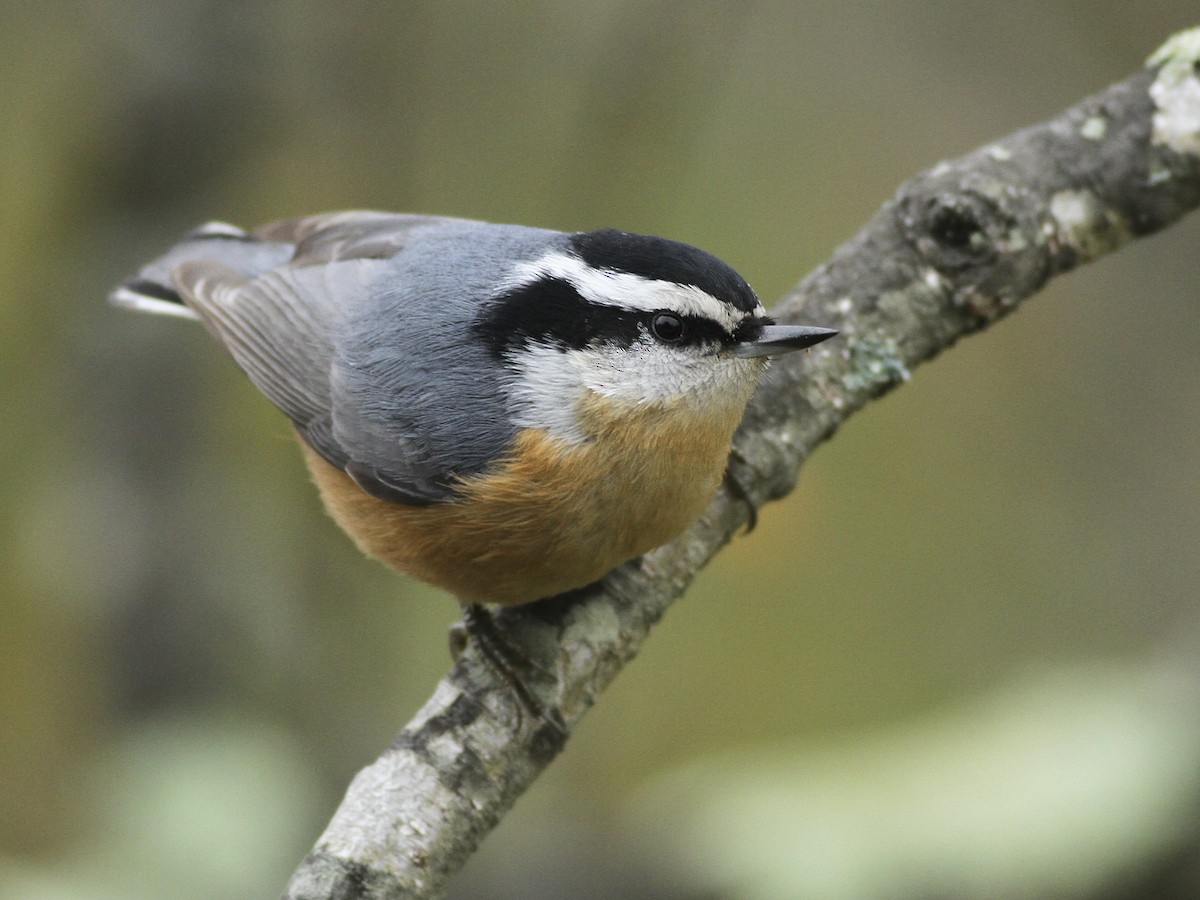
Where does the Red-breasted Nuthatch live?
Sitta canadensis
Spotted a bird? Identify it instantly with the Birdby app
Open the appThe Red-breasted Nuthatch lives in specific habitats and regions. Knowing where, and when, to look improves your chances of a successful sighting.
Biomes
Coniferous forests, mixed coniferous-deciduous forests.
Geographic range
Widespread across North America. Breeds from Alaska and Canada south through the western mountains to northern Baja California, and in the eastern United States south to the Great Lakes region and Appalachian Mountains. Irruptive movements can extend its winter range further south.
Preferred environments
Mature coniferous forests dominated by spruce, fir, pine, and hemlock. Also found in mixed forests with a significant conifer component. Requires trees with suitable bark for foraging and nesting cavities.
Elevation range
From sea level to high elevations in mountainous regions, typically favoring higher elevations in the southern parts of its range.
Where to look
Coniferous Forests
Primary habitat, especially those with mature spruce, fir, pine, and hemlock trees. Look in both dense stands and forest edges.
Mixed Forests
Areas where conifers are mixed with deciduous trees, particularly if there's a good conifer component.
Parks and Backyards
During irruptive years or in areas with suitable habitat, they may visit feeders in suburban or urban areas with mature trees.
Field tips
- Look Up. Scan tree trunks and large branches, especially the upper parts of conifers. They often forage high in the canopy.
- Listen for Calls. Their nasal 'yank-yank' call is often the first indication of their presence. Learn to distinguish it from other nuthatch calls.
- Observe Foraging Behavior. Watch for birds moving headfirst down tree trunks. This unique behavior is a strong identifier.
- Check Feeders. In winter, especially during irruptions, they are attracted to suet and black oil sunflower seeds at feeders.
- Patience. They are small and can be well-camouflaged against tree bark. Patience and careful observation are key.
Migration
Primarily a resident species throughout much of its range. However, it is known for irruptive migrations, particularly in the eastern part of its range, during winters when conifer seed crops fail in northern forests. These irruptions can lead to large numbers of birds moving south into areas where they are not typically found.
Explore the Red-breasted Nuthatch
Identify birds anywhere
Free on iOS, Android, and Web. Photo & sound identification, full species database, and your personal life list.