
Wie man den Star bestimmt
Sturnus vulgaris
Vogel gesehen? Bestimme ihn sofort mit der Birdby-App
App öffnenUm den Star (Sturnus vulgaris) richtig zu bestimmen, prüfe jeden dieser Merkmale. Vögel können knifflig sein: Verhalten, Lebensraum und Ruf bestätigen oft, was ein Foto allein nicht zeigt.
Größe auf einen Blick
- Länge
- 19-22 cm
- Flügelspannweite
- 31-44 cm
- Gewicht
- 60-90 g
Körperliche Merkmale zum Prüfen
- 1
Gefieder
Gesamte Gefiederfarbe und -muster.
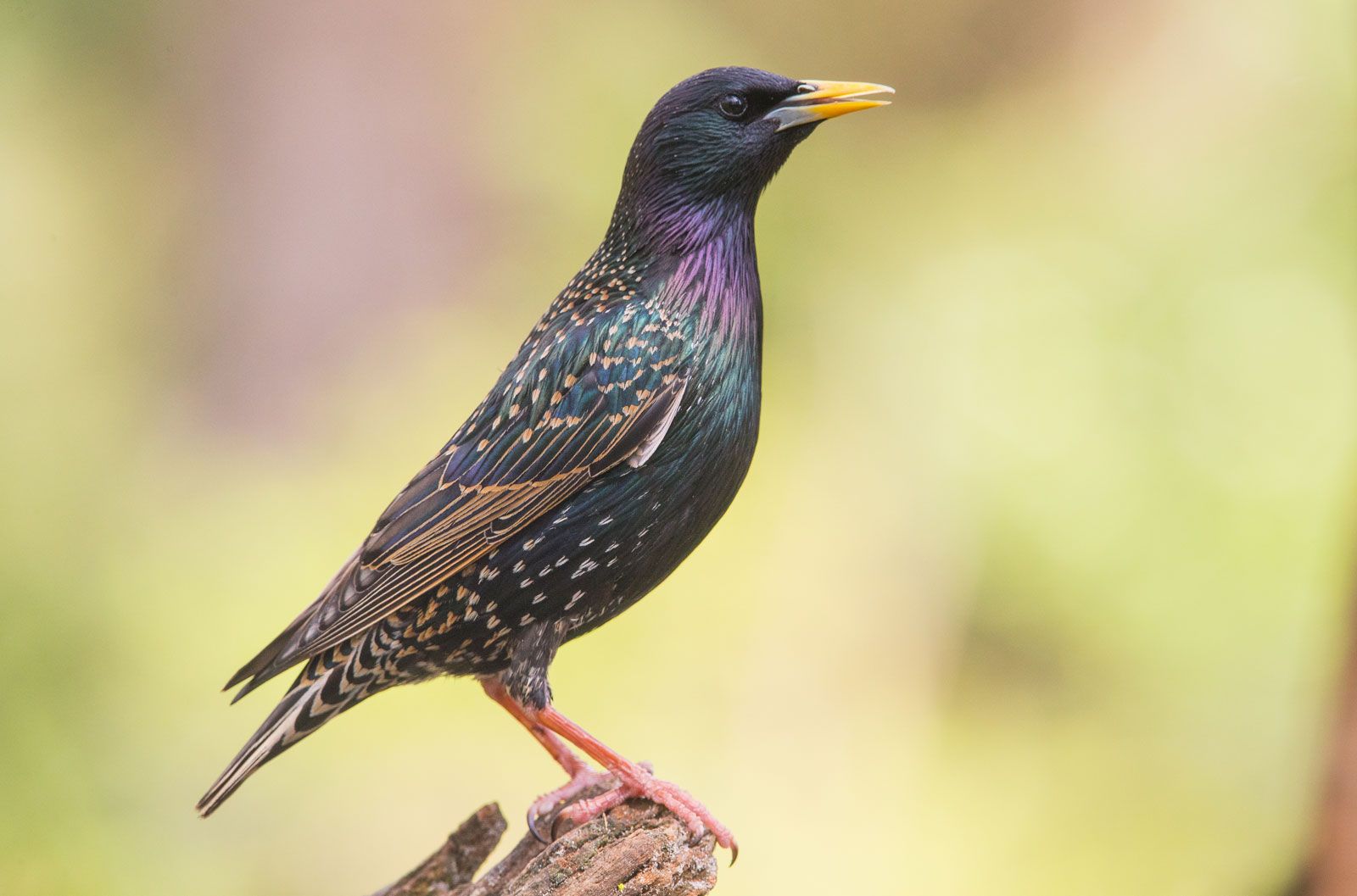
Adults in breeding plumage are glossy black with iridescent purple and green sheens, often appearing speckled with small white spots, especially on the flanks and belly. In non-breeding plumage, the white spots are much more prominent due to pale feather tips, giving a heavily speckled appearance. Juveniles are dull grey-brown overall, with a paler throat and streaked underparts.
- 2
Schnabelform
Form und Farbe des Schnabels: ein wichtiges Erkennungsmerkmal.
Conical and pointed. In breeding season, the bill is bright yellow with a bluish base in males and a pinkish base in females. Outside breeding season, the bill is dark brown to blackish.
- 3
Augenfarbe
Irisfarbe und auffällige Augenzeichnungen.
Dark brown.
- 4
Beinfarbe
Bein- und Fußfarbe.
Reddish-brown to pinkish-brown.
- 5
Erkennungsmerkmale
Hervorstechende Merkmale dieser Art.
Short tail, triangular wings in flight, distinctive waddling gait on the ground, and highly iridescent plumage. The speckled appearance in winter is a key identifier.
- 6
Jugendkleid
Wie Jungvögel sich von Altvögeln unterscheiden.
Uniformly dull grey-brown, lacking iridescence and speckling. They have a darker bill and legs than adults. They undergo a partial molt in late summer/early autumn to acquire first-winter plumage, which resembles adult non-breeding plumage but may retain some juvenile flight feathers.
- 7
Saisonale Veränderungen
Gefiederwechsel zwischen Brut- und Ruheperiode.
The most significant change is the reduction of white speckling from winter to breeding plumage. This is achieved through wear of the pale feather tips, revealing the glossy black iridescent feathers underneath. The bill also changes from dark to bright yellow during the breeding season.
- 8
Geschlechtsdimorphismus
Unterschiede zwischen Männchen und Weibchen.
Subtle. Males typically have a bluer base to the bill during breeding season and slightly longer, less speckled flank feathers. Females have a pinkish base to the bill and are often more heavily speckled. Sexing is difficult without close examination.
Wichtige Erkennungsmerkmale
- Plumage (Adult Breeding). Look for glossy black plumage with iridescent purple and green sheens. Small white spots may be present but are less prominent than in winter. Bill is bright yellow.
- Plumage (Adult Non-breeding/Winter). Heavily speckled appearance due to white tips on feathers. The bill is dark brown/black.
- Plumage (Juvenile). Dull grey-brown overall, lacking iridescence and speckling. Dark bill and legs.
- Shape and Size. Medium-sized, stocky bird with a short tail and pointed, triangular wings in flight. Distinctive waddling walk on the ground.
- Vocalizations. Listen for a complex, chattering song with whistles, clicks, and often mimicry of other birds. Calls include harsh 'churrr' and sharp 'tsit'.
- Behavior. Observe their highly social nature, especially the large, swirling flocks (murmurations) at dusk. They forage actively on the ground, probing with their bills.
Den Star entdecken
Vögel überall bestimmen
Kostenlos auf iOS, Android und Web. Foto- und Tonbestimmung, vollständige Artendatenbank und deine persönliche Liste.