
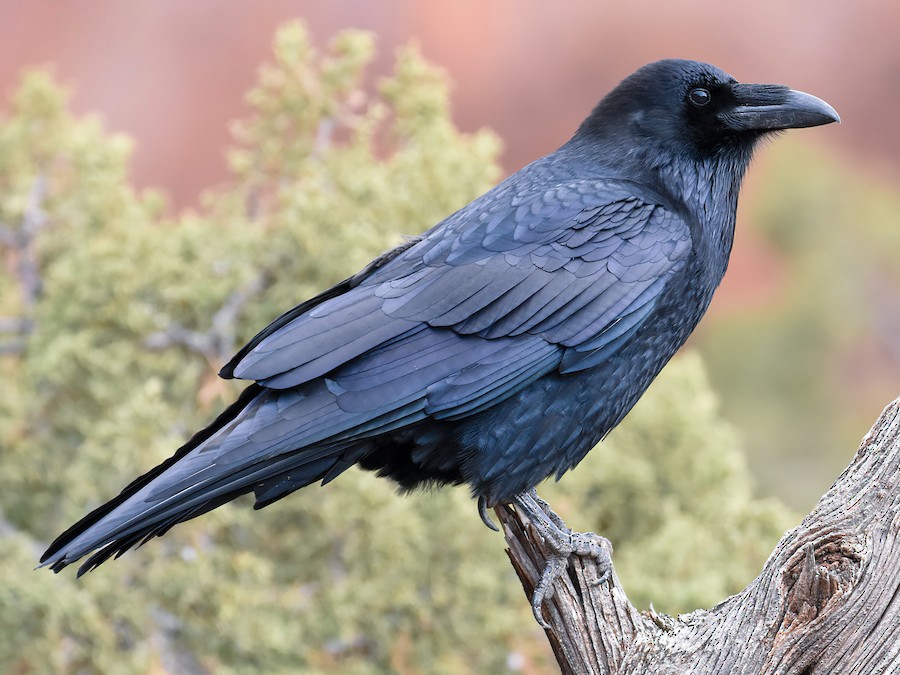
Kus elab Korp?
Corvus corax
Nägid lindu? Tuvasta see kohe Birdby rakendusega
Ava rakendusKorp elab konkreetsetes elupaikades ja piirkondades. Teadmine, kus ja millal otsida, suurendab eduka vaatluse võimalust.
Biokoosluskonnad
Highly adaptable, found in a wide range of biomes including forests (coniferous, deciduous, mixed), mountains, deserts, tundra, coastal areas, grasslands, and increasingly in urban and suburban environments.
Levila
Holarctic distribution, found across the Northern Hemisphere. This includes North America, Europe, Asia, and North Africa. It is one of the most widespread naturally occurring birds.
Eelistatud keskkonnad
Prefers areas with a mix of open country for foraging and tall structures (cliffs, large trees, human structures) for nesting and roosting. Often associated with human activity due to food availability.
Kõrgusvahemik
Sea level to over 6,000 meters in mountainous regions.
Kus otsida
Mountainous Regions
Often found soaring along cliff faces and over valleys in mountainous terrain.
Coastal Areas
Common along coastlines, scavenging for food washed ashore.
Forests and Woodlands
Especially in areas with tall trees for nesting and roosting, adjacent to open foraging areas.
Deserts and Arid Lands
Adaptable to harsh environments, often found near water sources or human settlements.
Urban and Suburban Areas
Increasingly common in human-modified landscapes, utilizing refuse as a food source and tall buildings for nesting.
Välitööde nõuanded
- Listen for Calls. Their distinctive deep 'cronk' calls are often heard before the bird is seen. Learn to distinguish it from crow calls.
- Look Up. Ravens frequently soar at high altitudes or perch on prominent vantage points like power poles, tall trees, or cliff edges.
- Observe Scavenging Sites. Check around roadkill, landfills, or other areas where carrion might be present, as they are primary scavengers.
- Watch for Aerial Displays. During courtship or play, ravens perform impressive aerial acrobatics, which can be a good way to spot them.
- Early Morning/Late Evening. They are often most active and vocal during these times, especially when leaving or returning to communal roosts.
Ränne
Generally resident throughout its range, though some northern populations may undertake short-distance altitudinal or irruptive movements in response to harsh weather or food scarcity. Juveniles may disperse widely.
Uuri Korp lähemalt
Tuvasta linde igal pool
Tasuta iOS-is, Androidis ja veebis. Foto- ja häältuvastus, täielik liikide andmebaas ja sinu isiklik vaatluste loend.