
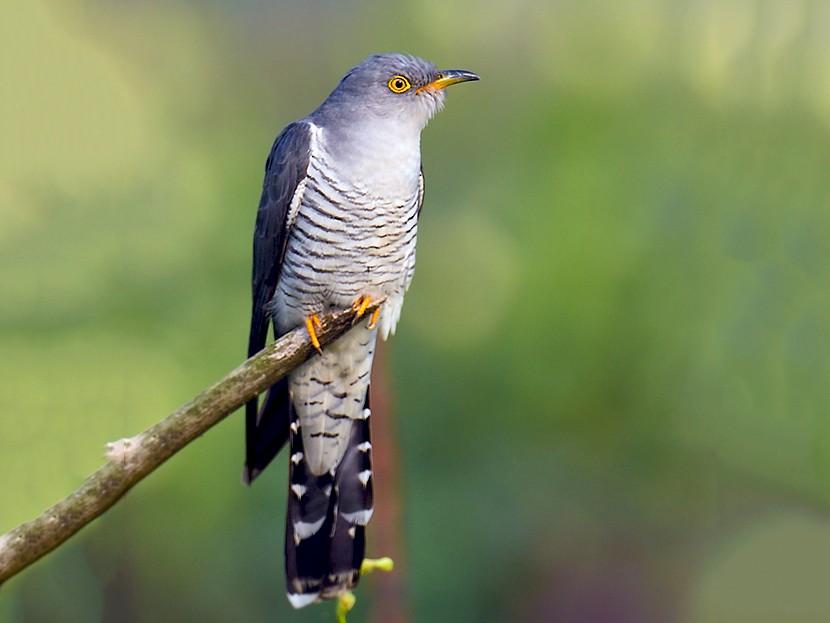
Kus elab Common Cuckoo?
Cuculus canorus
Nägid lindu? Tuvasta see kohe Birdby rakendusega
Ava rakendusCommon Cuckoo elab konkreetsetes elupaikades ja piirkondades. Teadmine, kus ja millal otsida, suurendab eduka vaatluse võimalust.
Biokoosluskonnad
Forests, woodlands, scrublands, heathlands, grasslands, agricultural areas, and open country with scattered trees.
Levila
Breeds across most of Europe and Asia, from the Atlantic to the Pacific. Winters in sub-Saharan Africa and parts of southern Asia.
Eelistatud keskkonnad
Requires a mosaic of open habitats for foraging and areas with suitable host species for breeding. Often found near edges of woodlands, clearings, and areas with dense vegetation.
Kõrgusvahemik
Sea level up to 3,000 meters in some mountainous regions, though typically found at lower to mid-elevations.
Kus otsida
Woodland Edges
Often found at the interface between woodlands and open areas, providing both cover and foraging opportunities.
Heathlands and Moorlands
Open, shrubby habitats are favored, especially where host species like Meadow Pipits are abundant.
Reedbeds
Areas with extensive reedbeds are important for host species like Reed Warblers, making them good places to find cuckoos.
Agricultural Landscapes
Can be found in cultivated areas with hedgerows, scattered trees, and patches of natural vegetation.
Välitööde nõuanded
- Listen for the Call. The male's 'cu-coo' call is the most effective way to locate this species, especially from April to July. Learn to distinguish it from other bird calls.
- Scan Open Perches. Cuckoos often perch conspicuously on exposed branches, wires, or posts, especially when calling. Use binoculars to scan such spots.
- Look for Mobbing Behavior. Smaller birds, particularly host species, will often mob cuckoos to drive them away from their nests. This commotion can draw attention to a cuckoo's presence.
- Observe Host Nests. During the breeding season, observing the behavior of potential host species (e.g., Dunnocks, Reed Warblers) around their nests might reveal a cuckoo's presence, particularly a female looking for a nest to parasitize.
- Early Morning/Late Evening. Males are most vocal during these times, increasing your chances of hearing and locating them.
Ränne
Long-distance migratory species. European populations migrate south to sub-Saharan Africa, while Asian populations winter in southern Asia and Africa. Migration occurs primarily at night.
Uuri Common Cuckoo lähemalt
Tuvasta linde igal pool
Tasuta iOS-is, Androidis ja veebis. Foto- ja häältuvastus, täielik liikide andmebaas ja sinu isiklik vaatluste loend.