
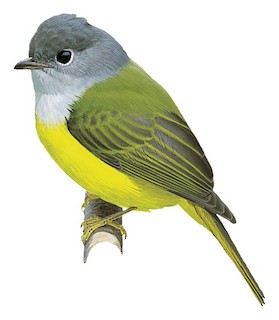
Di mana Grey-headed Canary-flycatcher tinggal?
Culicicapa ceylonensis
Melihat burung? Identifikasi seketika dengan aplikasi Birdby
Buka aplikasiGrey-headed Canary-flycatcher hidup di habitat dan wilayah tertentu. Mengetahui di mana dan kapan mencari meningkatkan peluang pengamatan yang berhasil.
Bioma
Tropical and subtropical moist broadleaf forests, montane forests, secondary forests, woodlands, and well-wooded gardens.
Persebaran geografis
Widely distributed across tropical Asia, from the Himalayas (northern India, Nepal, Bhutan) through Southeast Asia (Myanmar, Thailand, Laos, Vietnam, Cambodia, Malaysia, Indonesia) to parts of southern China and the Philippines. It is also found in Sri Lanka.
Lingkungan yang disukai
Prefers the mid-canopy and understory of dense forests, often near streams or clearings. It is also found in bamboo thickets and forest edges.
Rentang ketinggian
Typically found from lowlands up to 2,000 meters (6,500 feet) above sea level, occasionally higher in some parts of its range.
Di mana mencari
Forests and Woodlands
Primary habitat, especially in the mid-canopy and understory of broadleaf and montane forests.
Forest Edges and Clearings
Often found at the edges of forests or near clearings where insect activity is high.
Well-wooded Gardens and Parks
Can be found in larger, mature gardens and parks with ample tree cover, particularly in suburban areas adjacent to natural habitats.
Near Streams and Rivers
Frequently observed near water bodies within forested areas, as these attract insects.
Tips lapangan
- Look for movement. These are very active birds. Scan the mid-canopy and understory for quick, darting movements as they sally for insects.
- Listen for calls. Their high-pitched calls and songs are often the first indication of their presence. Learn to recognize their distinctive 'swee-swee-swee' song.
- Check mixed-species flocks. During the non-breeding season, they often join mixed-species foraging flocks. Look for them among other small insectivores.
- Patience and binoculars. Due to their small size and active nature, patience and good binoculars are essential for a clear view.
- Focus on specific habitat layers. Concentrate your search in the mid-canopy and lower branches of trees and shrubs, rather than the very top canopy or ground.
Migrasi
Mostly resident throughout its range, though some populations in the northern parts of its distribution (e.g., Himalayas) may undertake altitudinal movements, descending to lower elevations during winter. No long-distance migration is known.
Jelajahi Grey-headed Canary-flycatcher
Identifikasi burung di mana saja
Gratis di iOS, Android, dan Web. Identifikasi foto & suara, database spesies lengkap, dan daftar pribadi Anda.