
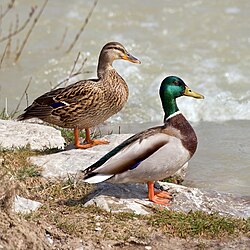
Dove vive Mallard?
Anas platyrhynchos
Visto un uccello? Identificalo all'istante con l'app Birdby
Apri l'appMallard vive in habitat e regioni specifiche. Sapere dove e quando guardare migliora le possibilità di un avvistamento riuscito.
Biomi
Wetlands, including freshwater and brackish marshes, ponds, lakes, rivers, estuaries, and coastal areas. Also found in urban parks and agricultural lands.
Areale geografico
Holarctic distribution, breeding across temperate and subtropical regions of North America, Europe, Asia, and parts of North Africa. Introduced to Australia, New Zealand, and other areas.
Ambienti preferiti
Shallow, calm waters with abundant aquatic vegetation for feeding and cover. Often found in close proximity to human settlements.
Fascia altitudinale
Primarily lowlands, but can be found at moderate elevations where suitable water bodies exist.
Dove guardare
Urban Parks and Ponds
Mallards are highly accustomed to humans and are frequently found in city parks, ornamental ponds, and golf courses.
Lakes and Rivers
Look for them on the edges of freshwater lakes, slow-moving rivers, and streams, especially where there is emergent vegetation.
Marshes and Wetlands
Natural wetland habitats, including freshwater and brackish marshes, provide ideal foraging and nesting grounds.
Estuaries and Coastal Areas
During winter or migration, they can be found in sheltered coastal bays and estuaries.
Consigli sul campo
- Look for movement on the water. Mallards are often seen dabbling, swimming, or resting on the water's surface. Their distinctive head-dipping feeding behavior is a good clue.
- Listen for calls. The female's loud 'quack' is unmistakable and can often lead you to a group of Mallards before you see them.
- Check for mixed flocks. Mallards often associate with other dabbling ducks like American Wigeons, Northern Pintails, and Green-winged Teals, especially outside the breeding season.
- Observe plumage details. Pay close attention to the head color, bill color, and the blue speculum on the wing to confirm identification, especially for females and eclipse males.
Migrazione
Partial migrant. Northern populations are migratory, moving south for winter. Southern populations are resident year-round. Migration occurs primarily at night.
Esplora Mallard
Identifica uccelli ovunque
Gratis su iOS, Android e Web. Identificazione per foto e suono, database completo e la tua lista personale.