
Visto un uccello? Identificalo all'istante con l'app Birdby
Apri l'appInformazioni
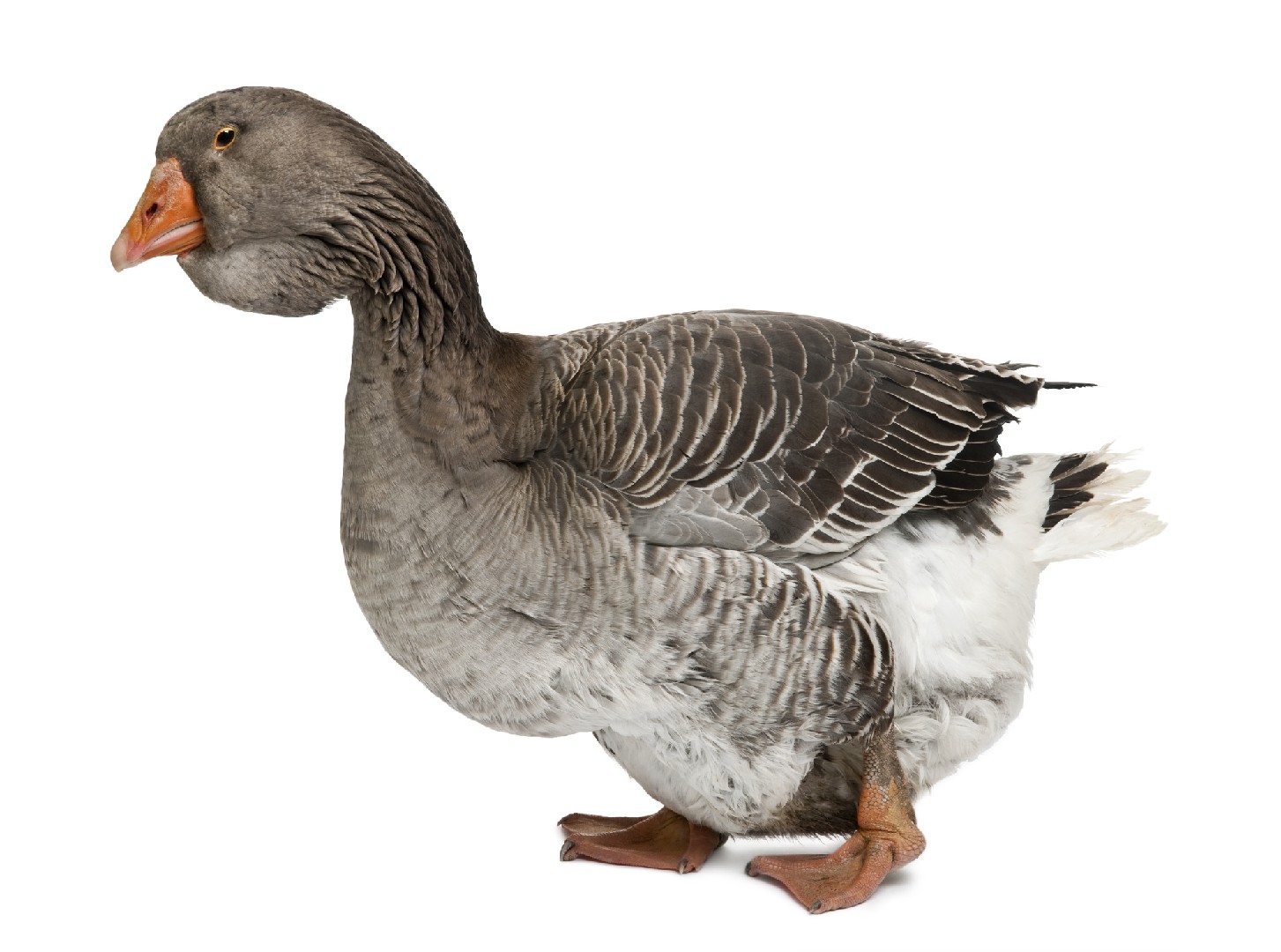
The Domestic Goose (Anser anser domesticus) is a domesticated subspecies of the Greylag Goose (Anser anser). It is one of the oldest domesticated animals, bred for meat, eggs, and feathers. Domestic geese exhibit a wide range of breeds and appearances, often differing significantly from their wild ancestor in size, plumage, and behavior. They are typically larger and heavier, with a more upright posture and a less streamlined body shape than wild geese. While they retain many behavioral traits of their wild counterparts, their flight capabilities are often reduced or absent due to selective breeding for increased body mass.
Dimensioni e longevità
- Lunghezza
- 75-110 cm
- Apertura alare
- 130-180 cm (highly variable, often reduced in flightless breeds)
- Peso
- 3-15 kg (highly variable by breed, males generally larger)
- Longevità
- 10-20 years (up to 30 years in captivity)
- Dieta
- Herbivore
Caratteristiche fisiche
- Piumaggio
- Highly variable depending on the breed. Common colors include pure white, grey (resembling wild Greylag), pied (patches of white and grey/brown), and buff. White breeds are common, lacking the darker plumage of their wild ancestor. Grey breeds often show a similar pattern to the Greylag Goose, with a grey-brown body, lighter belly, and white undertail coverts, but are typically larger and heavier.
- Forma del becco
- Strong, conical, and relatively large. Color varies by breed, often orange, pinkish-orange, or sometimes blackish. Many breeds have a prominent knob or basal swelling on the upper mandible.
- Colore degli occhi
- Typically blue, brown, or dark brown, depending on the breed and plumage.
- Colore delle zampe
- Orange to pinkish-orange, stout and webbed.
- Caratteristiche distintive
- Generally larger and heavier than wild geese, with a more upright stance. Many breeds have a prominent 'dewlap' (fold of skin) under the chin or a knob on the bill. Flight feathers are often clipped or underdeveloped in many breeds, rendering them flightless. The overall body shape is often more robust and less aerodynamic than wild geese.
- Aspetto giovanile
- Goslings are covered in soft down, typically yellow or grey, often with darker markings. They grow rapidly, developing adult plumage within a few months, though they may retain some juvenile characteristics (e.g., less developed bill knob) until full maturity.
- Cambiamenti stagionali
- Domestic geese do not exhibit significant seasonal plumage changes like some wild birds. Their plumage remains consistent year-round, though they undergo molting, during which they may appear scruffy or lose some feathers.
- Dimorfismo sessuale
- Males (ganders) are generally larger and heavier than females (geese) within the same breed, with a thicker neck and a more pronounced knob on the bill (if present). Behavioral differences are also notable, with ganders often being more aggressive and territorial, especially during breeding season.
Come identificare
- 1
Size and Stance
Look for a large, heavy-bodied goose with a noticeably more upright posture than wild geese. They often appear less streamlined.
- 2
Plumage Color
Observe the plumage. Pure white geese are almost certainly domestic. Pied (mixed white and grey/brown) or uniformly grey geese that are significantly larger and heavier than wild Greylags are also indicative of domestic origin.
- 3
Bill Features
Check the bill for a prominent knob at the base of the upper mandible (common in some domestic breeds like Chinese Geese) or a fleshy dewlap under the chin. Bill color can vary (orange, pinkish, blackish).
- 4
Leg Color
Note the leg color, typically orange or pinkish-orange, stout and webbed.
- 5
Flight Ability
Assess their flight. Many domestic geese are flightless or have very limited flight capabilities due to their weight or clipped wings. If they are unable to fly or struggle significantly, they are likely domestic.
- 6
Behavior and Location
Consider their behavior and location. Domestic geese are often found in close proximity to human settlements, farms, parks, and ponds, and may show less wariness towards humans than wild geese.
Habitat e areale
- Biomi
- Anthropogenic landscapes, agricultural areas, farms, parks, suburban ponds, and any freshwater body near human habitation.
- Areale geografico
- Worldwide, wherever humans have introduced and bred them. Originates from the domestication of the Greylag Goose (Anser anser) in Europe and Asia.
- Fascia altitudinale
- Primarily lowlands, associated with human settlements and agricultural practices. Not typically found at high altitudes.
- Ambienti preferiti
- Pastures, meadows, open grassy areas, and access to freshwater (ponds, lakes, slow-moving rivers) for drinking, bathing, and foraging. They thrive in environments where they can graze and have some protection from predators.
Comportamento
- Periodo di attività
- Diurnal. They are active during daylight hours, foraging, socializing, and resting.
- Abitudini alimentari
- Primarily grazers, feeding on grasses, clover, and other herbaceous vegetation. They also consume seeds, grains, and some aquatic plants. They use their strong bills to pluck and tear vegetation. They are opportunistic feeders and will readily accept supplementary feed provided by humans.
- Comportamento sociale
- Highly social birds, typically living in flocks or family groups. They form strong pair bonds and are known for their protective nature, especially towards their young. They can be quite vocal and territorial, particularly ganders defending their mates and nests.
- Tipo di volo
- Many domestic goose breeds are flightless or have significantly reduced flight capabilities due to their heavy body mass and/or clipped wings. Those that can fly exhibit a strong, direct flight with powerful wingbeats, similar to wild geese, often in V-formations when migrating (though domestic geese rarely migrate).
- Migrazione
- Non-migratory. Domestic geese are resident birds, staying in the same general area year-round, dependent on human care or suitable local resources.
- Territorialità
- Exhibit strong territorial behavior, especially during the breeding season. Ganders will aggressively defend their mates, nests, and goslings from perceived threats, including humans and other animals. They use hissing, honking, and charging displays to deter intruders.
Canto e richiami
- Canto
- Domestic geese do not have a 'song' in the typical avian sense. Their vocalizations are primarily calls.
- Richiamo
- A loud, resonant 'honk' or 'ga-ga-ga' call, similar to their wild ancestor, the Greylag Goose, but often louder and more varied depending on the breed. They also produce hissing sounds when threatened or agitated, and softer murmurs during social interactions.
- Quando vocalizza
- Vocalize throughout the day, especially when communicating with flock members, alerting to perceived dangers, or during territorial disputes. Increased vocalization during breeding season.
Riproduzione
- Stagione riproduttiva
- Typically late winter to early summer, depending on climate and breed, often starting in February-March in temperate regions.
- Abitudini di nidificazione
- Nests are usually built on the ground, often in a secluded, sheltered spot near water. The female constructs a shallow scrape lined with plant material (grasses, reeds) and down feathers plucked from her own breast. Nests are often reused in subsequent years.
- Dimensione della covata
- 4-12 eggs, with an average of 6-8 eggs. Some breeds are selected for higher egg production.
- Descrizione dell'uovo
- Large, oval, and typically white or creamy white. Size varies by breed, but generally larger than wild goose eggs. Shells are smooth.
- Periodo di incubazione
- 28-30 days. Primarily incubated by the female, though the gander remains nearby to guard the nest.
- Periodo di involo
- Goslings are precocial, meaning they are covered in down and able to walk and feed themselves shortly after hatching. They remain with their parents for several weeks to months, learning foraging skills and protection. They are not truly 'fledged' in the sense of flying, but become independent in terms of foraging and self-care within 8-10 weeks.
- Cure parentali
- Both parents are highly protective of their goslings. The female leads the young to foraging areas, and both parents defend them fiercely from predators. The gander plays a crucial role in guarding the family unit.
Dove trovarlo
Farms and Agricultural Areas
The most common place to find domestic geese, where they are raised for various purposes.
Parks and Public Ponds
Often kept as ornamental birds or allowed to roam freely in public green spaces with water features.
Suburban and Rural Gardens
Some individuals keep domestic geese as pets or for small-scale farming in larger gardens or properties.
Waterfowl Collections
Found in zoos, wildlife parks, and private waterfowl collections.
Consigli sul campo
- Look for large, white geese. Pure white plumage is a strong indicator of a domestic goose, as wild geese are typically grey or brown.
- Observe their gait and posture. Domestic geese often walk with a more upright, waddling gait due to their heavier build, and stand taller than their wild counterparts.
- Check for bill knobs or dewlaps. These features are absent in wild Greylag Geese but common in many domestic breeds.
- Consider their environment. If a goose is found in a park, farm, or other human-modified environment and appears unusually tame or large, it is likely domestic.
- Listen to their calls. While similar to Greylags, domestic goose calls can sometimes be louder or have a slightly different timbre depending on the breed.
Specie simili
Greylag Goose
Anser anser
The wild ancestor. Greylag Geese are generally smaller, more slender, and more agile fliers than domestic geese. They have a more uniform grey-brown plumage, an orange bill (without a knob), and pink legs. Domestic geese often have white or pied plumage, a larger body, a more upright posture, and may have a bill knob or dewlap. Flight ability is a key differentiator, with wild Greylags being strong migrants.
Canada Goose
Branta canadensis
Canada Geese are easily distinguished by their black neck and head with a prominent white 'chinstrap' marking. Their body plumage is typically brown, and their bill is black. Domestic geese lack the black neck and head pattern and usually have orange or pinkish bills and legs.
Swan Goose
Anser cygnoides
The wild ancestor of the Chinese Goose (a domestic breed). Wild Swan Geese have a distinctive long, slender black bill, a dark brown cap, and a pale stripe down the back of the neck. Domestic Chinese Geese often retain the prominent knob on the bill (especially ganders) and a more upright posture, but come in white or brown varieties. The knob is a key feature for distinguishing Chinese Geese from other domestic breeds and wild geese.
Fatti rapidi
- Origin:
- Domesticated from the Greylag Goose (Anser anser)
- Primary Use:
- Meat, eggs, feathers, weed control, guarding
- Flight:
- Often reduced or absent in many breeds
- Social Structure:
- Highly social, form strong pair bonds
- Diet:
- Primarily grazers (grasses, herbs)
Curiosità
- Domestic geese are among the oldest domesticated animals, with evidence of domestication dating back over 5,000 years.
- They are known for their excellent guarding abilities, often used to protect livestock due to their loud alarm calls and aggressive territorial behavior.
- The phrase 'what's good for the goose is good for the gander' refers to the equal treatment of males and females, reflecting the strong pair bonds and shared parental duties of geese.
- Some domestic goose breeds, like the African and Chinese Geese, are descended from the Swan Goose (Anser cygnoides), not the Greylag Goose, and are characterized by a prominent knob on their bill.
- Geese have a remarkable memory and can recognize individual humans and other animals, often forming strong attachments.
Classificazione scientifica
- Regno
- Animalia
- Phylum
- Chordata
- Classe
- Aves
- Ordine
- Anseriformes
- Famiglia
- Anatidae
- Genere
- Anser
- Specie
- Anser anser domesticus
Esplora Domestic Goose
Identifica uccelli ovunque
Gratis su iOS, Android e Web. Identificazione per foto e suono, database completo e la tua lista personale.