
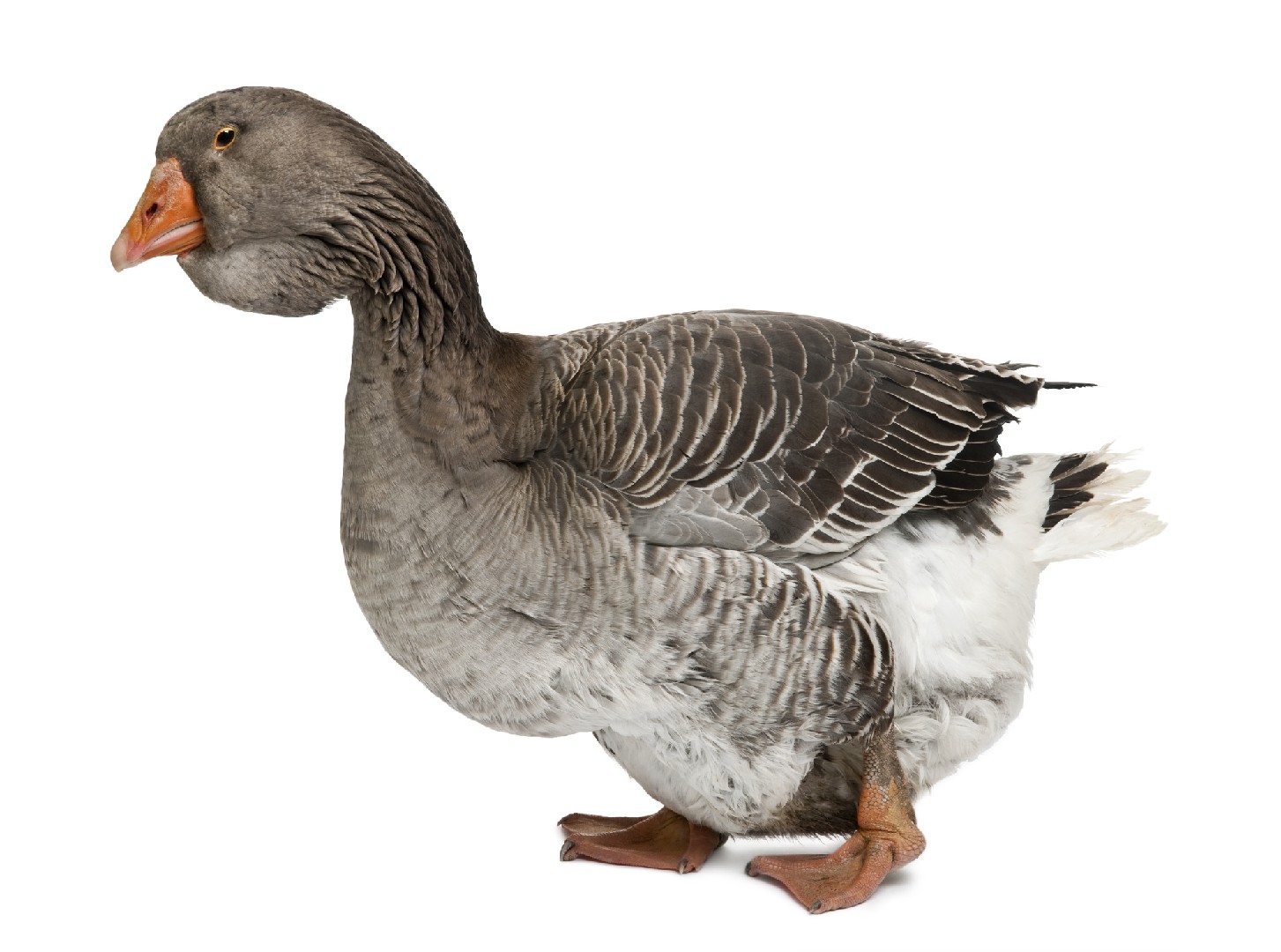
Come identificare Domestic Goose
Anser anser domesticus
Visto un uccello? Identificalo all'istante con l'app Birdby
Apri l'appPer identificare correttamente Domestic Goose (Anser anser domesticus), controlla ciascuna di queste caratteristiche. Gli uccelli possono essere complicati da riconoscere, perché comportamento, habitat e canto spesso confermano ciò che una sola foto non può.
Dimensioni a colpo d'occhio
- Lunghezza
- 75-110 cm
- Apertura alare
- 130-180 cm (highly variable, often reduced in flightless breeds)
- Peso
- 3-15 kg (highly variable by breed, males generally larger)
Caratteristiche fisiche da controllare
- 1
Piumaggio
Colorazione e disegno generale del piumaggio.
Highly variable depending on the breed. Common colors include pure white, grey (resembling wild Greylag), pied (patches of white and grey/brown), and buff. White breeds are common, lacking the darker plumage of their wild ancestor. Grey breeds often show a similar pattern to the Greylag Goose, with a grey-brown body, lighter belly, and white undertail coverts, but are typically larger and heavier.
- 2
Forma del becco
Forma e colore del becco, un segno di campo chiave.
Strong, conical, and relatively large. Color varies by breed, often orange, pinkish-orange, or sometimes blackish. Many breeds have a prominent knob or basal swelling on the upper mandible.
- 3
Colore degli occhi
Colore dell'iride e segni distintivi sugli occhi.
Typically blue, brown, or dark brown, depending on the breed and plumage.
- 4
Colore delle zampe
Colore di zampe e piedi.
Orange to pinkish-orange, stout and webbed.
- 5
Caratteristiche distintive
Tratti distintivi che separano questa specie.
Generally larger and heavier than wild geese, with a more upright stance. Many breeds have a prominent 'dewlap' (fold of skin) under the chin or a knob on the bill. Flight feathers are often clipped or underdeveloped in many breeds, rendering them flightless. The overall body shape is often more robust and less aerodynamic than wild geese.
- 6
Aspetto giovanile
Come i giovani si differenziano dagli adulti.
Goslings are covered in soft down, typically yellow or grey, often with darker markings. They grow rapidly, developing adult plumage within a few months, though they may retain some juvenile characteristics (e.g., less developed bill knob) until full maturity.
- 7
Cambiamenti stagionali
Variazione del piumaggio tra stagione riproduttiva e non.
Domestic geese do not exhibit significant seasonal plumage changes like some wild birds. Their plumage remains consistent year-round, though they undergo molting, during which they may appear scruffy or lose some feathers.
- 8
Dimorfismo sessuale
Differenze tra maschi e femmine.
Males (ganders) are generally larger and heavier than females (geese) within the same breed, with a thicker neck and a more pronounced knob on the bill (if present). Behavioral differences are also notable, with ganders often being more aggressive and territorial, especially during breeding season.
Segni di campo chiave
- Size and Stance. Look for a large, heavy-bodied goose with a noticeably more upright posture than wild geese. They often appear less streamlined.
- Plumage Color. Observe the plumage. Pure white geese are almost certainly domestic. Pied (mixed white and grey/brown) or uniformly grey geese that are significantly larger and heavier than wild Greylags are also indicative of domestic origin.
- Bill Features. Check the bill for a prominent knob at the base of the upper mandible (common in some domestic breeds like Chinese Geese) or a fleshy dewlap under the chin. Bill color can vary (orange, pinkish, blackish).
- Leg Color. Note the leg color, typically orange or pinkish-orange, stout and webbed.
- Flight Ability. Assess their flight. Many domestic geese are flightless or have very limited flight capabilities due to their weight or clipped wings. If they are unable to fly or struggle significantly, they are likely domestic.
- Behavior and Location. Consider their behavior and location. Domestic geese are often found in close proximity to human settlements, farms, parks, and ponds, and may show less wariness towards humans than wild geese.
Esplora Domestic Goose
Identifica uccelli ovunque
Gratis su iOS, Android e Web. Identificazione per foto e suono, database completo e la tua lista personale.