
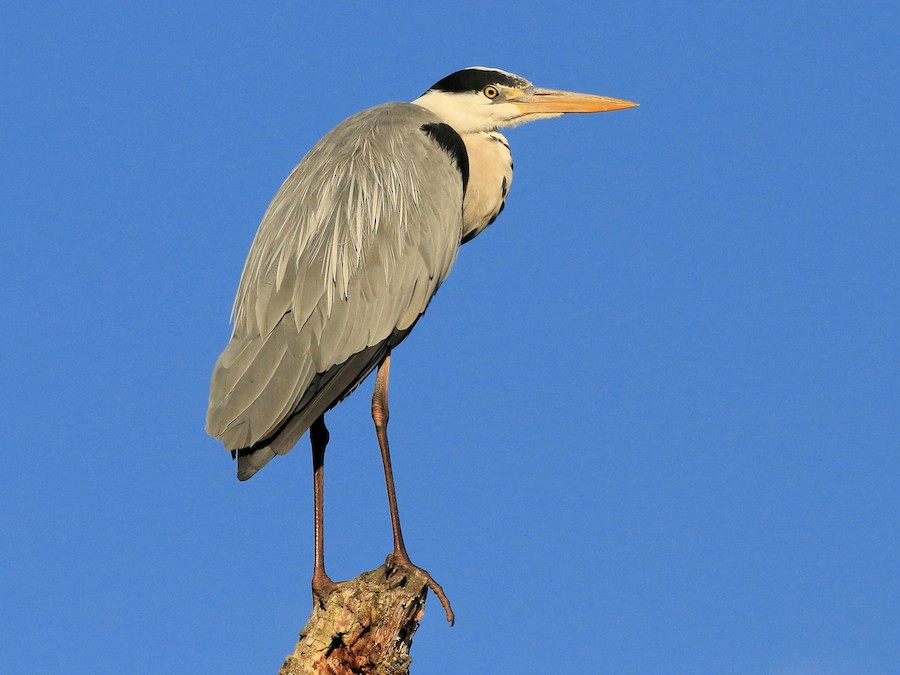
Dove vive Grey Heron?
Ardea cinerea
Visto un uccello? Identificalo all'istante con l'app Birdby
Apri l'appGrey Heron vive in habitat e regioni specifiche. Sapere dove e quando guardare migliora le possibilità di un avvistamento riuscito.
Biomi
Wetlands, including freshwater, brackish, and coastal environments.
Areale geografico
Widespread across Europe, Asia (from the Urals to Japan), and parts of Africa (south of the Sahara, Madagascar). Also found in some Atlantic islands.
Ambienti preferiti
Lakes, rivers, ponds, marshes, estuaries, coastal lagoons, flooded meadows, canals, reservoirs, and even garden ponds. Requires shallow water for foraging and nearby trees for nesting.
Fascia altitudinale
Primarily lowlands, but can be found up to 2,000 meters (6,500 ft) in some mountainous regions if suitable water bodies are present.
Dove guardare
Lakes and Ponds
Look along the edges of freshwater lakes, ponds, and reservoirs, especially where there are reeds or emergent vegetation.
Rivers and Canals
Often found along slow-moving rivers, canals, and drainage ditches, particularly in areas with shallow water.
Coastal Areas
Estuaries, tidal flats, saltmarshes, and coastal lagoons are favored habitats, especially during low tide.
Flooded Fields and Marshes
Will forage in temporarily flooded agricultural fields or extensive marshlands.
Urban Parks and Gardens
Increasingly common in urban environments with suitable water features, including large garden ponds.
Consigli sul campo
- Patience is Key. Grey Herons are often very still when hunting. Scan the water's edge carefully, looking for their distinctive silhouette.
- Look for Roosts and Colonies. In winter, look for communal roosts in tall trees. During breeding season, locate heronries (colonies) in large trees near water bodies.
- Dawn and Dusk. While diurnal, they are often most active and visible during the quieter hours of dawn and dusk.
- Check Urban Water Bodies. Don't overlook city parks, golf courses, or even large garden ponds, as they have adapted well to human presence.
- Listen for Calls. Their harsh 'fraaank' call is often the first indication of their presence, especially when they take flight.
Migrazione
Northern populations are migratory, moving south to warmer regions in winter (e.g., from Scandinavia to southern Europe or Africa). Central and southern European populations are largely resident or undertake short-distance dispersal. African populations are mostly resident.
Esplora Grey Heron
Identifica uccelli ovunque
Gratis su iOS, Android e Web. Identificazione per foto e suono, database completo e la tua lista personale.