
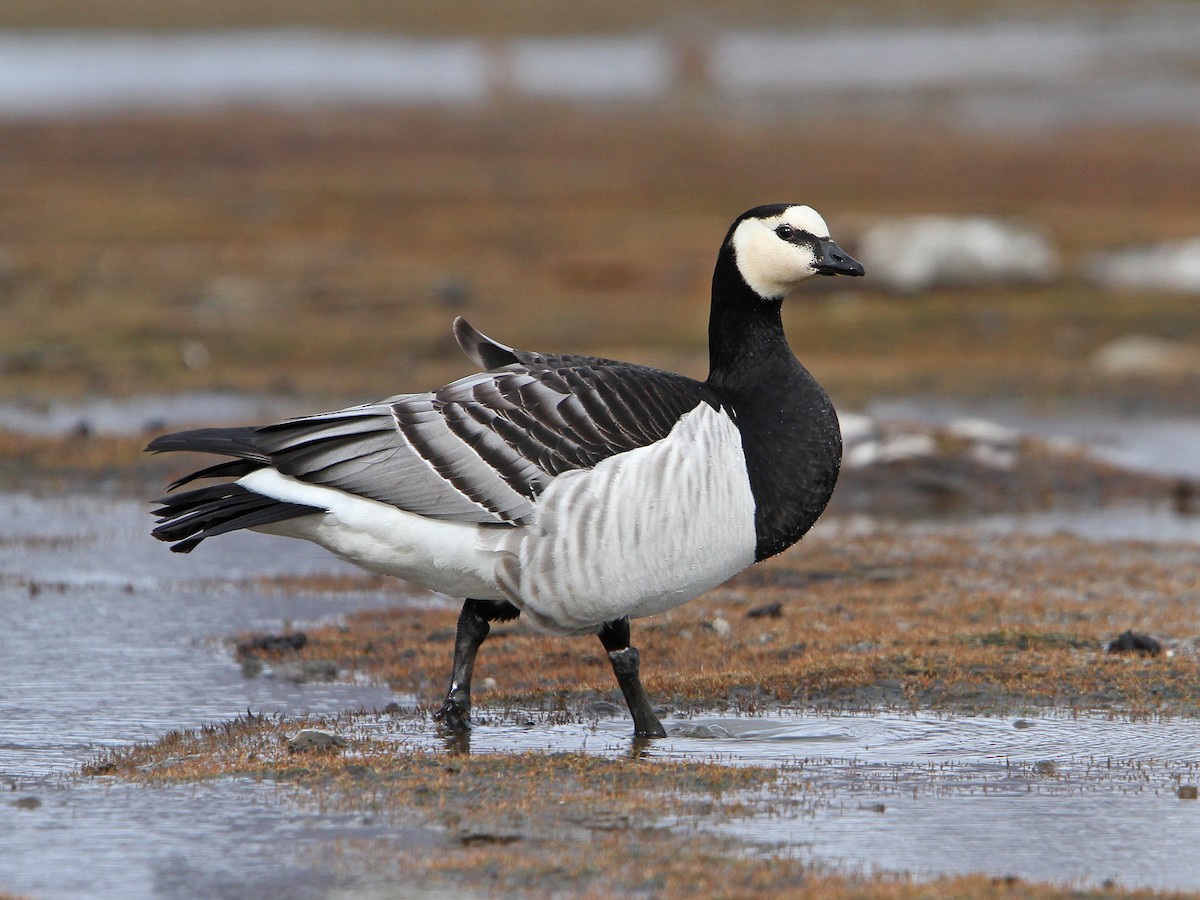
Dove vive Barnacle Goose?
Branta leucopsis
Visto un uccello? Identificalo all'istante con l'app Birdby
Apri l'appBarnacle Goose vive in habitat e regioni specifiche. Sapere dove e quando guardare migliora le possibilità di un avvistamento riuscito.
Biomi
Tundra, coastal wetlands, saltmarshes, agricultural grasslands, estuaries.
Areale geografico
Breeds in Arctic regions of Greenland, Svalbard, Novaya Zemlya, and occasionally northern Russia. Winters primarily along the coasts of Ireland, Great Britain, the Netherlands, Germany, and Denmark, with smaller numbers in other parts of northwestern Europe.
Ambienti preferiti
During breeding, they prefer rocky cliffs, islands, and tundra near freshwater. In winter, they favor coastal grasslands, saltmarshes, estuaries, and increasingly, agricultural fields (e.g., pastures, winter cereals) for grazing.
Fascia altitudinale
Typically found at sea level to low elevations, especially during wintering. Breeding grounds can be at higher altitudes on cliffs.
Dove guardare
Coastal Wetlands and Estuaries
Prime wintering habitat, especially in northwestern Europe. Look for them grazing on saltmarshes and mudflats at low tide.
Agricultural Grasslands
Increasingly common in winter on pastures and fields planted with winter cereals, often near coastal areas.
Arctic Breeding Grounds
During summer, they can be found on rocky cliffs and islands in Greenland, Svalbard, and Novaya Zemlya.
Nature Reserves and Bird Sanctuaries
Many protected areas along the European coast provide safe havens for wintering flocks.
Consigli sul campo
- Scan large flocks. Barnacle Geese are highly gregarious. Look for them among other geese species or in pure flocks in open areas.
- Listen for calls. Their distinctive yapping calls are often heard before the birds are seen, especially when they are flying overhead.
- Use optics. Binoculars or a spotting scope are essential for observing details of their plumage and distinguishing them from similar species, especially at a distance.
- Check coastal areas in winter. Focus your search on coastal regions of Ireland, Great Britain, and the Wadden Sea during the non-breeding season (October-March).
- Observe flight patterns. Migrating flocks often fly in V-formations, and their calls are particularly noticeable during these movements.
Migrazione
Long-distance migratory. They breed in the high Arctic during the short summer and undertake extensive migrations south to their wintering grounds in temperate Europe. Migration occurs in large flocks, typically from September to November and March to May.
Esplora Barnacle Goose
Identifica uccelli ovunque
Gratis su iOS, Android e Web. Identificazione per foto e suono, database completo e la tua lista personale.